The Reinvention of Wilderness Luxury
For nearly a century, the luxury safari across the Indian subcontinent followed a prescribed formula: colonial canvas tents, silver tea services set under banyan trees, and open-topped military surplus Jeeps navigating dusty forest reserves. While romance enveloped the ritual, the mechanical experience was undeniably spartan. Today, a fundamental transformation has taken root across the private wilderness concessions of Rajasthan, Madhya Pradesh, and Ladakh.
A new generation of conservation-minded luxury travellers and estate owners demands vehicles that offer uncompromising off-road capability without surrendering mechanical sophistication, thermal insulation, or long-distance touring comfort. In response, the holy trinity of all-terrain engineering — the Land Rover Defender 110 and 130, the Mercedes-Benz G-Class, and the Toyota Land Cruiser 300 Series — has emerged as the definitive transport of the modern Indian grand tour.
“The modern luxury overland journey is defined not by how much terrain you conquer, but by how quietly and effortlessly you pass through it.”
The Modern Defender on the Sands of Osian
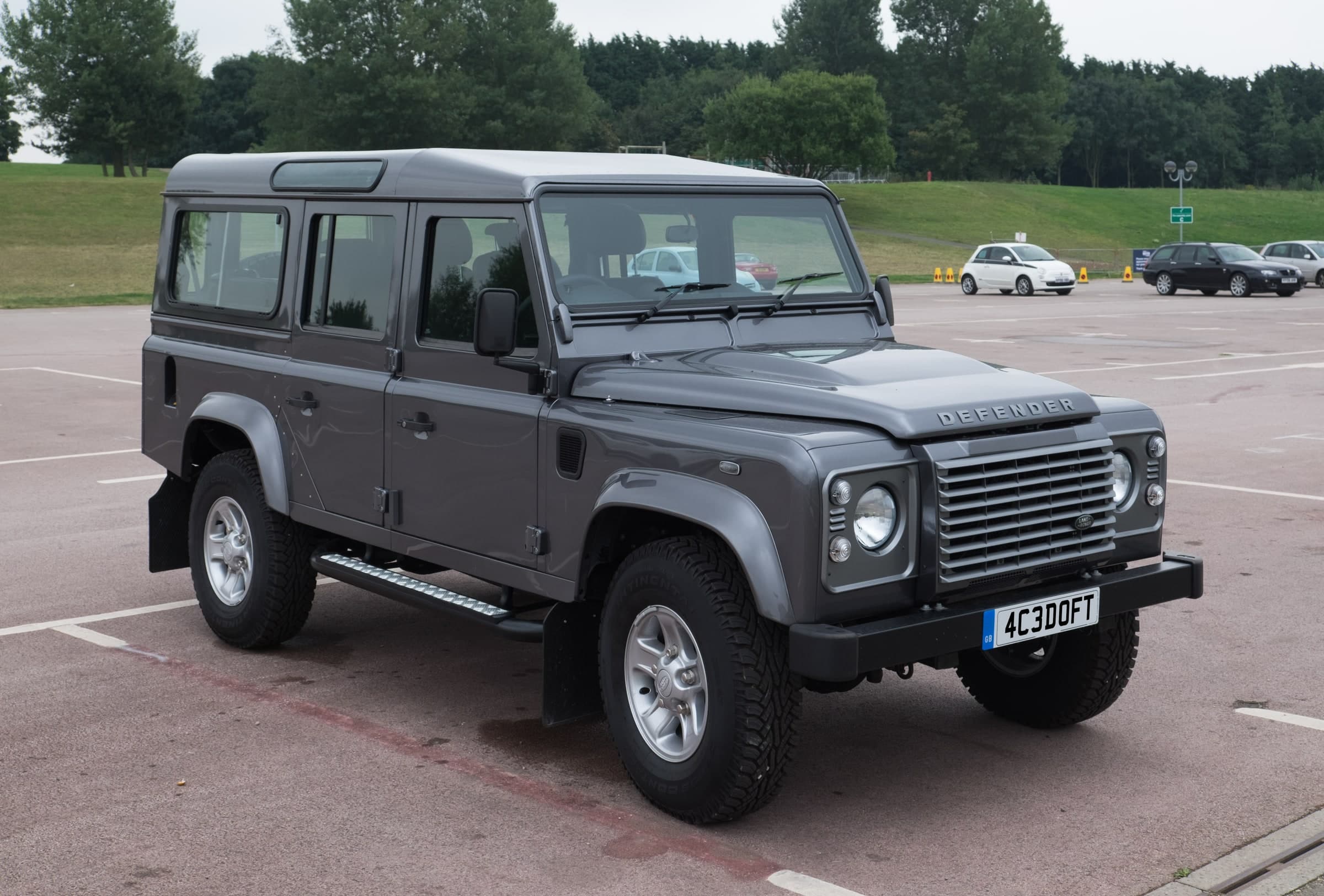
When Land Rover replaced the ladder-frame classic Defender with the unibody D7x aluminium monocoque platform, purists expressed scepticism. Yet in the rolling dune fields of Osian and the rocky escarpments surrounding Mihir Garh, the modern Defender 110 has decisively silenced critics. With air suspension capable of raising ride height to provide 291mm of ground clearance, a 900mm wading depth, and twin-speed transfer boxes governed by Configurable Terrain Response, the vehicle floats across deep sand where older four-wheel drives dig themselves into oblivion.
Equally significant is its acoustic refinement. The whisper-quiet twin-turbocharged inline-six mild-hybrid powertrains allow safari guides to stalk within photography distance of blackbuck and desert foxes without the concussive diesel clatter that characterized earlier generations of shikar vehicles. Inside, marine-grade rubberised flooring and robust open-pore wood surfaces endure desert dust storms, while multi-zone climate control maintains a steady 21 degrees Celsius against forty-degree ambient afternoon heat.
The Mercedes G-Class: Military Provenance, Palace Presence
If the Defender represents functional modern expedition capability, the Mercedes-Benz G-Class occupies a legendary cultural status. Conceived in the late 1970s at the suggestion of the Shah of Iran and manufactured by hand in Graz, Austria, the G-Wagon remains the only production luxury vehicle equipped with three independent 100% mechanical differential locks — front, centre, and rear.
In the leopard granite boulder fields of Jawai Bandh, the G 400d and G 63 are increasingly the vehicles of choice for private royal estates. With its indestructible rigid rear axle, high-articulation front suspension, and distinctive acoustic door-latch clack, the G-Wagon bridges the divide between utilitarian military tool and sovereign luxury statement. Customized with matte sand-beige paint finishes, rooftop observation racks, and custom leather rifle scabbards, it sits as comfortably in the forecourt of Rambagh Palace as it does scrambling over prehistoric volcanic rocks in pursuit of big cats.
“Three mechanical differential locks and an indestructible chassis: the G-Wagon bridges military provenance and palace presence like nothing else on earth.”
The Land Cruiser: The Diplomatic Workhorse
No survey of overland authority is complete without acknowledging the Toyota Land Cruiser. Across the subcontinent's most hostile terrain — from the high-altitude passes of Chang La in Ladakh to the saline expanses of the Rann of Kutch — the Land Cruiser is the gold standard of mechanical reliability. While European rivals champion cutting-edge electronic sensors and pneumatic wizardry, the Land Cruiser 300 pairs robust mechanical engineering with an indestructible ladder frame and Multi-Terrain Monitor cameras.
For royal families with extensive rural agricultural and forest estates, the Land Cruiser is the vehicle that is never left behind. It is built to run on erratic fuel quality, endure relentless washboard corrugations without suspension bushing degradation, and provide ten or fifteen years of continuous service with nothing more than routine fluid changes. It is luxury defined not by vanity, but by certainty.
The Future of Subcontinental Grand Touring
The emergence of modern 4x4 culture has catalysed an entirely new style of hospitality in India. Properties such as Suján Jawai, The Serai in Jaisalmer, and Singinawa in Kanha now offer bespoke trans-state overland itineraries where guests pilot fleet-prepared Defenders across forgotten caravan routes, guided by satellite navigation and accompanied by mobile luxury kitchens.
This is grand touring returned to its authentic 19th-century origins: self-directed exploration into the wilderness, supported by uncompromising engineering. In an era where commercial air travel has become increasingly generic, driving an overland legend across the sands of the Thar remains one of the ultimate expressions of sovereign luxury.
THE ROYAL GALLERYS is the international magazine for heritage, culture and luxury — documenting the people, places and ideas shaping the worlds of royalty, jewellery, design, travel and contemporary life. Our editorial authority rests on deep engagement with India's cultural ecosystem and a commitment to telling the stories that matter.
For editorial inquiries, story proposals, and partnership discussions, contact our editors at hey.theroyalgallerys@gmail.com.
Karanjit Singh
Expeditions & Automotive Writer. THE ROYAL GALLERYS is the international magazine for heritage, culture and luxury — editorial authority on the people, places and ideas shaping our world.
Part of Motoring
This article is part of THE ROYAL GALLERYS Motoring section — our international editorial destination for motoring, heritage and luxury.
Explore All Motoring Stories →