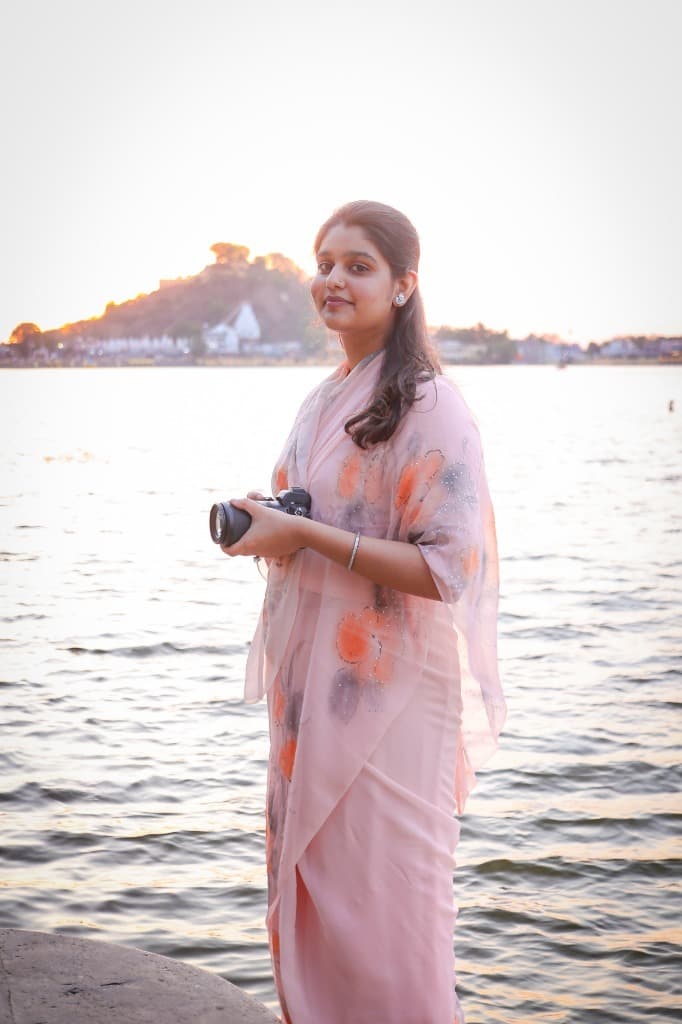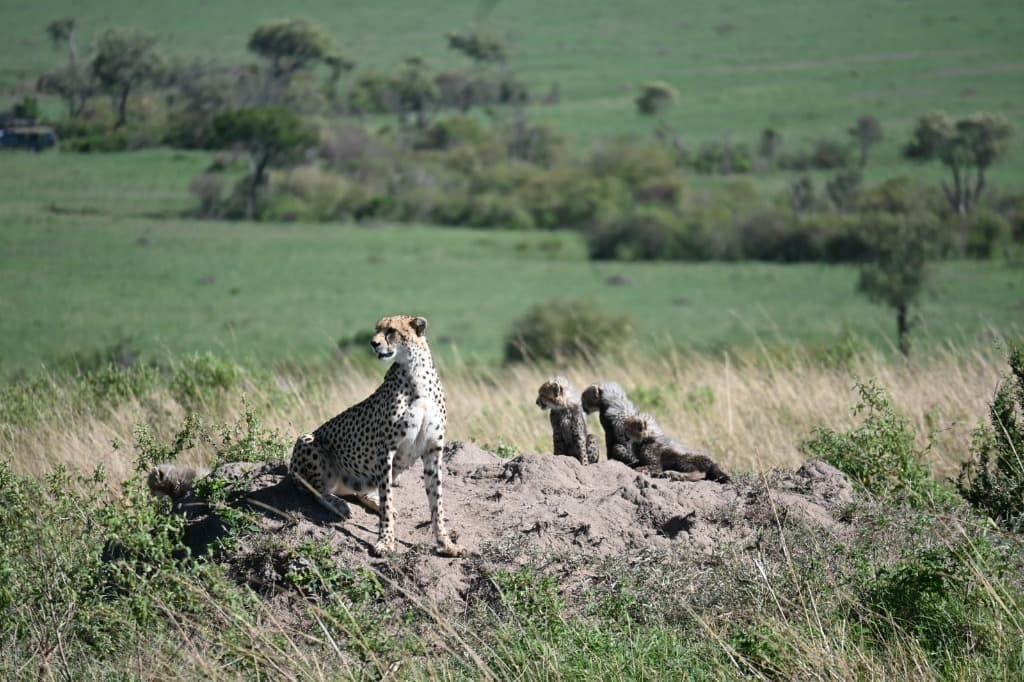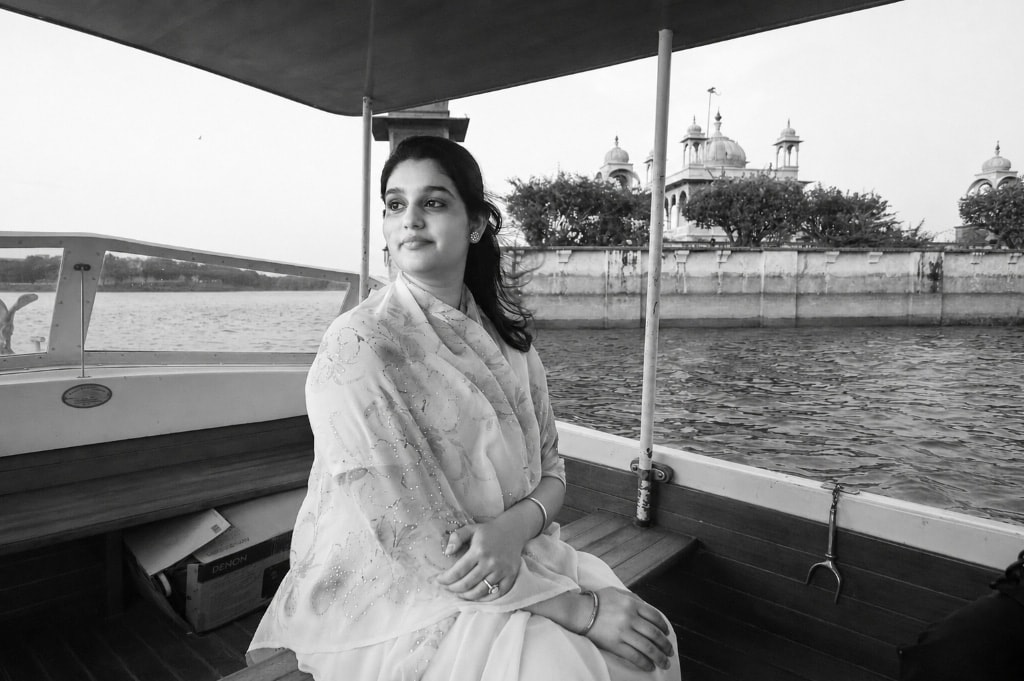
In the lake city of Dungarpur, where heritage and wilderness have always shared the same horizon, Shivanjali Kumari has built a practice of quiet, extraordinary attention. A princess by birthright, a wildlife photographer by conviction, she moves through the wild with the patience of someone who understands that the most powerful images are never taken — they are waited for. Her lens captures not merely the animals of Rajasthan's forests and wetlands, but the emotional grammar of the natural world: stillness before the hunt, the tenderness between a cheetah and her cubs, the dignity of creatures entirely indifferent to the human gaze. Each frame is a testament to her belief that photography, at its finest, is an act of profound respect.
The City That Made Her
The hilly terrain of southern Rajasthan cradles Dungarpur — a city of Pareva stone that glows bluish-grey in dawn light, of palaces that have outlasted dynasties. It is from this soil that Shivanjali Kumari Dungarpur — nineteen, princess by birthright, photographer by passion — draws her vision of the world.
Most who inherit a royal lineage inherit its rituals. Shivanjali inherited its gaze. The seven-storey Juna Mahal; the serene Udai Bilas Palace, her family's seat and today a celebrated heritage hotel. These are not backdrops to her life but the grammar of her artistic language — one she now speaks through a camera, studying at Le Mark Institute in Bombay.
A Lockdown and an iPhone 5
Her journey began not in a studio but in the stillness of a lockdown. In 2020 her school, Mayo College, encouraged entry to a Round Square Conference on the arts. Armed only with an iPhone 5, she submitted her work — and emerged first runner-up across all-India. She returned transformed, earning her photography badge and rising to official Head Photographer, a role that pulled her from mid-lecture to capture school life as it happened.
“Nature has its own pace — it is raw, wild, and not performing for humans. This is the lesson I carry from every safari, every hour before sunrise, every quiet moment in the field.”
— Shivanjali Kumari Dungarpur
The Most Powerful Permission
By the middle of twelfth grade the decision was made: photography, and nothing else. Her parents offered the most powerful of permissions — “If you love it so much, why not?” For a young woman navigating expectations woven into centuries of royal heritage, it was an act of liberation. She enrolled in her degree with the blessing of a family that chose to celebrate her art over convention.