Station I65–67 Million Years BC · Cretaceous Period
The Ancient Nesting Grounds
Dinosaurs nest in the land that will become Balasinor. Their eggs, transformed into rock by minerals over millennia, wait beneath the hills.

The Dinosaur Princess of Balasinor
Words by Krishanpriya Rajawat · Raiyoli, Gujarat, India
Vol. XII, pp. XXXIII–XXXIV · Balasinor, Gujarat · 65 Million Years
In the mineral-rich hills of Balasinor, time does not flow in a straight line. The present is layered over a past 65 million years deep — and no one navigates this strange collision of eras with more grace, fire and determination than Aaliya Sultana Babi.
In the sunny, mineral-rich Balasinor region, time doesn't flow in a straight line. The present is layered over a past that goes back 65 million years. Few people represent this strange collision of time like Aaliya Sultana Babi. To a casual observer, she appears as a lively, modern figure, a storyteller who brings ancient history to life. Yet, to the paleontology community and locals, she is the “Dinosaur Princess,” a strong protector of a prehistoric empire. In her hands, history is not a dusty idea from textbooks; it is real, heavy, and inspiring. Her story is one of chance — a noble lineage intersecting with the demands of science and a determination that turned forgotten garden ornaments into a national treasure.
This unlikely journey began with a misunderstanding — a delightful geological error that would ultimately change India's paleontological significance. In the 1980s, the area around the village of Raiyoli was known for its mineral wealth, including limestone, quartz, and mica. The locals, including the late Nawansab of Balasinor, Aaliya's father, often found strange, round objects in the cement quarries.
These limestone balls seemed ordinary, so villagers would give them to the Nawansab, thinking they were cannonballs from his family's historical artillery.
The Nawansab, who gracefully navigated the shift from feudalism to modern democracy, had no need for these heavy artifacts cluttering his space; he kindly returned them to the villagers. In return, they used them as decorative edges for garden paths, as weights for papers, or simple weights for scales. This scene is almost surreal — dinosaur eggs, preserved for millions of years, used to hold down papers or outline a flowerbed, completely unaware of their incredible value.
“These were not remnants of a local battle but the eggs of ancient giants.”
Dinosaurs nest in the land that will become Balasinor. Their eggs, transformed into rock by minerals over millennia, wait beneath the hills.
Villagers find strange, round "cannonballs" in the cement quarries and use them as garden-path edging, paperweights and scale weights.
While searching for mineral deposits, a team finds the "cannonballs" in a quarry manager's office. Dr. Ashok Sahni confirms them as dinosaur eggs. About 400 bones follow, including Rajasaurus Narmadensis.
After years of persistence, the Raiyoli excavation site becomes a museum and a source of national pride.
From Cretaceous nesting beds beneath the hills of Balasinor to the world-class museum opened in 2019.
Dinosaurs nest in the land that will become Balasinor. Their eggs, transformed into rock by minerals over millennia, wait beneath the hills.
Villagers find strange, round "cannonballs" in the cement quarries and use them as garden-path edging, paperweights and scale weights.
While searching for mineral deposits, a team finds the "cannonballs" in a quarry manager's office. Dr. Ashok Sahni confirms them as dinosaur eggs. About 400 bones follow, including Rajasaurus Narmadensis.
After years of persistence, the Raiyoli excavation site becomes a museum and a source of national pride.
The breakthrough came with the Geological Survey of India. While searching for mineral deposits, their team found the “cannonballs” in a quarry manager's office. They were initially amused, then fascinated, and finally struck by a profound realisation. The finds were sent to Dr. Ashok Sahni — the “Dino Man of India” — who confirmed the remarkable truth. These were dinosaur eggs from the Cretaceous period, between 65 and 67 million years old, transformed into rock by minerals over millennia. To an untrained eye, it's nearly impossible to tell a fossil from a stone, yet the eggs hold distinct microscopic pores that once provided oxygen to the fetus inside.
This discovery led to the excavation of about 400 bones, revealing two types of dinosaurs: one herbivore and one carnivore. The carnivore, a 30-foot stocky creature named Rajasaurus Narmadensis, became the highlight of the find. Aaliya often jokes, with a playful glint in her eye, that while the Rajasaurus is technically not a T-Rex — the T-Rex was found only in Europe and North America — it was, in her words, “more ferocious than even the T-Rex.” This discovery was a collaborative success, connecting Indian paleontologists with international researchers and putting Balasinor on the global paleontology map.
“The dinosaurs made me famous — and I made the dinosaurs famous. It is a mutually beneficial relationship, a legacy built on an accidental discovery and the determination of a woman who refused to let the past fade away.”

However, turning a quarry of “cannonballs” into a world-class museum was not an easy task. It took a champion, and Aaliya became more than just a caretaker; she became a warrior for the cause. When the idea of a museum was first suggested, the state government was sceptical. Their concerns centred on logistics: the site was rural and underdeveloped, just 15 minutes from Balasinor, with inadequate infrastructure and few roads. Bureaucrats questioned the feasibility of constructing a high-tech facility where few tourists would visit, deeming the project “futile.”
But the Dinosaur Princess believed that the museum's strength lay in its location — exactly where history was buried — and she refused to accept their dismissal. She fought fiercely against the powers that be, insisting that relocating the fossils to a city centre would remove their context and scientific importance. Her persistence tested her patience over years where the museum stood empty, finally leading to its opening in 2019, transforming a forgotten excavation site into a source of national pride.
Since the museum's opening, Aaliya has shifted from being a fighter to an educator. She understands that having a museum isn't enough; history must come to life. She offers special, personalised tours and travels across India to lecture at universities and international museums. She carries a personal collection of fossils and allows her audience to do what many museum-goers can only dream of: hold a piece of prehistoric history in their hands.
Holding a dinosaur egg or a fossilised bone is a life-changing experience, and Aaliya knows this well. For a student or a visitor at the museum, the distance of millions of years is suddenly narrowed by the weight of a stone in their palm. This is the core of her mission: ensuring that the earth's wonders are not confined to the dry pages of textbooks but are felt and appreciated as vital parts of our shared heritage.
Curated dispatches from Balasinor, Raiyoli & global lecture halls
For Aaliya, the dinosaurs are more than just her work; they are her companions. She talks about them with a warm, almost maternal affection. She examines the textures of the fossils — the fibrous or grainy patterns — with the eye of both an artist and a scientist. She understands that fame is a tool for achieving her goals. She has turned the “cannonballs” of the past into the cultural treasure of the future.
When asked about her impact, she looks beyond the awards and accolades. She focuses on the visitors, students, and tourists who come to Raiyoli — not because they have to, but because they have caught a glimpse of the wonder she experiences daily. They arrive as everyday people, just seeing rocks, and leave with a connection to deep, ancient time. This is the legacy of the Dinosaur Princess of Balasinor — a story that started in a garden path and changed how a nation understands its own land.
The sun sets over the hills of Balasinor, casting long shadows across a landscape that once echoed with the thundering footsteps of giants. Every time she holds a fossil in her hand, the gap between the ancient world and the modern one vanishes. In this silence, the fossils rest — no longer ornaments of the past, but the living, enduring heartbeat of the region.
“No longer ornaments of the past, but the living, enduring heartbeat of the region.”
Words: Krishanpriya Rajawat · Photography: [Photographer credit TBC]
First published in The Royal Gallerys print edition, Heritage Edition 2026, Vol. XII, pp. XXXIII–XXXIV. Digital flagship edition optimized for high-fidelity archival reading.
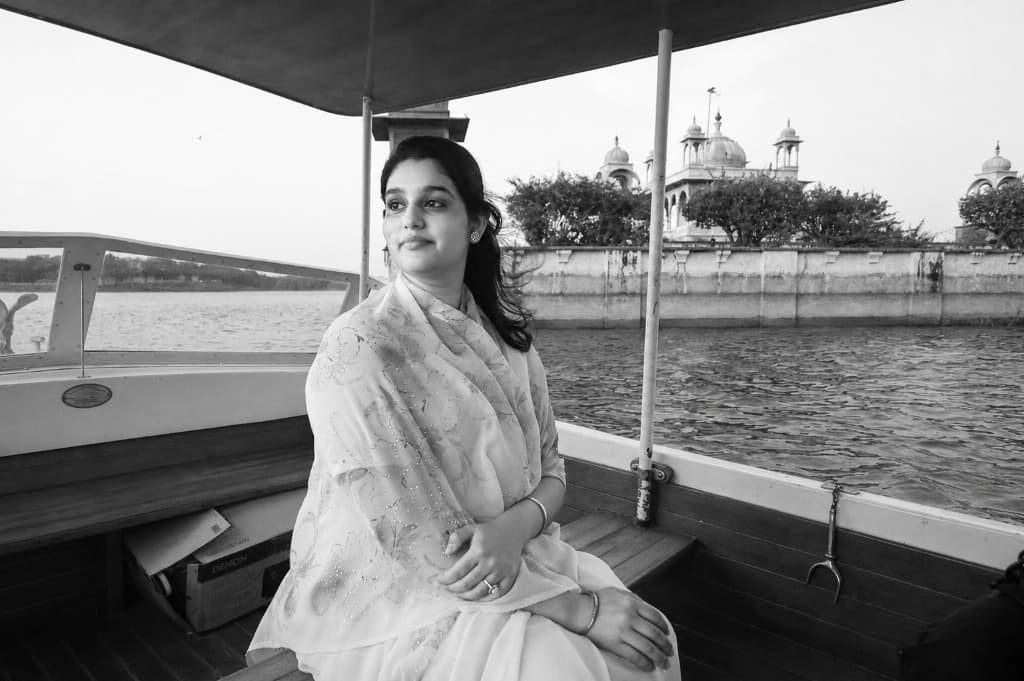
Aaliya Sultana Babi is a member of the Balasinor royal family and custodian of the dinosaur heritage of Raiyoli, known widely as the "Dinosaur Princess".
The custodians, artists and visionaries carrying India's legacies into the present.
Shivanjali Kumari Dungarpur
Conservation, wildlife photography and royal patronage in southern Rajasthan.
The Architect of the Modern Jodhpur Cut
Bridging royal tailoring heritage and international luxury design for modern couture.
Receive our finest long-form profiles, cultural essays and archival dispatches directly to your inbox.