
India is the luxury travel market the global hospitality industry keeps underestimating. The numbers are no longer ambiguous: Indian outbound tourism spend reached an estimated $34 billion in 2024, and the most widely cited forecasts place it on a trajectory toward $55 billion by 2034. Within that figure sits a smaller cohort that matters more than the aggregate — roughly 350,000 high-net-worth individuals whose average international trip spend exceeds $12,000, placing them among the highest-value travellers in the world.
Yet ask a room of global hotel marketing directors to describe the Indian luxury consumer and the answers remain strikingly thin. "Affluent." "Brand-conscious." "Growing." The adjectives are correct and nearly useless. The global industry has spent three decades building sophisticated mental models of the American, European, Middle Eastern and Chinese luxury traveller. The Indian traveller remains, for most brands, an emerging-market afterthought — a smaller, warmer-weather variation on a market they believe they already understand.
This briefing is written to correct that. It is not a market-sizing exercise; those are widely available. It is a strategic map for global hospitality brands — hotel groups, resort operators, destination marketers and the agencies that serve them — covering the structure of Indian luxury demand, the decision architecture that governs it, and the entry strategy most likely to convert India's scale into commercial advantage.

The Durbar Hall at Umaid Bhawan Palace — Indo-Deco mastery, where Art Deco geometry meets Rajput ornament beneath zodiac-painted ceilings
Designed by Polish artist Stefan Norblin, who fled wartime Europe to paint murals for Indian maharajas, the Durbar Hall exemplifies why Indian heritage is an asset class no global brand can replicate. It offers a commercial proposition — provenance, event revenue, brand association — that no amount of new-build investment can manufacture. This is the structural advantage at the centre of India's luxury travel market.
1. The Structure of Indian Luxury Demand
The first thing to understand is that Indian luxury travel demand is not one market but three overlapping ones, each with distinct dynamics: domestic luxury, outbound luxury, and what might be called the "heritage premium" — the uniquely Indian phenomenon of palace and heritage hospitality that sits between the two.
Domestically, India's luxury hotels are anchored by an extraordinary concentration of living heritage. Rajasthan's palace hotels — Umaid Bhawan, Rambagh, the Lake Palace — command RevPAR premiums of 60 to 120 percent over comparable luxury chain properties in the same markets, according to hospitality industry benchmarks. This is not a marginal advantage; it is the commercial expression of an asset class — genuine, continuous cultural heritage — that cannot be built, bought, or relocated.
Outbound, the same consumer who stays in a palace in Udaipur is chartering villas in Lake Como and taking suites at Cheval Blanc. The two markets are not separate; they are served by the same consumer and the same decision architecture. A global brand that understands the Indian guest domestically gains privileged access to their outbound decisions, and vice versa. Treating them as distinct markets is the first, most common strategic error.
“The Indian luxury traveller is not a smaller version of the Chinese outbound market. They are a distinct segment with distinct decision architecture.”
2. Three Pillars: Celebration, Family, Cultural Signalling
What distinguishes the Indian HNW traveller from comparable segments elsewhere is the primacy of three factors, each of which has direct operational and marketing implications.
The first is celebration. India's premium leisure travel is disproportionately event-driven. Destination weddings, milestone birthdays, anniversary journeys and multi-generational reunions account for an estimated 40 to 50 percent of premium leisure bookings from Indian source markets, according to travel industry data. A hotel is not merely selling a holiday to an Indian guest; it is hosting what may be the most significant family gathering of the decade. The operational requirements — food-and-beverage flexibility, spatial configuration, privacy protocols, elder accessibility — are substantial and routinely underestimated by brands that treat the Indian guest as a generic luxury consumer.
The second is family. The Indian luxury travel decision is rarely individual. It involves consultation across generations, with the senior family member often retaining final authority even when younger members conduct the research and make the recommendations. The daughter is researching on Instagram; the son is comparing on TripAdvisor; the parents are evaluating through a trusted travel advisor. A single-channel, single-decision-maker marketing strategy fails before it begins.
The third is cultural signalling. Indian luxury consumers increasingly value experiences that demonstrate cultural intelligence rather than pure expenditure. A suite upgrade is pleasant; a private audience with a master craftsman, a chef's table built around regional Indian ingredients reimagined through French technique, or access to a collection not open to the public signals something more potent — that the traveller possesses taste, not merely money.
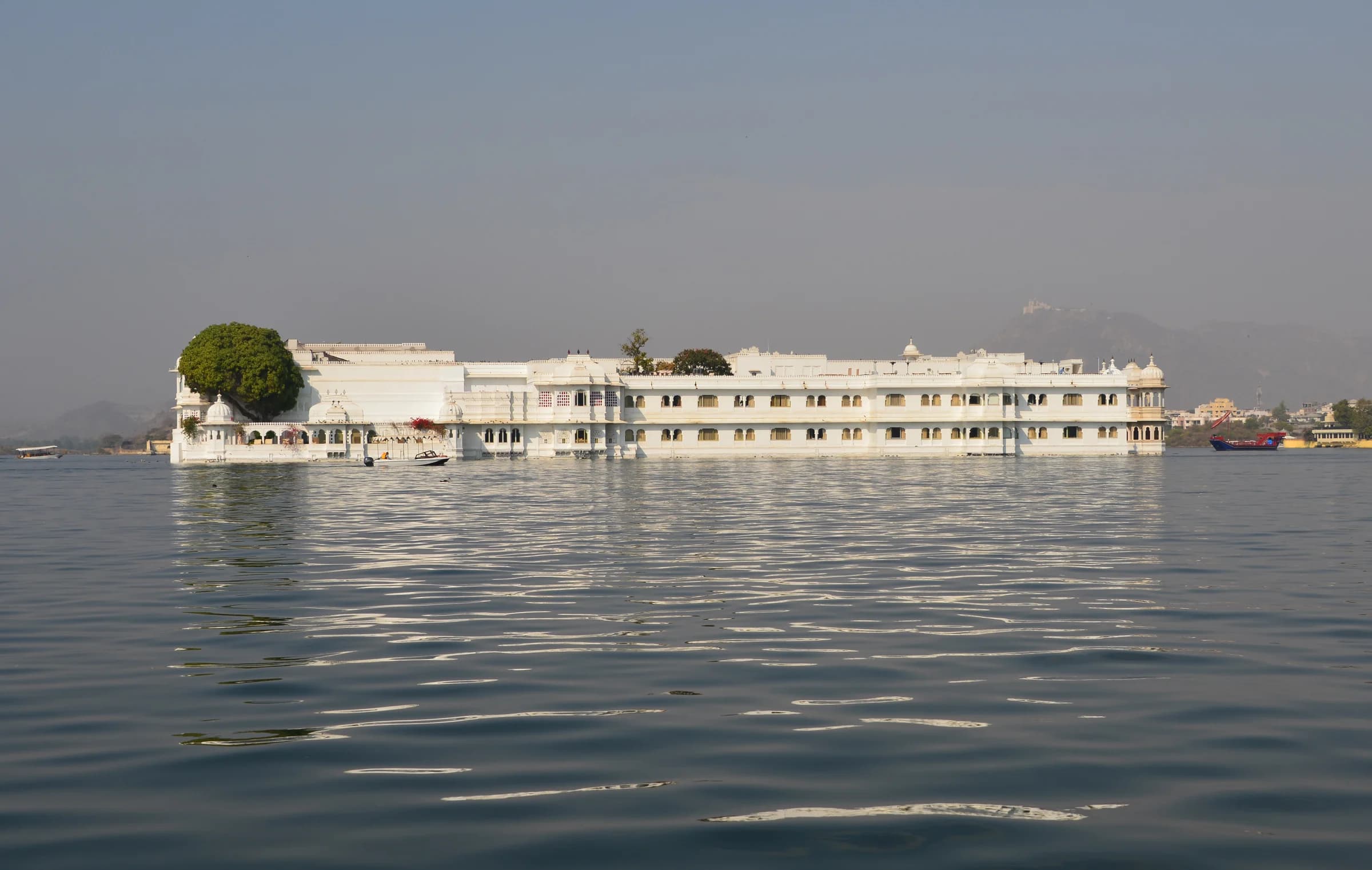
Taj Lake Palace at twilight — four centuries of Mewar royalty distilled into the world's most romantic hotel, accessible only by private boat
The Lake Palace demonstrates how cultural specificity converts into pricing power. Built between 1743 and 1746 on a four-acre rock foundation, it could exist nowhere but Udaipur — which is precisely why its 65 rooms and 18 grand royal suites maintain occupancy and average daily rates that would be the envy of any urban luxury hotel. Global brands entering India should study this property less as a competitor and more as a benchmark.
3. Where Global Brands Misjudge the Market
The most common miscalculations global brands make in India are predictable, and they are all failures of cultural intelligence rather than of resources.
The first is treating the Indian guest as a generic luxury consumer. Global standards of service, design and brand discipline are necessary — the Indian luxury consumer is among the most travelled and discerning in the world, and they recognise the world's leading brands with the same fluency they recognise leading watch and automobile marques. But standards are the entry ticket, not the differentiator. The brands that win add a layer of cultural understanding that the standard playbook does not provide.
The second is marketing to a single decision-maker. The multi-generational nature of Indian luxury decisions means a campaign that speaks only to the millennial researcher, or only to the senior authoriser, misses the others. Effective campaigns address the researching daughter, the comparing son and the authorising parents simultaneously — aspirational imagery for the younger generation, operational reassurance for the older.
The third is underweighting celebration. Brands that design for individual leisure and find themselves unable to accommodate a 400-guest wedding, a multi-day multi-ceremony event, or a three-generation family reunion, have simply not understood what Indian luxury demand is for. The celebration economy is not a niche; it is the centre of gravity.
The fourth is competing on status rather than cultural intelligence. In a market where "luxury" is increasingly available to anyone with a credit card, the Indian consumer's premium increasingly attaches to experiences that signal taste, access and cultural fluency. Brands that sell status are competing on a commodity; brands that sell cultural intelligence are competing on a moat.
“The properties that outperform do so because they are impossible to separate from their location. They are destinations before they are hotels.”
4. The Competition You Are Not Watching
Global brands entering India typically benchmark against other global brands. The more instructive benchmark is the Indian heritage sector itself.
Consider the competitive logic. A new luxury resort in the Maldives competes with every other overwater villa in the Maldives. A ski lodge in Gstaad competes with every other Alpine property at its price point. Differentiation in these markets is expensive, incremental and easily replicated. India's palace and heritage hotels operate within a moat that no competitor can breach: you cannot build a 15th-century Rajput fortress in the South of France, and you cannot manufacture four centuries of continuous lineage for a new resort in Cabo.
The data confirms the moat's commercial value. Palace hotels in Rajasthan sustain pricing power, occupancy and brand equity that conventional luxury properties in equivalent markets cannot match. The Oberoi Amarvilas, with its uninterrupted Taj Mahal view, achieves average daily rates significantly above Agra's other luxury properties. The Taj Lake Palace, accessible only by private boat, maintains occupancy levels that would be exceptional for any urban luxury hotel. These are not accidents of location; they are the pricing of provenance.
The strategic implication for global brands is not to attempt to replicate heritage they cannot possess. It is to understand that in India, the local benchmark for luxury is defined by heritage, and to position accordingly — through partnership, cultural integration and editorial storytelling rather than through head-on product competition.
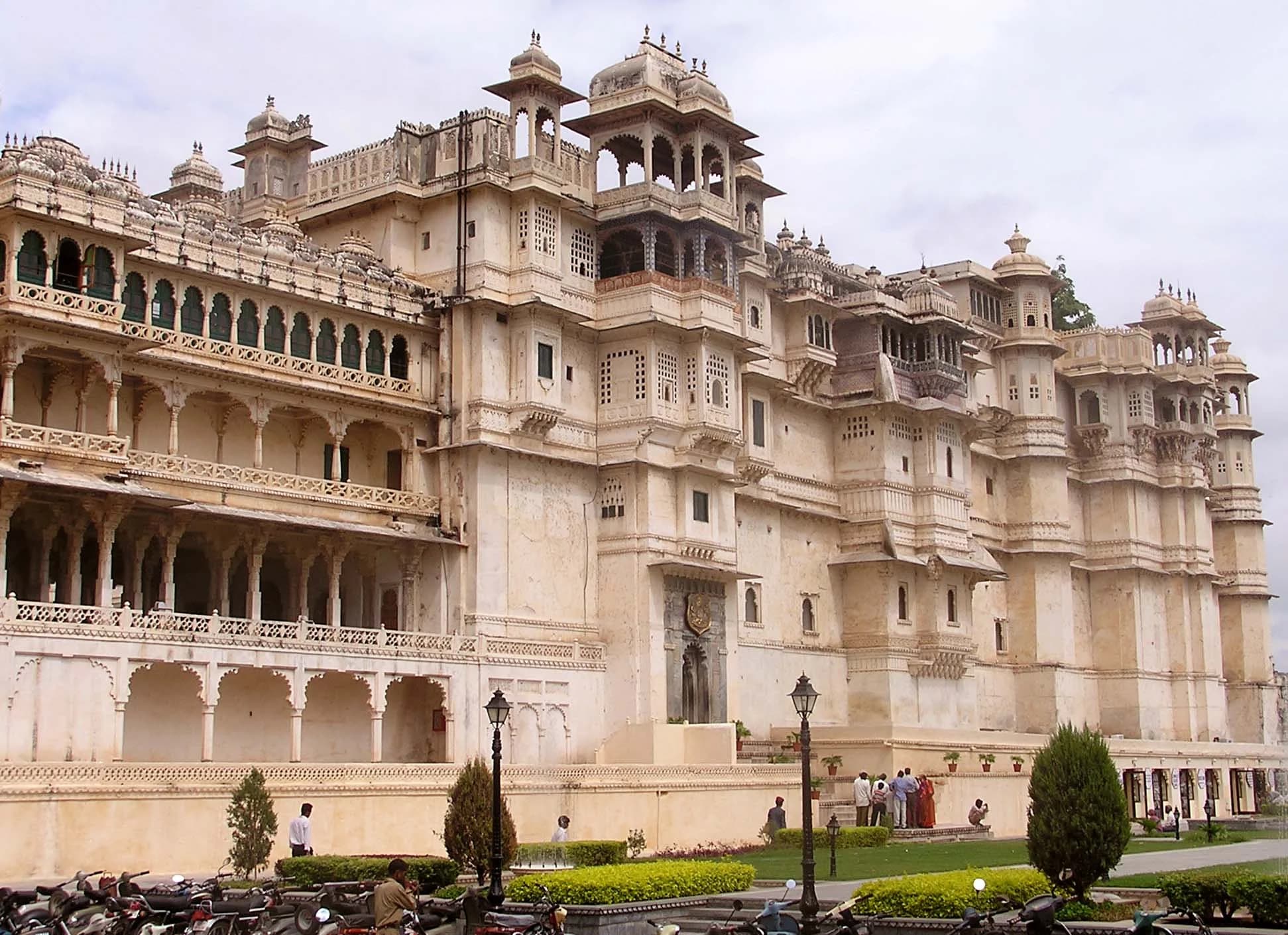
City Palace Udaipur — the largest palace complex in Rajasthan, a labyrinth of courtyards and galleries built over four centuries by the Sisodia dynasty
The City Palace is a reminder that India's luxury narrative is architectural and continuous rather than designed and recent. For a global brand, the lesson is not to copy such heritage but to align with it — through partnership, programming and storytelling — so that the brand participates in a cultural context older and richer than any it could construct alone.
5. Entry Strategy: Partnership Over Presence
The most effective entry strategy for a global brand in India is almost always partnership over presence.
The reasons are structural. India's luxury market rewards cultural depth, ecosystem integration and editorial credibility — all of which take years to build and none of which a standard new-build entry provides. A global brand that enters alone, with a beautiful product and a familiar playbook, arrives as an outsider to a market that privileges the specific over the generic. A brand that enters through partnership — with an established Indian operator, a heritage property, a network of luxury travel advisors, or a cultural institution — borrows the local credibility it would otherwise spend years earning.
This principle extends beyond the deal structure to the marketing layer. Editorial storytelling in trusted Indian and international publications generates what the industry calls "borrowed credibility": the authority of the publication transfers to the subject of the story. Among HNW consumers, editorial mentions and peer recommendations outweigh paid advertising as decision drivers by margins of three to one or greater. For a global brand entering India, the most valuable early investment may not be an additional programmatic campaign but the cultivation of relationships with publications whose editorial authority aligns with the brand's positioning.
For Global Hospitality Brands
The Indian luxury travel market rewards cultural intelligence over scale, partnership over presence, and editorial authority over advertising. A brand that enters with a standard product and a familiar playbook competes on commodity terms in a market that privileges the specific. A brand that enters through partnership, localisation and editorial storytelling borrows the credibility that takes a decade to earn. Explore how THE ROYAL GALLERYS partners with global hospitality brands →
6. The Strategic Opportunity
India's HNW traveller does not need to be convinced that luxury exists. They have experienced it — at Amanpulo and Amangiri, at Cheval Blanc and Château Saint-Martin, at palace hotels in Rajasthan and private villas in the Maldives. They recognise the world's leading hotel brands with the same ease they recognise the world's leading watch and automobile marques.
The opportunity for global hospitality brands is therefore not to introduce themselves. It is to make themselves matter.
India's advantage in this competition is structural and permanent. Its palaces, its landscapes, its craftsmanship, its cuisine, its celebrations and its living cultural traditions constitute an asset base that no competitor can duplicate. The brands that understand how to translate those assets into contemporary luxury experiences — into privacy, provenance, wellness, celebration and story — will define the industry's next chapter not only in India but globally.
The question is not whether India matters to global hospitality. It is whether global hospitality understands how to matter to India.
For Global Hospitality Brands
THE ROYAL GALLERYS provides a premium editorial environment and brand-storytelling platform at the intersection of Indian royalty, heritage, luxury hospitality, travel and culture. For selected hotels, resorts, destinations and luxury travel brands, we offer editorial features, digital storytelling, print visibility and brand-narrative development — all within a publication whose editorial authority reaches the audiences that matter most to luxury hospitality. Explore partnership opportunities →
Frequently Asked Questions
How large is India's luxury travel market in real terms? Indian outbound tourism spend reached an estimated $34 billion in 2024 and is projected to approach $55 billion by 2034. Within this, roughly 350,000 HNW individuals spend an average of over $12,000 per international trip. The domestic luxury market is comparably significant — Rajasthan's palace hotels generate RevPAR premiums of 60–120 percent over comparable luxury chain properties.
What makes the Indian luxury traveller distinct from other markets? Three factors: celebration (an estimated 40–50 percent of premium leisure bookings are event-driven), multi-generational family decision-making (seniors often retain final authority), and cultural signalling (experiences demonstrating taste and cultural intelligence increasingly outperform pure status expenditure as decision drivers).
Should global brands prioritise the domestic or outbound Indian market? Both, because they are served by the same consumer and the same decision architecture. The Indian luxury traveller compares international and domestic options in the same consideration set — a palace in Udaipur and a villa in Lake Como compete directly. Brands that understand Indian guests domestically gain privileged access to their outbound decisions, and vice versa.
Where do global luxury brands most often misjudge the Indian market? Most commonly by treating the Indian guest as a generic luxury consumer, marketing to a single decision-maker rather than a multi-generational family, underweighting the operational requirements of Indian celebrations, and competing on status rather than cultural intelligence. The brands that win localise their understanding without diluting their standards.
What is the most effective entry strategy for a global brand in India? Partnership over presence — aligning with established Indian operators, heritage properties, luxury travel advisors and cultural institutions rather than entering alone with a standard product. Ecosystem integration, editorial credibility, and culturally intelligent positioning outperform conventional market-entry playbooks.
Why does editorial media matter for global brands entering India? Editorial coverage generates borrowed credibility — the authority of a trusted publication transfers to the subject. Among HNW consumers, editorial mentions and peer recommendations outweigh paid advertising as decision drivers by margins of 3:1 or greater, making editorial authority strategically essential for brands seeking relevance rather than mere visibility.