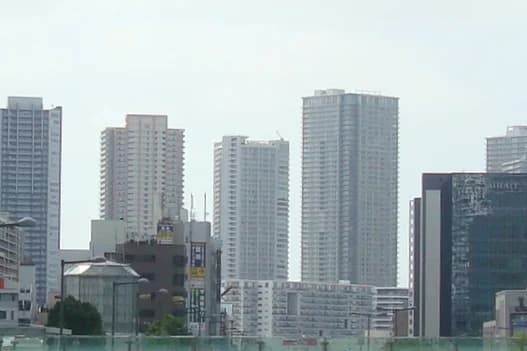
Tokyo does not introduce itself; it engulfs you. Forty million people live in the greater metropolitan area, making it the most populous urban agglomeration in human history, and the sheer kinetic force of the place — the LED rivers of Shibuya, the pachinko parlour cacophony, the salarymen streaming through Shinjuku Station (three and a half million passengers a day through what is the world's busiest transport hub) — can feel like a sensory assault engineered to overwhelm. But stay a day longer. Wake early and walk to a neighbourhood shrine, where a priest in white robes sweeps the entrance and the only sound is the clack of a wooden *sotoba* tablet in the breeze. Descend into a basement izakaya in Yurakucho, where the master has been grilling yakitori over binchotan charcoal for forty years and the seats number seven. Tokyo's genius lies in this oscillation between the epic and the miniature, the hypermodern and the ancient, the crowd and the cocoon. It is the world's most fascinating city not despite its contradictions, but because of them.

/images/experiences/23-tokyo/img-01.webp
The Shibuya Scramble, directly outside Shibuya Station's Hachiko Exit, is the busiest pedestrian intersection on Earth — approximately 3,000 people cross with each green-light cycle during peak hours, and over 250,000 pedestrians traverse the diagonal daily. The current configuration dates to the 1970s, when the area was transformed from a quiet residential district into Tokyo's youth culture epicentre following the 1964 Olympics and the opening of the Shibuya 109 department store. The LED billboards that now dominate the surrounding buildings, particularly the five-panel array on the QFRONT building, have drawn comparisons to Times Square — but Shibuya's vertical layering and narrow street canyon create a more immersive, almost cocooning urban spectacle.
Photo: Photo courtesy of Tokyo Convention & Visitors Bureau
Begin with the sacred, because it sets the scale of Tokyo's layering. Senso-ji, Tokyo's oldest temple, stands at the heart of Asakusa, a district that preserves the atmosphere of Edo-era shitamachi (low city) amidst the towers. Legend holds that in 628, two fishermen pulled a statue of Kannon, the goddess of mercy, from the Sumida River, and the temple was founded to enshrine her. The approach, Nakamise-dori, is a 250-metre shopping street lined with stalls selling ningyo-yaki (doll-shaped cakes), fans, and souvenirs — touristy, yes, but also a direct descendant of the Edo-period merchants who sold to pilgrims. Pass through the Kaminarimon (Thunder Gate) with its enormous red paper lantern, through the Hozomon gate, and into the main hall, where incense smoke billows and worshippers toss coins into the offering box with a clatter that echoes through the centuries. Behind the temple, the narrow streets of Hoppy Street and the izakaya alleys feel like a Showa-era film set.
A twenty-minute subway ride west deposits you at the torii gate of Meiji Jingu, a Shinto shrine dedicated to Emperor Meiji and Empress Shoken, completed in 1920 and surrounded by a 170-acre forest of 120,000 trees donated from across Japan. The approach is a broad gravel path through towering cryptomeria and cypress — the city's noise fades within fifty metres, replaced by birdsong and the crunch of footsteps. The shrine itself is an exercise in austere Shinto aesthetics: unpainted cypress, a copper roof, and the vast peace of a sacred space. On a Sunday morning, you may witness a traditional Shinto wedding procession, the bride in a white kimono and hood, the groom in a black haori, led by priests beneath a red parasol. Write your wish on an ema wooden plaque, buy an omamori amulet, and feel, for a moment, the presence of the deep Japan that survives beneath the neon.
“Tokyo is a city that never reveals itself completely. The second you think you understand it, it changes into something else entirely.”
The counterweight to serenity is Shinjuku, the district that never stops. Shinjuku Station handles more passengers than any other station on earth; its warren of underground passages and 200 exits is the stuff of legend and missed meetings. Above ground, the west side bristles with skyscrapers — the Tokyo Metropolitan Government Building offers free observation decks with views that, on a clear day, stretch to Mount Fuji, a cone of white hovering improbably on the horizon. The east side is Shinjuku's id: Kabukicho, Japan's largest red-light district, a riot of neon, host-club billboards, and the famous Godzilla head atop the Hotel Gracery; Golden Gai, a grid of six narrow alleys containing some 200 tiny bars, each seating four to ten people, each with its own theme (jazz, cinema, punk, French chanson), each a portal to a private Tokyo; and Omoide Yokocho, or "Piss Alley," where yakitori smoke fills the narrow lane and office workers spill out of closet-sized eateries clutching beer bottles. Golden Gai is the one essential: go with a Japanese speaker if you can, or pick a bar with an English sign and a welcoming owner, and order a highball. You will leave with stories.
Shibuya is Shinjuku's younger, more fashionable sibling, and its scramble crossing is the most famous pedestrian intersection on the planet — a thousand people surge from all directions with each green light, an orderly explosion of humanity. The new Shibuya Sky observation deck, atop the Scramble Square tower, opened in 2019 and offers an open-air rooftop with a 360-degree view and a thrilling escalator ride through a glass tube up the side of the building. Shibuya's backstreets hold gentler pleasures: the trendy boutiques of Cat Street, the vinyl shops and vintage stores, the tiny coffee stands where baristas in leather aprons brew single-origin pour-overs with monastic focus. The Hachiko statue outside the station commemorates the famously loyal Akita dog who waited for his deceased master every day for nine years; it is Tokyo's most popular meeting spot and a reminder that the city's heart beats beneath its chrome surface.

/images/experiences/23-tokyo/img-02.webp
Hachiko, an Akita dog born in 1923, accompanied his owner — Professor Hidesaburo Ueno of the University of Tokyo — to Shibuya Station each morning and returned to meet him each evening. After Ueno died suddenly at work in 1925, Hachiko continued waiting at the station every day for the next nine years, nine months, and fifteen days until his own death. The original bronze statue, sculpted by Teru Ando, was unveiled in 1934 with Hachiko himself in attendance; it was melted down for the war effort in 1944, and the current statue, by Ando's son Takeshi, was installed in 1948 and has remained Tokyo's most popular meeting spot ever since.
Photo: Photo courtesy of Tokyo Convention & Visitors Bureau
Tokyo's culinary supremacy is statistical fact. With more Michelin-starred restaurants than any other city — over 200 at last count — it is the world's dining capital by every measure. But the numbers obscure the texture of the experience. At **Sukiyabashi Jiro** in Ginza, the octogenarian master Jiro Ono (or his son, Yoshikazu, who now runs the counter) serves a twenty-course omakase of Edomae sushi that lasts perhaps thirty minutes — each piece of fish, aged and vinegared to exacting standards, placed on the counter the moment you swallow the previous. The famous documentary *Jiro Dreams of Sushi* immortalised it; a reservation requires luck, connections, and a significant outlay. But Tokyo's sushi brilliance extends from the three-star temples down to the standing sushi bars beneath train tracks and the conveyor-belt chains like Sushiro, where plates cost ¥100 and the quality defies the price. The Tsukiji Outer Market, though the inner wholesale market moved to Toyosu in 2018, remains a gastronomic wonderland: stalls selling tamago (rolled omelette) on sticks, grilled scallops with butter, tuna sashimi sliced to order, and the best uni (sea urchin) you will ever taste, briny and sweet, scooped from spiky shells before your eyes.
“In Tokyo, you can eat a different cuisine every night for a year and never repeat a restaurant — and every meal will be good.”
For the luxury traveller, Tokyo's hotels are destinations unto themselves. **Aman Tokyo** occupies the top six floors of the Otemachi Tower, its lobby a soaring thirty-metre-high atrium of washi paper and wood that channels a modernist cathedral. The pool, a black-stone rectangle overlooking the Imperial Palace gardens, is among the most beautiful urban swimming experiences in the world. The **Palace Hotel**, rebuilt in 2012 on the edge of the Imperial Palace moat, offers rooms with balconies — a rarity in Tokyo — and a French-Japanese restaurant, Esterre, overseen by Alain Ducasse. The **Mandarin Oriental** in Nihonbashi sits atop the Mitsui Tower, its rooms claiming spectacular views of the Skytree and Mount Fuji, and its spa is routinely ranked among Asia's finest. At a slightly more accessible price point, **Trunk Hotel** in Shibuya and the **K5** in Nihonbashi (a 1920s bank building converted into a designer stay by Claesson Koivisto Rune) define Tokyo's new wave of boutique hospitality.

/images/experiences/23-tokyo/img-03.webp
Aman Tokyo, designed by Australian architect Kerry Hill and opened in 2014, occupies the top six floors of the Otemachi Tower — the first urban Aman property in the brand's portfolio. The lobby's 30-metre-high central atrium is lined with panels of mulberry-bark washi paper, evoking the translucent shoji screens of a traditional ryokan enlarged to cathedral scale, while a massive ikebana floral arrangement and a water feature carved from a single block of basalt anchor the space. The design synthesises Japanese aesthetic principles — ma (negative space), wabi-sabi (imperfect beauty), and shakkei (borrowed scenery) — within a thoroughly contemporary architectural framework, framing views of the Imperial Palace gardens as a living scroll.
Photo: Photo courtesy of Aman Resorts
Then there is Ginza — the world's most expensive real estate, a grid of designer flagships (Uniqlo's twelve-floor global flagship, the futuristic Maison Hermès, Mikimoto's pearl emporium), art galleries hidden on the sixth floors of office buildings, and the Kabuki-za theatre, where traditional kabuki plays are performed in a baroque 2013 reconstruction of the 1889 original. Even if you do not understand the language, the spectacle — the elaborate costumes, the stylised gestures, the cries of the audience — is one of Tokyo's essential cultural experiences; single-act tickets are available at the door. Ginza is also home to some of the world's finest cocktail bars. **Bar High Five**, hidden on the fourth floor of an anonymous building, is run by Hidetsugu Ueno, a master who carves ice diamonds by hand and mixes drinks with the precision of a surgeon. **Star Bar**, in the basement, is a wood-panelled jewel box where Hisashi Kishi, a silver-haired gentleman in a white tuxedo, shakes martinis and tells stories in careful English.
For an experience that blurs the line between art, technology, and pure wonder, **teamLab Borderless** in Azabudai Hills (it relocated from Odaiba in 2024) and **teamLab Planets** in Toyosu are immersive digital-art spaces where projections of flowers, waterfalls, and koi fish flow across walls, floors, and visitors, creating interactive dreamscapes that dissolve the boundary between viewer and artwork. Go early or late to avoid the densest crowds; book online well ahead. It is Instagram heaven, yes, but it is also genuinely transporting, and children and adults alike emerge wide-eyed.
Tokyo Transport Mastery
Tokyo's rail network looks like a plate of neon spaghetti on a map, but the city has tamed it brilliantly. Get a Suica or Pasmo IC card (available at any station machine; they work on trains, subways, buses, and even at vending machines and convenience stores) and let Google Maps guide you. It will tell you which exit to use, which platform to stand on, and even which car to board for the fastest transfer. The JR Yamanote Line, a green loop that circles the city, connects most major districts (Shinjuku, Shibuya, Harajuku, Tokyo Station, Ueno). The subway network fills in the gaps. Taxis are expensive — a trip from Shinjuku to Ginza can cost ¥4,000-5,000 — but after midnight, when the trains stop, they are the only option. The limousine bus from Narita or Haneda airport to your hotel is often more convenient than the Narita Express or Keikyu trains, especially with luggage. Always carry cash (small restaurants and bars often do not accept cards), and remember: Tokyo's ATMs that accept foreign cards are in 7-Eleven convenience stores and post offices, not in every bank.
Day Trips: Hakone and Nikko
Tokyo's gravitational pull is powerful, but two extraordinary day trips lie within easy reach. **Hakone**, ninety minutes by the Romancecar limited express from Shinjuku, is a hot-spring town in the shadow of Mount Fuji, centred on a volcanic caldera lake. The Hakone Free Pass (¥6,100 for two days) covers the round trip and all transport within the area, including the scenic pirate-ship cruise across Lake Ashi, the ropeway over the volcanic valley of Owakudani (famous for black eggs boiled in hot springs — eating one is said to add seven years to your life), and the mountain railway that zigzags up through hydrangea-filled hillsides. On a clear day, the view of Fuji from the lake, snow-capped and symmetrical, is one of the great images of Japan.
**Nikko**, two hours north of Asakusa on the Tobu line, is a temple complex unlike any other in Japan. The Toshogu Shrine, the mausoleum of Tokugawa Ieyasu — the shogun who unified Japan in 1600 — is an explosion of polychrome carving, gold leaf, and lacquer so maximalist it makes Versailles look restrained. The famous carving of the three wise monkeys — "see no evil, hear no evil, speak no evil" — is here, but so are elephants, dragons, and peonies carved with astonishing detail by artists from across seventeenth-century Japan. The surrounding forests of cryptomeria trees, planted by a lord too poor to offer a stone lantern, form avenues of cathedral-like grandeur. Kegon Falls, one of Japan's three great waterfalls, plunges 97 metres from a cliff near Lake Chuzenji, a cobalt-blue alpine lake that fills a volcanic crater.
Frequently Asked Questions
**How many days do I need in Tokyo?** Five full days is a solid introduction. Allocate one day each to: Asakusa and Ueno (temples, museums, old Tokyo), Shinjuku and Shibuya (modern Tokyo, shopping, nightlife), Ginza and Tsukiji (luxury, food, Kabuki), Harajuku and Omotesando (fashion, design, coffee), and one for a day trip to Hakone, Nikko, or the seaside city of Kamakura. If you have a week, add a day for Roppongi's museums (Mori Art Museum, the National Art Centre) and the teamLab installations.
**When is the best time to visit?** Spring (late March to April) brings cherry blossoms and hanami picnics, particularly beautiful along the Meguro River and in Ueno Park. Autumn (November) offers crisp days and ginkgo trees turning brilliant yellow along the Icho Namiki avenue. Both seasons are peak tourist periods. Summer (June to August) is hot and humid but brings festivals — the Sumida River Fireworks in July are a highlight. Winter (December to February) is dry, cold, and clear, with the best views of Mount Fuji and far fewer tourists.
**Is Tokyo expensive?** It can be luxury-level expensive or surprisingly affordable. A bowl of ramen costs ¥800-1,200; a set lunch at a good sushi restaurant, ¥2,000-4,000; a room at a mid-range business hotel, ¥12,000-20,000. The city's best-value meal is the *teishoku* (set meal) at a neighbourhood restaurant: miso soup, rice, pickles, a main dish (grilled fish, tonkatsu, tempura), and often a small salad, for ¥1,000-2,000, often served with more care than meals costing ten times that in other world capitals.
**Do I need to speak Japanese?** No, but learning a handful of phrases — *sumimasen* (excuse me/sorry), *arigato gozaimasu* (thank you), *eigo no menyu wa arimasu ka* (do you have an English menu?) — will transform your experience. Many restaurants have English menus or picture menus; train announcements are bilingual. Tokyo is one of the world's most foreigner-friendly cities.
**What about etiquette?** Don't tip — it can be seen as rude. Stand on the left on escalators in Tokyo (but on the right in Osaka — it is one of Japan's enduring regional mysteries). Don't eat while walking. Remove your shoes when you see tatami mats or a sign indicating you should. Bow when greeting people; a slight nod is sufficient for casual interactions. And never, ever stick your chopsticks vertically into a bowl of rice — it resembles a funeral ritual.

/images/experiences/23-tokyo/img-04.webp
Mount Fuji, at 3,776 metres Japan's highest peak and one of the world's most recognisable stratovolcanoes, has been a sacred site for Shinto and Buddhist practitioners since at least the 7th century. The mountain is visible from Tokyo on clear days — roughly 80 days per year — and the best viewing windows are winter mornings after a cold front has swept the atmosphere clean. The juxtaposition of Fuji's symmetrical cone with Tokyo's glass-and-steel towers captures Japan's defining tension: the eternal and the ephemeral, the sacred and the hypermodern, sharing the same frame as naturally as they share the same archipelago.
Photo: Photo courtesy of Tokyo Metropolitan Government