The Sangeet: Music and the Celebration of Arrival
The sangeet is, for most families, the moment the wedding begins in earnest — an evening of music, dance and rehearsed performance that gathers both families in celebration before the more solemn rites that follow. Its name descends from the Sanskrit for music, and song remains its animating force, though the contemporary sangeet has grown into a production in its own right, with choreographed performances that relatives and friends have prepared over many weeks.
The sangeet was historically a more intimate affair, the occasion on which the women of both households sang the traditional wedding songs, many of them threaded with gentle, affectionate teasing of the bride and groom. In the royal and aristocratic courts this musical evening was raised into a grand court performance — trained musicians, classical repertoire and an audience assembled in durbar halls and palace courtyards.
The regional variation is considerable. In Punjab the emphasis falls on the jaggo, a lantern-lit procession of song and dance; in Gujarati and Rajasthani traditions the garba and ghoomar shape the evening; elsewhere the night belongs to folk song and family performance. What unites every version is a single idea: that a wedding should begin with joy, and that joy should be sung.
“A wedding should begin with joy, and that joy should be sung.”
The Mehndi and Haldi: Adornment and Purification
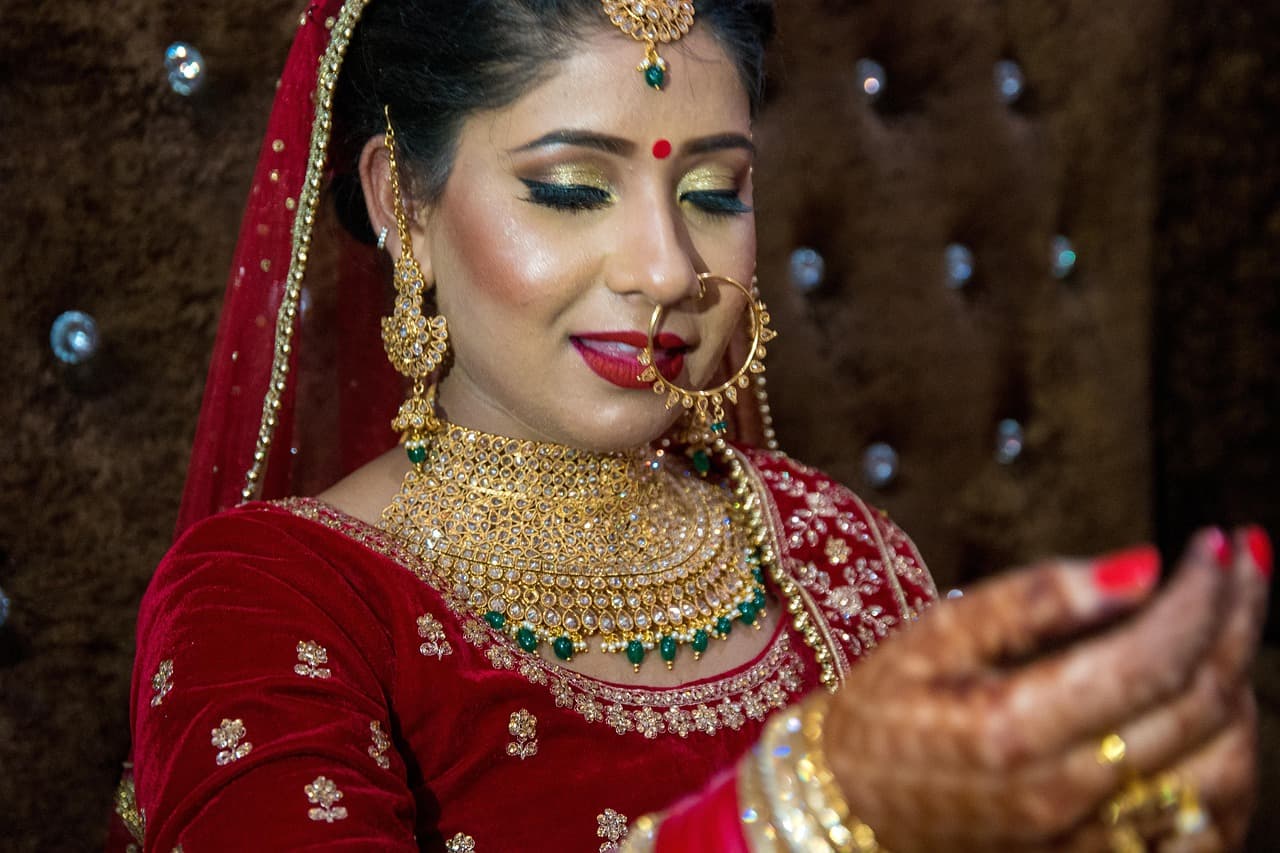
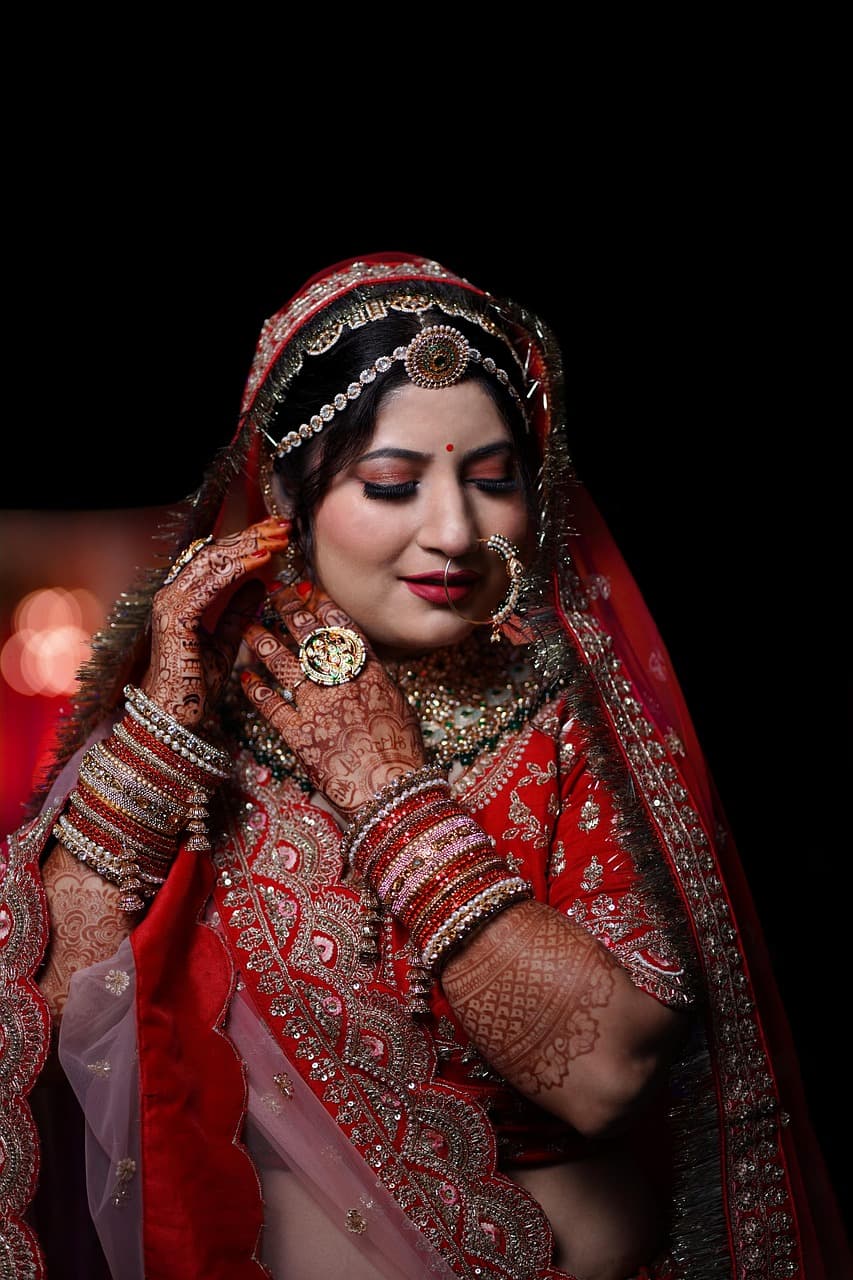
Two of the most cherished pre-wedding ceremonies — the mehndi and the haldi — are concerned less with spectacle than with preparation, and their intimacy is precisely their charm. The mehndi is the ceremony of henna, in which intricate patterns are applied to the bride's hands and feet in a sitting that can last hours. The designs are at once decoration and symbol: within the arabesques the groom's initials are traditionally concealed, and the depth of the resulting stain is read, affectionately, as an omen of the warmth of the marriage.
The haldi is a rite of purification, in which a paste of turmeric, sandalwood and rosewater is applied to the bride and groom in their respective homes, often by the married women of the family. Turmeric is revered for its cleansing and auspicious properties, and the golden cast it leaves is understood to bestow protection and radiance ahead of the wedding day.
In royal households these domestic rites grew grander without ever losing their tenderness — the haldi paste prepared with saffron and sandalwood, the mehndi applied by master artists whose hand evoked court painting. The rituals survived the palaces intact because, at their core, they were always family ceremonies.
The Baraat: The Groom's Procession
The baraat is the wedding's great processional — the arrival of the groom at the wedding venue accompanied by his family and friends in a celebration that is loud, musical and unashamedly joyful. Historically the groom travelled on horseback or, in aristocratic and royal weddings, on a decorated elephant; today the elephant is often exchanged for a decorated car, but the spirit of the procession is unchanged.
The baraat is a rite of welcome as much as arrival. It is met at the threshold by the bride's family in the milni, a ceremony in which members of the two families greet one another formally, and the groom is received with the aarti, a ritual of light and blessing performed by the bride's mother. The threshold — the door or gate — is itself sacred, and the rites enacted there mark the groom's passage from one family into another.
In the royal courts the baraat was also a display of lineage and standing, a public declaration of the alliance being formed. The processions could be vast, but their meaning remained intimate: the groom, arriving to be received, claimed and welcomed into the household that awaited him.
“The pheras are the only truly private moment in a wedding that is otherwise emphatically public.”
The Pheras and the Reception: The Sacred Circle and the Public Celebration
The pheras are the spiritual heart of the Hindu wedding — the circumambulation of the sacred fire, the agni, during which the couple make vows that bind them to one another. The fire serves as witness to the marriage, and each circuit, led by the bride, carries a specific commitment: to nourish one another, to grow together in strength, to share in prosperity and faith, and to remain companions through every season of life.
The pheras are, in a sense, the only truly private moment in a wedding that is otherwise emphatically public — the ritual that makes the marriage real, however elaborate the setting that surrounds it. Its companion rite, the saptapadi, the seven steps, completes the binding act.
The reception, by contrast, is the wedding's public face — an evening of formal hospitality in which the newly married couple are presented to the extended community. In royal weddings this final celebration was the grandest of all: a durbar of guests, entertainment on a courtly scale, and the couple presented as the newest branch of a continuing lineage. The reception closes the sequence, but it is the pheras that seal it.
The Royal Gallerys Perspective
THE ROYAL GALLERYS treats these rituals not as a checklist but as the architecture of meaning that makes the Indian wedding extraordinary. The sangeet, the mehndi, the haldi, the baraat, the pheras and the reception are not separate events but a single coherent narrative — of joy, adornment, purification, arrival, commitment and public celebration.
What the royal and aristocratic courts did was not to invent these ceremonies but to elevate them: to give the sangeet a durbar, the mehndi a court artist, the baraat an elephant, the pheras a palace. That elevation is the legacy that defines the luxury Indian wedding today, and it is one we document with the seriousness it deserves.
For those planning or celebrating such a wedding, our pages offer editorial guidance grounded in the culture itself. Brands and venues that wish to reach this audience through our pages may learn more at /advertise.
THE ROYAL GALLERYS is the international magazine for heritage, culture and luxury — documenting the people, places and ideas shaping the worlds of royalty, jewellery, design, travel and contemporary life. Our editorial authority rests on deep engagement with India's cultural ecosystem and a commitment to telling the stories that matter.
For editorial inquiries, story proposals, and partnership discussions, contact our editors at hey.theroyalgallerys@gmail.com.
The Royal Gallerys Editorial
Weddings & Luxury Correspondent. THE ROYAL GALLERYS is the international magazine for heritage, culture and luxury — editorial authority on the people, places and ideas shaping our world.
Part of Weddings
This article is part of THE ROYAL GALLERYS Weddings section — our international editorial destination for weddings, heritage and luxury.
Explore All Weddings Stories →