The Disappearance of Friction: The Philosophy of Movement
Throughout human history, luxury travel has been defined by the systematic removal of friction. In the nineteenth century, steam yachts and royal trains allowed aristocrats to bypass dusty coaching roads. In the twentieth century, the jet age compressed oceans into seven-hour flights. Yet in the modern era, commercial aviation and congested urban highways have reintroduced intolerable friction — crowded terminals, security queues, and carbon anxieties.
Today, a profound technological paradigm shift is underway. Future mobility is not merely about replacing internal combustion engines with lithium-ion battery packs; it is an architectural reimagining of human transit. The convergence of electric vertical take-off and landing (eVTOL) aircraft, solid-state battery chemistry, and autonomous spatial design is creating an entirely new category of travel: silent, point-to-point, zero-emission mobility.
“Silent eVTOL aircraft will allow travelers to lift off from a private urban vertiport and land 30 minutes later inside a medieval desert fortress courtyard.”
Electric Aviation: Point-to-Point Palace Corridors
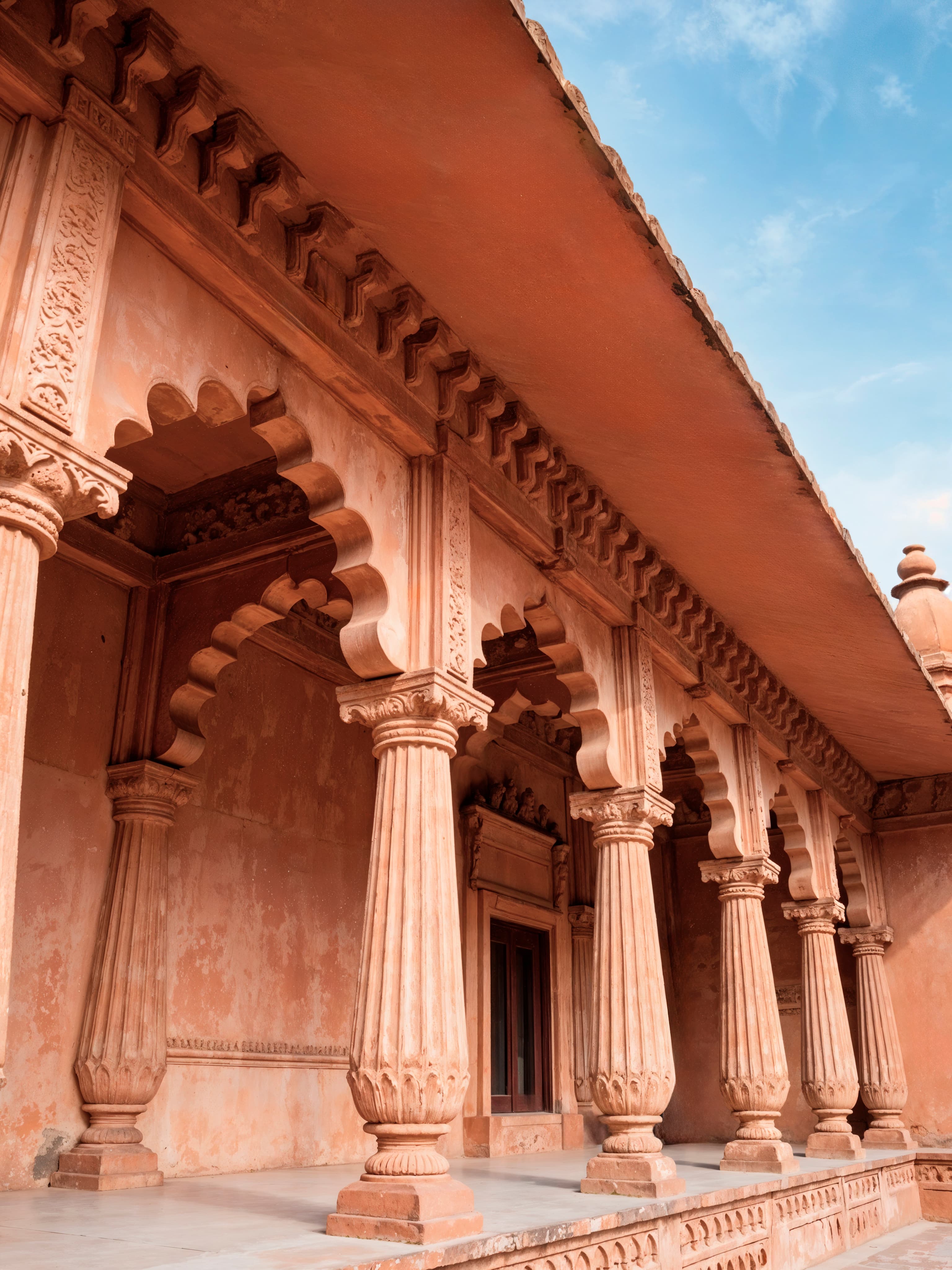
Consider the geography of heritage luxury in India. Rajasthan, Madhya Pradesh, and Gujarat boast hundreds of magnificent fortresses and palace estates, yet many remain difficult to access due to multi-hour road transfers from major commercial airports. Commercial airliners cannot land on short mountain airstrips, and traditional helicopters produce intrusive acoustic pollution that shatters the serene tranquility of rural valleys.
Enter the new generation of electric aviation. Aerospace pioneers like Joby Aviation, Archer, and Lilium are engineering eVTOL aircraft that produce less noise than a whisper at cruise altitude, operating with zero direct emissions. In the near future, guests will be able to lift off from a private vertiport on the rooftop of a Mumbai or Delhi residence and land thirty minutes later directly inside the courtyard of a remote 15th-century desert fortress, eliminating five hours of highway transit without disturbing a single peacock on the palace ramparts.
The Autonomous Sanctuary: Living Rooms on Wheels
On the ground, autonomous driving technology is transforming the automobile from an instrument of control into an architectural sanctuary. When Level 4 and Level 5 autonomous systems relieve passengers of the need to look at the road, traditional vehicle interiors — front-facing bucket seats, steering wheels, and pedals — become obsolete.
Marques like Rolls-Royce, Bentley, and Mercedes-Maybach are already patenting interior concepts that resemble bespoke private salons: rotatable cashmere armchairs, OLED acoustic glass with adjustable opacity, circadian wellness lighting, and handcrafted timber tables designed for dining, conversation, or deep sleep while the vehicle glides autonomously along scenic coastal or mountain highways. The journey ceases to be 'lost time' between two cities; it becomes the most restorative, productive part of the day.
“When autonomous driving eliminates steering wheels, the car becomes a bespoke private salon: rotatable cashmere armchairs, circadian light, and zero friction.”
Sustainability Without Aesthetic Compromise
Crucially, this future is grounded in uncompromising environmental ethics. Modern high-net-worth travellers will no longer tolerate the cognitive dissonance of arriving at an eco-sanctuary in a gas-guzzling convoy. Future luxury requires closed-loop circular manufacturing: interior leathers tanned using olive leaf extracts rather than toxic chromium, carpets woven from reclaimed ocean plastics, and chassis fashioned from sustainably recycled aluminium forged using green hydrogen.
By uniting avant-garde aerospace engineering with artisanal craftsmanship, future mobility proves that ecological responsibility is not an austere limitation. It is the ultimate expression of human ingenuity.
The Royal Gallerys Perspective
The future of luxury travel belongs to those who understand that true freedom is the mastery of time and space. As electric aviation and autonomous sanctuaries dissolve physical distances, the world's most remote heritage monuments will be brought into intimate contact with discerning travellers.
In this new era, the journey will no longer be an ordeal to endure. It will be a continuous state of wonder — silent, effortless, and reverent toward the earth we traverse.
THE ROYAL GALLERYS is the international magazine for heritage, culture and luxury — documenting the people, places and ideas shaping the worlds of royalty, jewellery, design, travel and contemporary life. Our editorial authority rests on deep engagement with India's cultural ecosystem and a commitment to telling the stories that matter.
For editorial inquiries, story proposals, and partnership discussions, contact our editors at hey.theroyalgallerys@gmail.com.
Rohan Varma
Senior Motoring & Technology Editor. THE ROYAL GALLERYS is the international magazine for heritage, culture and luxury — editorial authority on the people, places and ideas shaping our world.
Part of Futures
This article is part of THE ROYAL GALLERYS Futures section — our international editorial destination for futures, heritage and luxury.
Explore All Futures Stories →