From Manipur to the Desert Courts: The Ancestral Game
While the international sporting press often associates polo with the manicured lawns of Berkshire, the pampas of Argentina, or the private clubs of Palm Beach, the game's true heartbeat has always belonged to India. Originally played for centuries in Manipur as *Sagol Kangjei* and across Ladakh and Gilgit as a fierce mountain martial exercise, polo was discovered by British military officers in the 1850s, codified into formal rules, and swiftly adopted by India's princely states.
No royal house embraced the game with greater passion, technical mastery, or flamboyant style than the Rathores of Jodhpur. The Rajputs were horsemen by ancestral identity — their legendary Marwari steeds, famous for their inward-curving lyre-shaped ears and fierce loyalty in battle, had carried warriors across desert sands for eight centuries. For the Maharajas of Jodhpur, polo was not merely a leisure sport; it was cavalry training elevated to the status of high courtly art.
“In the 1890s, Sir Pratap Singh of Jodhpur designed a flared riding trouser tailored for desert saddles — Savile Row copied it, and 'Jodhpurs' entered the global lexicon of style.”
Sir Pratap Singh and the Golden Era of Jodhpur Polo
In the late 19th and early 20th centuries, Lieutenant-General Maharaja Sir Pratap Singh of Jodhpur became an international equestrian icon. A peerless rider and fearless strategist, Sir Pratap brought the Jodhpur polo team to England in 1897, astonishing European crowds with their aggressive, fluid style of galloping and unprecedented hand-eye precision.
It was during this era that Sir Pratap designed a new, flared riding trouser with reinforced inner thighs and tight lower calves, designed to provide comfort in hot desert saddles without snagging in stirrup leathers. British tailors in Savile Row eagerly copied the design, naming the garment 'Jodhpurs' — introducing an enduring staple into the lexicon of global equestrian fashion.
In subsequent decades, Indian royal teams dominated international competition. In the 1930s, the Jaipur team led by Maharaja Sawai Man Singh II and Rao Raja Abhay Singh won every major tournament in the world, establishing a world record for consecutive international victories that remains unbroken today.
The Season: Thoroughbreds, Champagne and Desert Dust
Following a period of dormancy after the abolition of royal purses, Jodhpur's equestrian heritage was revived through the single-minded dedication of Maharaja Gaj Singh II. Establishing the Jodhpur Polo & Equestrian Institute, the Maharaja built state-of-the-art polo grounds at the Maharaja Gaj Singh Sports Foundation, creating what is now widely considered one of the world's most glamorous winter sporting fixtures.
Every December, the Jodhpur Polo Season attracts top professional players from Argentina, Britain, South Africa, and across India. Unlike sterile modern stadiums, the atmosphere in Jodhpur is steeped in princely romance. As the afternoon sun softens, casting long golden shadows across the Aravali sands, spectators sip chilled champagne and estate Darjeeling tea beneath embroidered royal canopies.
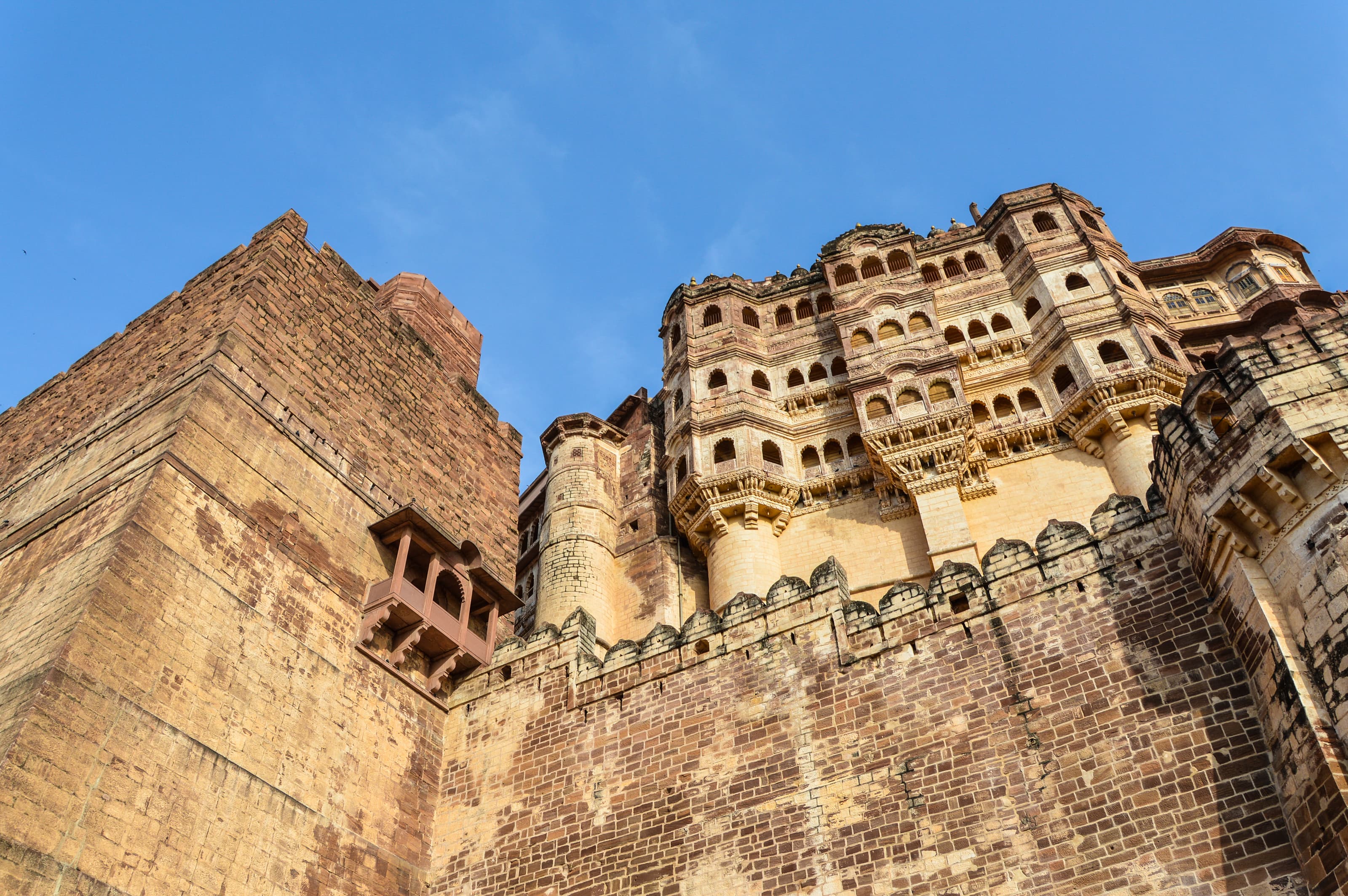
The thunder of eighty hooves galloping at thirty-five miles per hour across the turf, accompanied by the sharp wooden crack of cane mallets striking willow balls, echoes against the backdrop of the Umaid Bhawan Palace and Mehrangarh Fort.
“The thunder of eighty hooves galloping at 35 miles an hour beneath the ramparts of Mehrangarh: polo in Jodhpur is living mythology.”
The New Guard: Maharaja Padmanabh Singh of Jaipur
The contemporary revival of Indian polo is embodied by Maharaja Padmanabh Singh of Jaipur ('Pacho'). An accomplished international player with a handicap that has seen him captain the Indian National Polo Team and play at high-goal tournaments worldwide, Padmanabh represents a seamless bridge between ancient lineage and modern global sportsmanship.
His presence on the field — combining aggressive athleticism with classical seat posture — has inspired a new generation of young Indian athletes, both royal and commoner, to take up the mallet. Corporate patronage from luxury watchmakers, automotive marques, and heritage hospitality brands has injected new commercial vitality into the circuit, funding professional training academies and world-class veterinary facilities.
The Royal Gallerys Perspective
In Jodhpur, polo is far more than a spectator sport; it is living mythology. It is the continuation of an equestrian ethos that views the bond between horse and rider as a sacred spiritual union.
As the dust settles over the Jodhpur turf at sunset and the royal brass bands play the state anthem, one understands why this game has endured for over a millennium. In the Blue City, the sport of kings has never been about trophies; it is about the poetry of speed, honor, and courage etched against the desert sky.
THE ROYAL GALLERYS is the international magazine for heritage, culture and luxury — documenting the people, places and ideas shaping the worlds of royalty, jewellery, design, travel and contemporary life. Our editorial authority rests on deep engagement with India's cultural ecosystem and a commitment to telling the stories that matter.
For editorial inquiries, story proposals, and partnership discussions, contact our editors at hey.theroyalgallerys@gmail.com.
Rohan Varma
Senior Motoring & Equestrian Editor. THE ROYAL GALLERYS is the international magazine for heritage, culture and luxury — editorial authority on the people, places and ideas shaping our world.
Part of Society
This article is part of THE ROYAL GALLERYS Society section — our international editorial destination for society, heritage and luxury.
Explore All Society Stories →