Lake Como does not announce itself. It reveals itself, slowly — a ribbon of deep blue water appearing between mountains, a cypress spire piercing the haze, a rococo balustrade glimpsed through a curtain of wisteria. The lake, an inverted Y carved by ancient glaciers into the foothills of the Italian Alps, has been seducing travellers for two millennia. Pliny the Younger had a villa here and described the lake with the precision of a man who knew he had found paradise. Virgil set scenes from the Aeneid on its shores. Shelley wrote that "this lake exceeds anything I ever beheld in beauty." And in the twenty-first century, it has become the retreat of choice for Hollywood royalty, tech billionaires, and anyone with the means and the taste to understand that true luxury is not about ostentation but about the quiet perfection of a place.
The lake is forty-six kilometres long and never more than four and a half kilometres wide, a topographical constraint that creates an extraordinary intimacy. The mountains plunge almost vertically into the water, leaving room for only the narrowest of roads, a string of villages, and the gardens of the grand villas that are the lake's defining architectural glory. To be on Lake Como is to be constantly aware of scale: the Alps above you, the deep water below you, the civilisation of two thousand years compressed into a shoreline that, from the middle of the lake, looks barely wide enough to support a footpath.
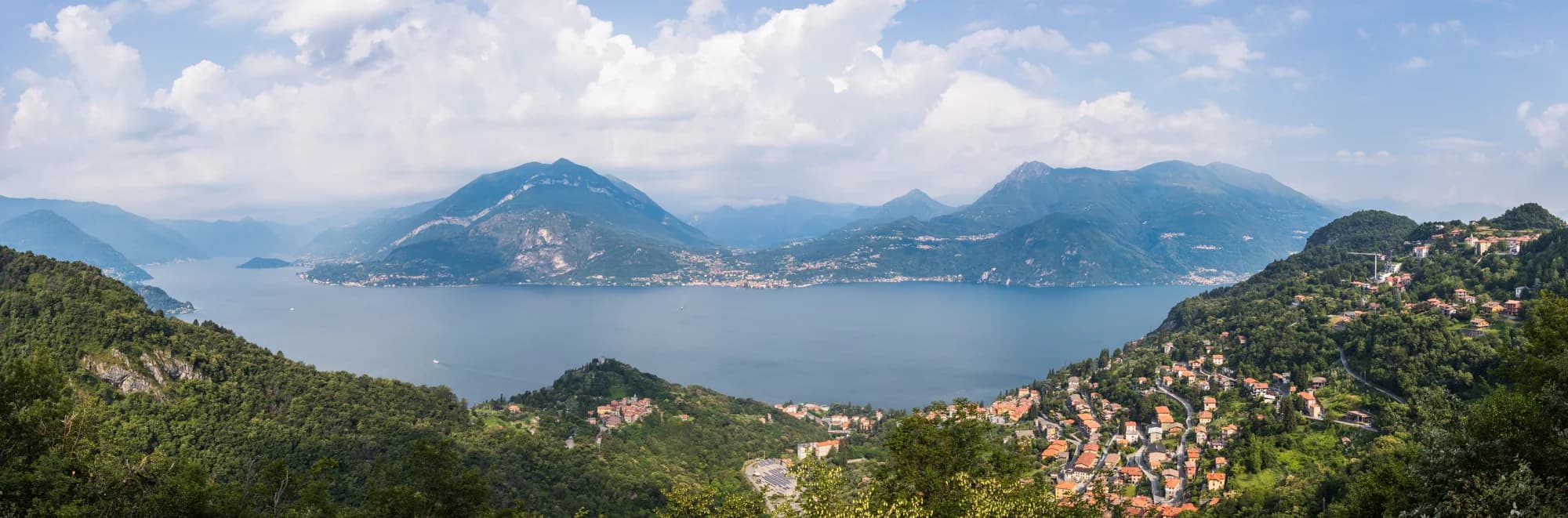
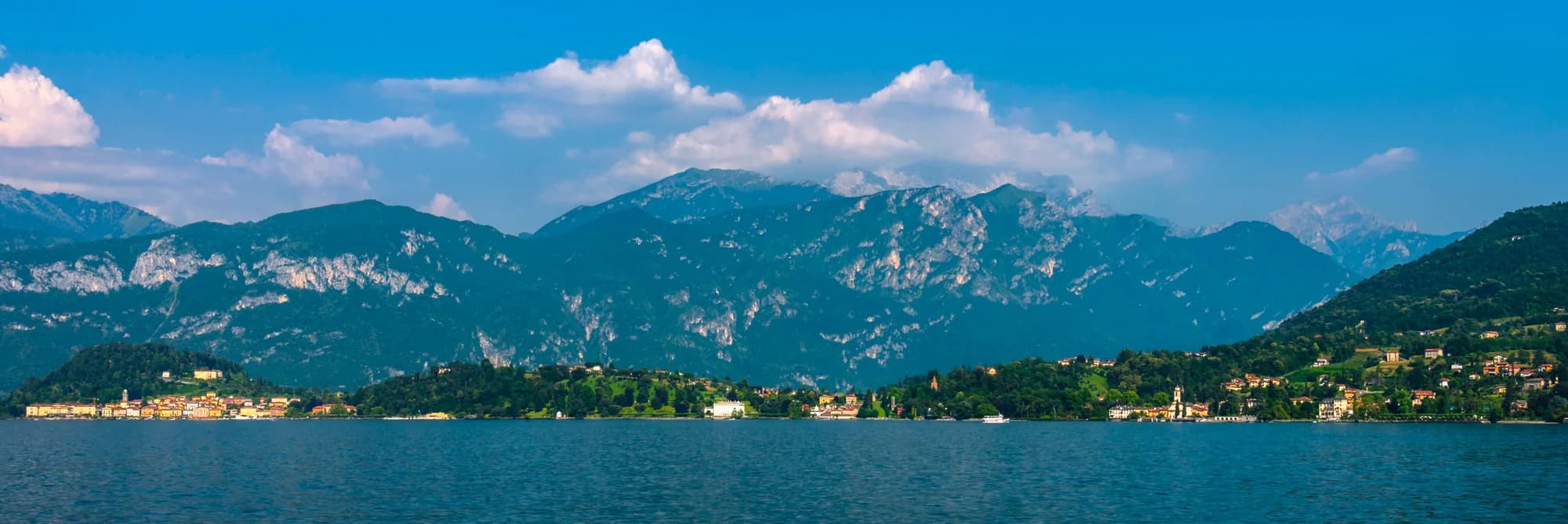
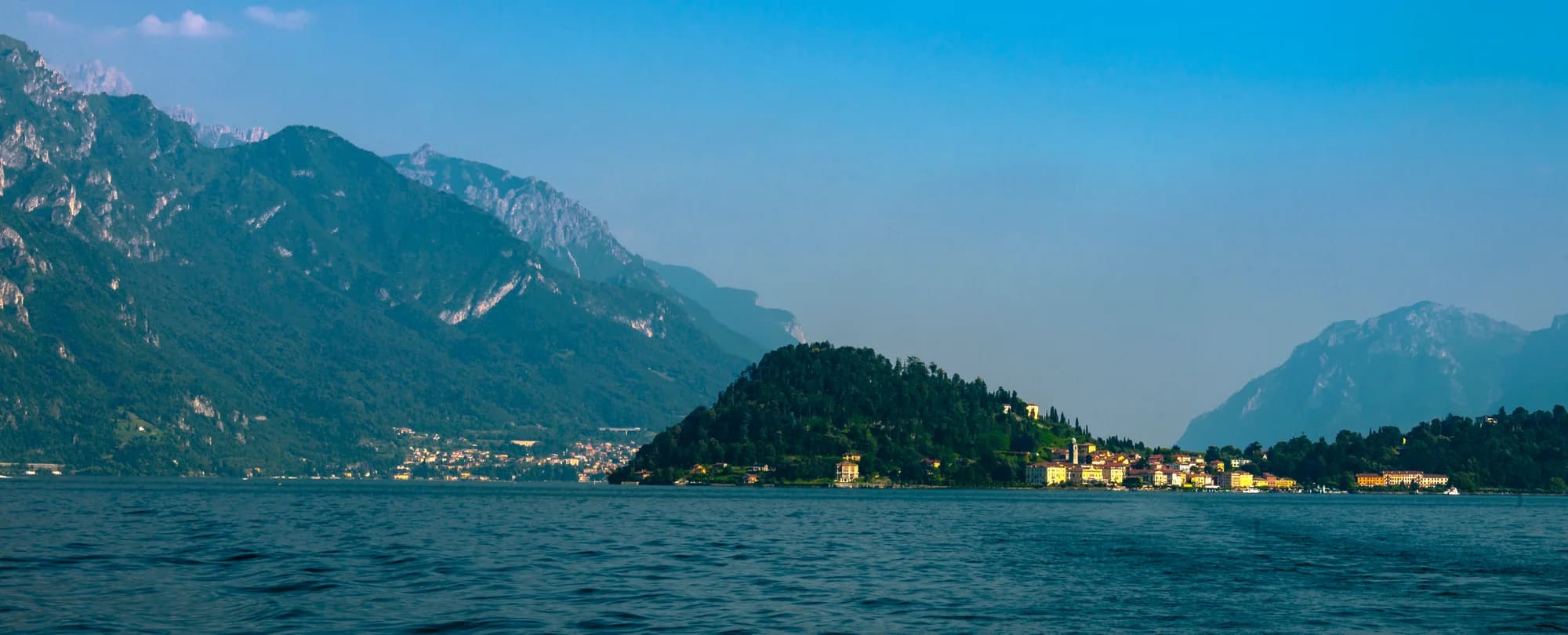
The classic view of Lake Como from above Bellagio, the inverted-Y glacier lake spreading beneath the Alps
Lake Como, known to the Romans as Lacus Larius, was carved by the Adda glacier during the last Ice Age approximately 10,000 years ago, creating its distinctive inverted-Y shape with depths reaching 425 metres — making it the deepest lake in Italy and the fifth deepest in Europe. Bellagio occupies the central promontory where the three branches converge, a strategic position that has commanded the lake's traffic since pre-Roman times when the Celtic Insubres tribe first fortified the headland. The surrounding pre-Alpine peaks, dominated by Monte Legnone (2,609 metres), are composed of Triassic dolomite and Jurassic limestone, their verticality creating the compressed, fjord-like drama that distinguishes Como from the broader Italian lakes.
Villa del Balbianello: The Screen Star
Of all the villas that fringe Lake Como, none is more photographed, more cinematic, or more exquisitely situated than Villa del Balbianello. It occupies the entire tip of the Dosso di Lavedo, a wooded peninsula that juts into the lake near Lenno, and from the air it resembles a ship moored to the shore, its loggia of cypress-dotted terraces like the prow of a galleon. The villa was built in 1787 for Cardinal Angelo Maria Durini on the ruins of a Franciscan monastery, and the cardinal evidently believed that God's work could be enhanced with a little theatricality: he built the loggia specifically to receive guests arriving by boat, a piece of staging that remains breathtakingly effective more than two centuries later.
The villa's most recent owner was Guido Monzino, an explorer and mountaineer who led the first Italian expedition to summit Mount Everest in 1973. He filled the villa with an astonishing collection that spans Napoleonic furniture, pre-Columbian artefacts, and Chinese terracotta warriors, but the real treasures are the gardens: terraced, manicured, and anchored by an immense holm oak that has been pruned into a perfect canopy. The villa's fame was sealed in the twenty-first century when it appeared in Casino Royale (as the hospital where Bond convalesces) and Star Wars: Episode II (as the lakeside retreat where Anakin and Padmé marry). Visit by the taxi boat from Lenno and arrive, as the cardinal intended, by water — the approach across the lake is an essential part of the experience.
Villa del Balbianello's iconic loggia perched on the tip of a wooded peninsula at golden hour
Villa del Balbianello was commissioned in 1787 by Cardinal Angelo Maria Durini, a worldly prelate who built the villa as a summer salon for his circle of artists and writers — the loggia specifically designed to receive guests arriving by gondola, a piece of theatrical staging inspired by Venetian tradition. The villa occupies the tip of the Dosso di Lavedo, a wooded promontory that was once the site of a 13th-century Franciscan monastery whose bell tower remains integrated into the villa's structure. Its final private owner, explorer Guido Monzino, led Italy's first successful Everest expedition in 1973 and furnished the villa with treasures from his expeditions alongside a collection of 18th-century English and French furniture, bequeathing it to the Fondo per l'Ambiente Italiano upon his death in 1988.
“This lake exceeds anything I ever beheld in beauty, with the exception of the arbutus islands of Killarney.”
Bellagio: The Pearl of the Lake
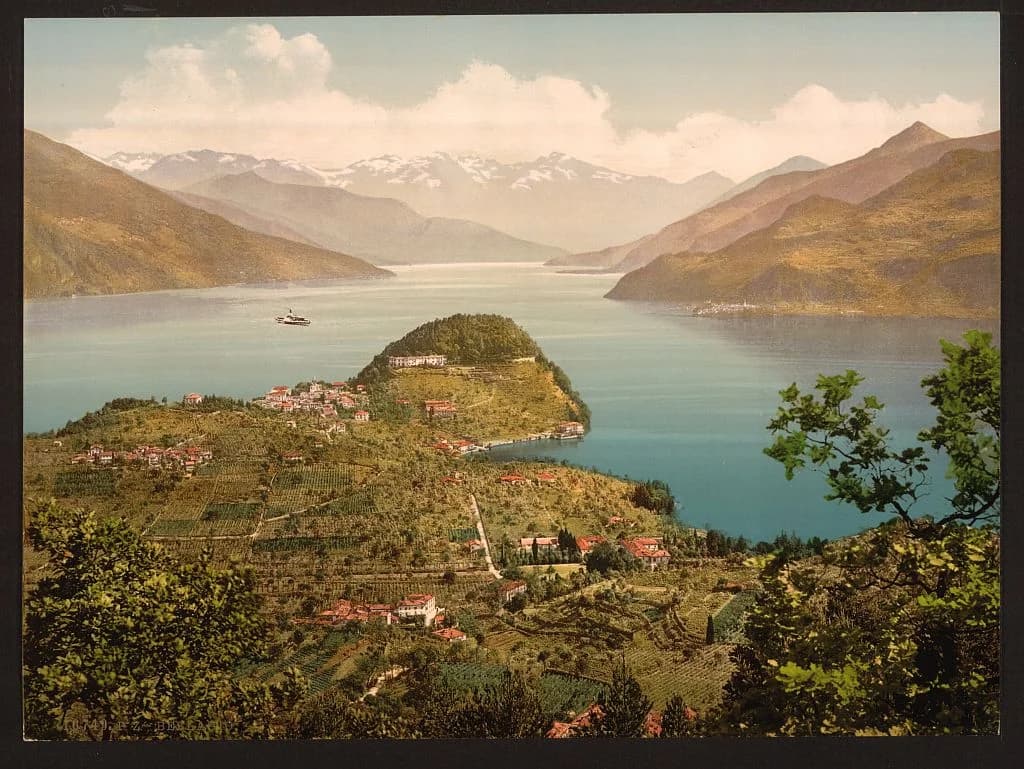
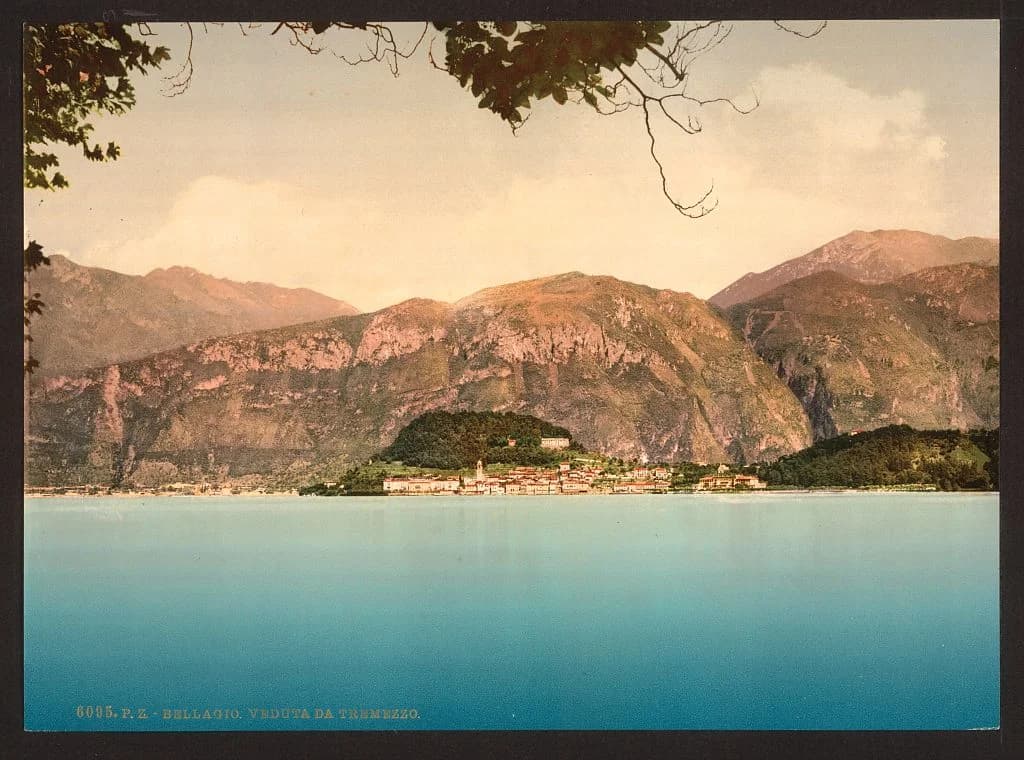
Bellagio occupies the central promontory where the three branches of Lake Como meet — a position of such strategic and aesthetic perfection that it has been called the most beautifully situated town in Italy. The view from Punta Spartivento, at the very tip of Bellagio's peninsula, is the defining panorama of the lake: the Alps rising in the north, the two arms of the lake spreading east and west, the sky and water engaged in a constant negotiation of blue.
Bellagio's charm lies as much in its verticality as its views. The town climbs from the lakefront in a series of stepped alleyways — salite — that are paved with cobblestones, lined with silk shops and wine bars, and connected by sudden tunnel-like archways that frame the lake as if it were a painting hung in a stone gallery. The staircases are steep and numerous; this is not a town for high heels or heavy luggage. Book accommodation that offers a porter service or, better still, a room in one of the grand hotels on the lakefront where the porter meets you at the ferry.
The Grand Hotel Villa Serbelloni, opened in 1873, dominates the Bellagio waterfront with its neoclassical facade and frescoed interiors. Even if you do not stay, have a Negroni at the bar and walk through the lobby — the painted ceilings, the Murano chandeliers, the sense of having stepped into a Visconti film, are worth the price of the drink. The surrounding gardens of the Villa Serbelloni — the private villa above the hotel, now owned by the Rockefeller Foundation — are even more spectacular but can only be visited on a guided tour booked through the Bellagio tourist office.
The stepped alleyways of Bellagio, where every turn frames the lake like a living painting
Bellagio's salite — the steep cobbled staircases that ladder the town from lake to hilltop — date to the medieval period when the town was an important Lombard stronghold controlling navigation at the intersection of the lake's three branches. The tunnel archways that punctuate these passages, known locally as porta, were originally defensive gateways built into the 12th-century fortifications that ringed the promontory. The optical effect of the lake framed through these stone arches — acqua nel quadro, "water in the picture frame," as the Bellagini call it — has been drawing artists and writers since the Grand Tour, when Bellagio was an essential stop on the itinerary that shaped European Romanticism.
Varenna: The Romantic's Choice
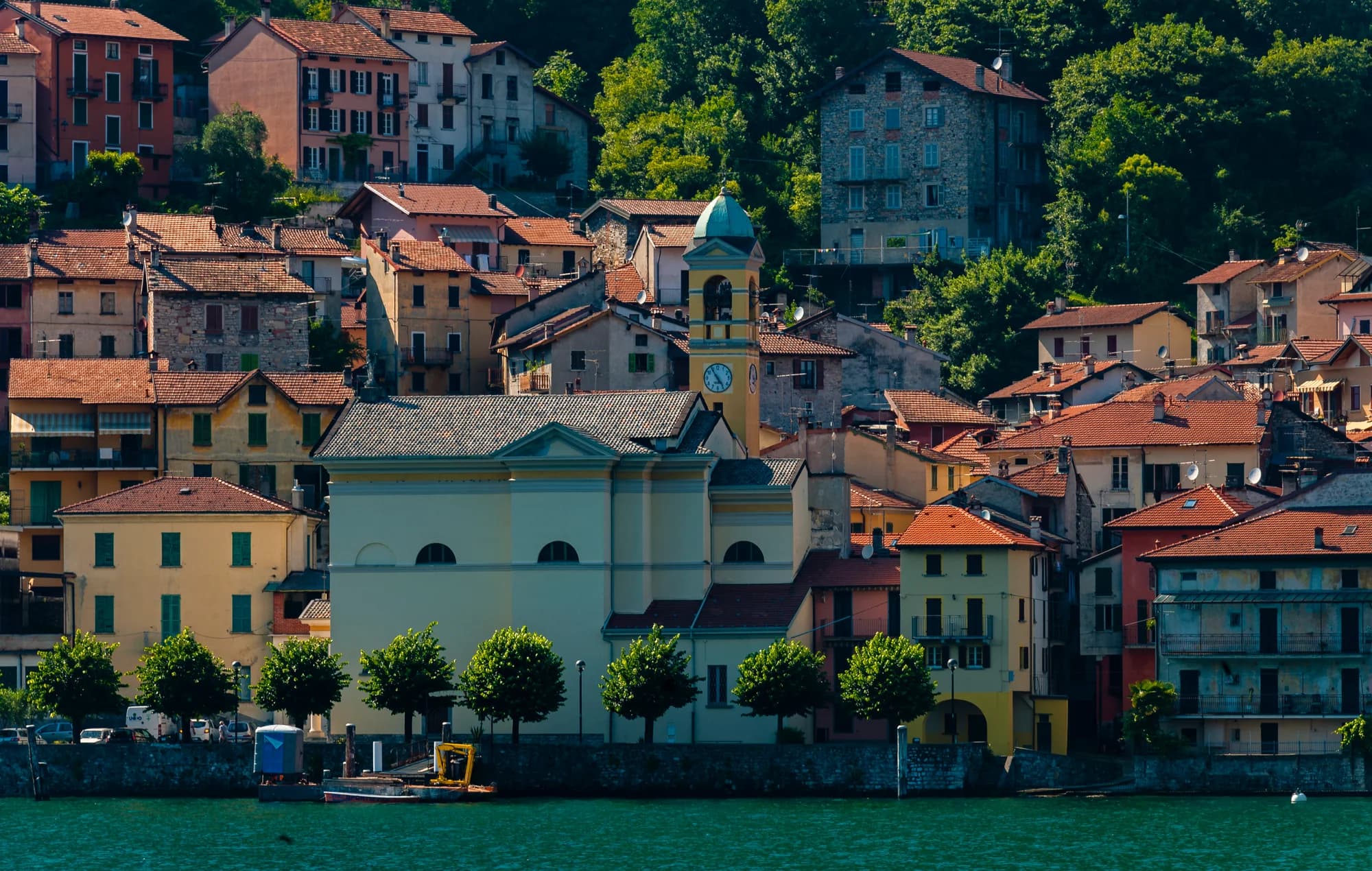
On the eastern shore, directly opposite Bellagio, Varenna offers a quieter, more intimate take on the Lake Como experience. It is a village of fishermen's houses painted in shades of ochre and terracotta, of a small harbour where boats creak gently against their moorings, and of the Villa Monastero, a former Cistercian convent turned private residence with botanical gardens that slide down to the lake's edge. The gardens are a labour of love, planted with palms, citrus, agaves, and roses that bloom against a backdrop of cypress and lake views. The walk along the lakefront promenade — the Passeggiata degli Innamorati, or Lovers' Walk — is as romantic as its name suggests, especially at sunset when the western sky turns Bellagio into a silhouette and the lake becomes a sheet of rose gold.
Varenna's Castello di Vezio, a medieval fortress perched on a promontory above the village, offers the most dramatic panorama on the eastern shore. The castle has been partially restored and now houses a falconry centre where birds of prey are trained and flown daily; watching a peregrine falcon dive towards the lake with the Alps as a backdrop is a spectacle that connects you to the medieval lords who once surveyed their domain from these same ramparts.
Varenna's pastel waterfront reflecting in the still waters of Lake Como at dawn
Varenna, settled in 769 AD by fishermen from the island of Comacina fleeing Lombard raids, is the oldest continuously inhabited village on the eastern shore of Lake Como. The waterfront ochre and terracotta facades are the colours of the local stone — calcareous sandstone quarried from the Grigna massif that rises behind the village — painted in hues that derive from natural iron oxide pigments traditionally mixed with limewash. The Passeggiata degli Innamorati, the lakeside promenade, was built in the 19th century to link the village centre with Villa Monastero, a former 12th-century Cistercian convent converted into a private residence in 1567 by the Mornico family.
The Silk Legacy of Como Town
The town of Como, at the southern tip of the lake's western arm, is the working city that anchors the region. It is not a holiday destination in the manner of Bellagio or Varenna, but it repays a morning's exploration with a cultural and industrial history that few visitors expect. Como has been a centre of silk production since the fifteenth century, when Ludovico Sforza, Duke of Milan, planted mulberry trees around the lake and imported silkworms from the East. By the nineteenth century, Como had become the silk capital of Europe, supplying the great fashion houses of Paris, London, and Milan with the raw and finished fabrics that defined haute couture.
The Museo Didattico della Seta — the Silk Educational Museum — in a former silk mill on the outskirts of Como tells this story with vintage looms, pattern books, and samples of the extraordinary fabrics produced here. For something more immediately useful, the silk shops of Via Vittorio Emanuele II and Via Morazzone sell scarves, ties, and fabrics at prices considerably lower than Milan. Brands like Mantero and Ratti, which supply the fashion houses, have factory outlets on the outskirts of town where you can buy silk that would retail for five times the price in a Paris boutique.
Bolt after bolt of Como silk, the product of six centuries of textile mastery
Como's silk industry was formally established in 1510 when the Sforza dukes mandated the planting of mulberry trees around the lake, but the trade was seeded earlier — in the 13th century, returning Crusaders brought silkworm eggs and the techniques of sericulture from the East. By 1795, Como's silk mills employed over 5,000 workers and supplied fabric to the courts of Europe; by 1900, the city produced more silk than any other centre outside China and Japan. Today, the district of Como produces 85% of Italian silk and supplies luxury fashion houses from Hermès to Chanel — the famous twill scarves and jacquard ties a direct descendant of techniques refined across six centuries on the same narrow streets between the lake and the mountains.
The Riva Boat Experience
No vessel is more synonymous with Lake Como than the Riva. These mahogany runabouts, built in the nearby town of Sarnico since the 1850s, are the definitive lake craft: sleek, polished, and propelled by an engine note that thrums through the water like a well-tuned cello. Hiring a Riva for a day, a half-day, or even a single hour is not cheap — expect to pay between €300 and €800 depending on the boat and duration — but it is one of those experiences that defines a Lake Como visit.
A good Riva captain doubles as a guide, and the best ones know the lake in the way that a sommelier knows a wine list: which villages to approach from which angle, at which hour the light falls most beautifully on a particular villa, where to cut the engine and simply float while you drink a glass of Franciacorta and contemplate the improbable beauty of the scene. You can also rent smaller, self-drive boats if you have a boating licence, and even the public ferry system offers spectacular views, but the Riva — with its chrome detailing, its white leather seats, its sense of having motored out of a Slim Aarons photograph — is the lake's signature mode of transport.
A vintage Riva Aquarama gliding across the glassy surface of Lake Como
The Riva Aquarama, launched in 1962 by Carlo Riva at the family boatyard in Sarnico on Lake Iseo, is universally regarded as the finest wooden powerboat ever built — a twin-engine mahogany runabout whose design combined the craftsmanship of Venetian gondola builders with the engineering of Ferrari-era Italy. Only 277 Aquaramas were produced between 1962 and 1996, each one requiring over 1,500 hours of hand labour, with 35 coats of marine varnish applied to the triple-laminated mahogany hull. The Riva family had been building boats on Lake Como's neighbouring lake since 1842, beginning with simple fishing vessels before a storm in 1849 destroyed a fleet and prompted Pietro Riva to rebuild — and, in the process, to create the most revered name in pleasure boating.
Riva Rental Strategy
Book a Riva for the late afternoon — 4 pm until sunset — rather than midday. The light is better for photography, the lake is quieter as the ferry traffic winds down, and you will catch the golden hour that turns the villa facades from pale stone to molten honey. Ask your captain to take you past Villa del Balbianello, up the west shore past the Villa d'Este, and into the central lake for the classic view of Bellagio at sunset. Most captains will pack a bottle of Franciacorta and a plate of local charcuterie.
Grand Hotels and Villa Hotels
Lake Como's grand hotel tradition dates to the Grand Tour, when wealthy British and German travellers would establish themselves for weeks at a time in lakeside palazzi. The tradition has only deepened, and the lake now boasts one of the finest concentrations of historic hotels in Europe.
The Grand Hotel Tremezzo, on the western shore directly opposite Bellagio, is the undisputed queen. Opened in 1910, its Art Nouveau facade is a froth of stucco, wrought iron, and crimson geraniums. The hotel's floating pool — a platform on the lake itself — is the most photographed swimming pool in Italy, and the panoramic suites with their Belle Époque decor and private terraces are among the most desirable hotel rooms in Europe. Even if you are not a guest, you can visit the hotel's public spaces: the bar, the lakeside terrace, the tiny beach, and the wine cellar. Aperitivo on the Tremezzo terrace, with Bellagio glowing across the water as the sun sets behind the mountains, is an essential Lake Como ritual.
Il Sereno, a few kilometres away in Torno, is the modernist riposte to the Belle Époque excess: a cool, clean-lined hotel of glass, stone, and water designed by Patricia Urquiola, each of its thirty suites facing the lake with floor-to-ceiling windows. The Michelin-starred restaurant, Berton al Lago, serves a tasting menu that reinterprets lake fish and Alpine herbs through the lens of contemporary Italian gastronomy. The contrast between Il Sereno and the Grand Hotel Tremezzo could hardly be more pronounced — one is pure streamline modernism, the other pure fin de siècle romance — and the fact that both exist, half an hour apart by Riva, tells you everything about the range of the Lake Como experience.
Villa d'Este, in Cernobbio, is the grande dame to which all others defer. A former cardinal's residence turned hotel in 1873, its twenty-five acres of gardens include a sixteenth-century nymphaeum, a Renaissance mosaic, and a plane tree allegedly five hundred years old. The hotel's terrace, with its swimming pool floating on the lake, has hosted everyone from Clark Gable to Madonna. The prices are commensurate with the history, but a lunch on the terrace — the saffron risotto, a glass of Franciacorta, that view — is one of the great travel experiences of Europe.
The Grand Hotel Tremezzo's floating pool, the most iconic swimming pool in Italy
The Grand Hotel Tremezzo opened in 1910 as one of the great Belle Époque palace hotels of Europe, its Art Nouveau facade designed to face Bellagio — the lake's most desirable vista — across the water. Its floating pool, an engineering feat installed in 2007, is a platform suspended directly on Lake Como's surface, allowing swimmers to float at eye level with the water, surrounded by the same Alpine panorama that inspired the architect Giuseppe Sommaruga. The hotel's original guests included European royalty — the Savoy dynasty, the Russian grand duchesses escaping the Revolution — and the property remains owned by the De Santis family, who have managed it since the 1930s.
The Funicular to Brunate
For the finest elevated view of Lake Como without the price tag of a villa tour, take the funicular from Como town to Brunate. The journey takes seven minutes — a steep climb through gardens and terraces — and deposits you at an altitude of 715 metres on a broad plateau with views that sweep the entire southern basin of the lake. From Brunate, a series of walking paths lead further up the mountain: the trail to the Volta Lighthouse at San Maurizio (another thirty minutes uphill) rewards with a 360-degree panorama that takes in the lake, the Po Valley, and on clear days, the Apennines and the Matterhorn.
Brunate itself is a pleasant Art Nouveau village — the "balcony of the Alps," as it styles itself — with a scattering of cafes and trattorias that are considerably more affordable than those down by the lake. The funicular runs from early morning until midnight (with a break in the middle of the day), so it is perfectly feasible to come up for a sunset aperitivo and dinner, then descend to Como on the last car.
Where the Alps Meet La Dolce Vita
Lake Como occupies a liminal space — geographically between the Alps and the Po Valley, culturally between the rigour of northern Europe and the sensuality of the Mediterranean, temporally between an aristocratic past and a globalised present. The lake is not a museum; it is a living, evolving, deeply sophisticated place that has been absorbing influences for two millennia and transmuting them into something identifiably its own. The Roman remains in Como, the Lombard churches, the Renaissance villas, the Belle Époque hotels, the modernist interventions — each layer has added depth without erasing what came before.
This layering is what distinguishes Lake Como from the other great lakes of northern Italy. Lake Garda is larger and more family-oriented, with theme parks and windsurfing. Lake Maggiore has the Borromean Islands and a more melancholic atmosphere. But Lake Como, with its compressed geography and its concentration of beauty, achieves a density of experience — history, nature, gastronomy, design — that no other lake can match. It is a place that rewards slow travel, that asks you to linger on a terrace, to take the ferry rather than the road, to understand that the greatest luxury is not the suite with the best view but the time to sit and look at it.
“Lake Como? Someone told me you can buy one of those for the price of a Van Gogh.”
Frequently Asked Questions
**When is the best time to visit Lake Como?** April through mid-June and September through mid-October are ideal. Spring brings the villa gardens into spectacular bloom — the azaleas and rhododendrons at Villa Carlotta in May are world-famous. Autumn offers the clearest light and the fewest crowds, with the added drama of the mountains turning gold. July and August are high season: warm, busy, and best for swimming. The lake does not shut down in winter, but many villas and gardens close from November to March, and the ferry service reduces.
**Which village should I stay in?** Bellagio is the most convenient base — it sits at the intersection of all three lake branches, and the ferry connects to everywhere. It is also the most expensive and the busiest. Varenna offers a quieter, more romantic alternative with good transport links. Menaggio, on the western shore, is a practical base with a car-friendly layout and a golf course if you need a break from villa-gazing. Cernobbio and Torno are closer to Como town and suit those who want easy access to Milan (about forty-five minutes by train or car). Avoid staying in Como town itself — it is a working city, not a holiday destination.
**Do I need a car?** Not necessarily, and for many visitors a car is more of a hindrance than a help. The roads around Lake Como are exceptionally narrow — often single-track with passing places — and parking in the villages is scarce and expensive. The ferry network is excellent and covers all the main towns. Trains from Milan serve Como, Varenna, and Lecco. Use a combination of ferries, trains, taxis, and your hotel's boat or shuttle service. If you do bring a car, book accommodation with guaranteed parking and be prepared for some stressful moments on the lake road.
**Can I visit George Clooney's villa?** No. Villa Oleandra, in Laglio, is a private residence and cannot be visited. You can, however, walk or drive through Laglio and glimpse the villa's gates, which many people do. The villa's fame — Clooney bought it in 2002 from the Heinz family — has brought enormous attention to the lake, and the actor's presence (he summers here most years) is a source of both pride and occasional exasperation to the locals. Motorcycle paparazzi are a known nuisance on the lake road in July and August.
**How long should I stay?** A minimum of two nights. Three to four nights allows a proper exploration: a day for Bellagio and Villa del Balbianello, a day for Varenna and Villa Monastero, a day on the water in a Riva, and an evening or two in the grand hotel bars. A week allows you to explore Como town, the Brunate funicular, the less-visited northern reaches of the lake, and perhaps a day trip to Milan or the vineyards of the Valtellina.
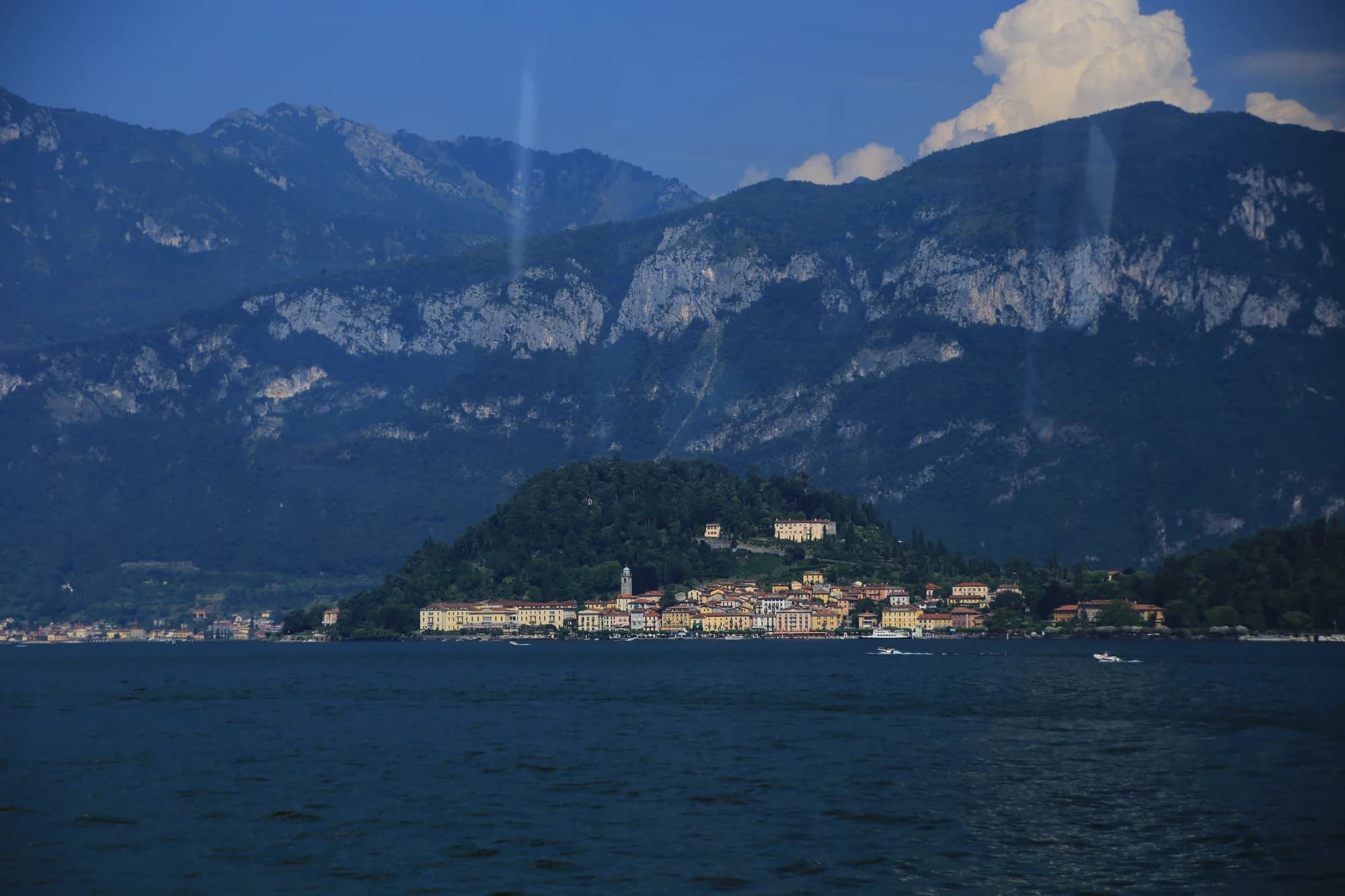
Lake Como at dusk from a Riva boat, the villas and mountains reflected in water like glass
The still-water reflection of Lake Como at dusk — the phenomenon known to locals as l'ora del silenzio, the hour of silence — occurs when the afternoon breva wind, a thermal breeze that blows reliably from the south between April and October, subsides completely at sunset. The lake's great depth (425 metres) and cold bottom temperatures create a thermal layer that, when the surface warms in summer, produces mirror-flat conditions in the evening hours. The villas visible from the water — Villa d'Este in Cernobbio, built 1568 for a cardinal; Villa Carlotta in Tremezzo, built 1690 for the Milanese Clerici family; Villa del Balbianello on its prow-like peninsula — represent five centuries of Italian architectural ambition, each one placed to command both the view and the approach by water, which remained the only practical transport along Lake Como's vertiginous shores until the 19th-century road tunnels were blasted through the living rock.