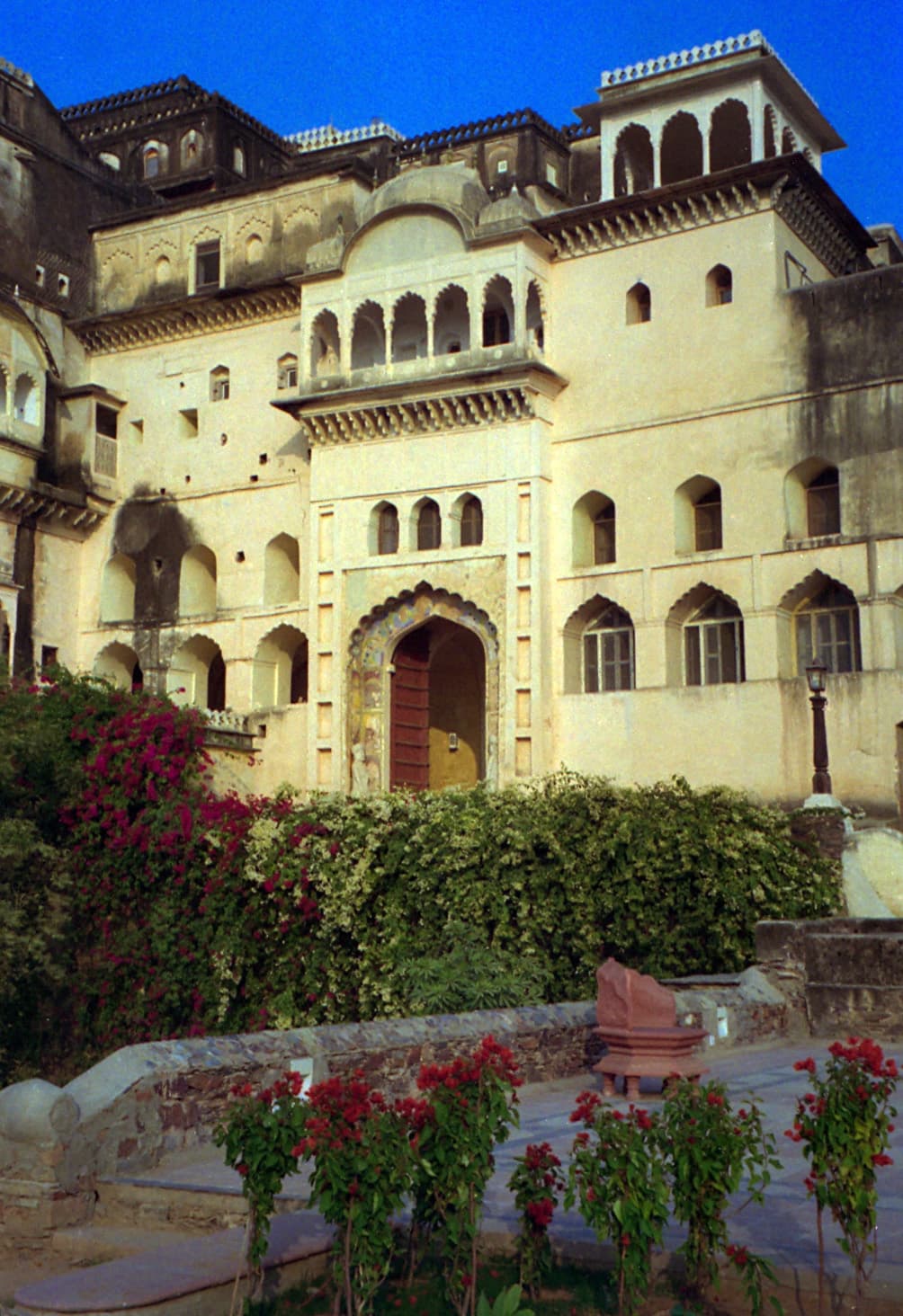
Neemrana Fort Palace is the heritage hotel that started it all. In 1986, when Aman Nath and Francis Wacziarg — two Delhi-based antiquarians and restoration enthusiasts — first saw the ruined fifteenth-century Rajput fortress on a hillside in the Aravalli range, 122 kilometres from Delhi, the building was, by any reasonable standard, a lost cause. The roofs had collapsed. Monkeys occupied the courtyards. Trees grew through the walls. The last recorded inhabitant, a hermit, had been dead for decades. The neighbours considered it a haunted ruin and gave it a wide berth. Two architecture historians, surveying the wreckage of what had once been a forty-acre fortress-palace complex, saw something different: the possibility of resurrection.
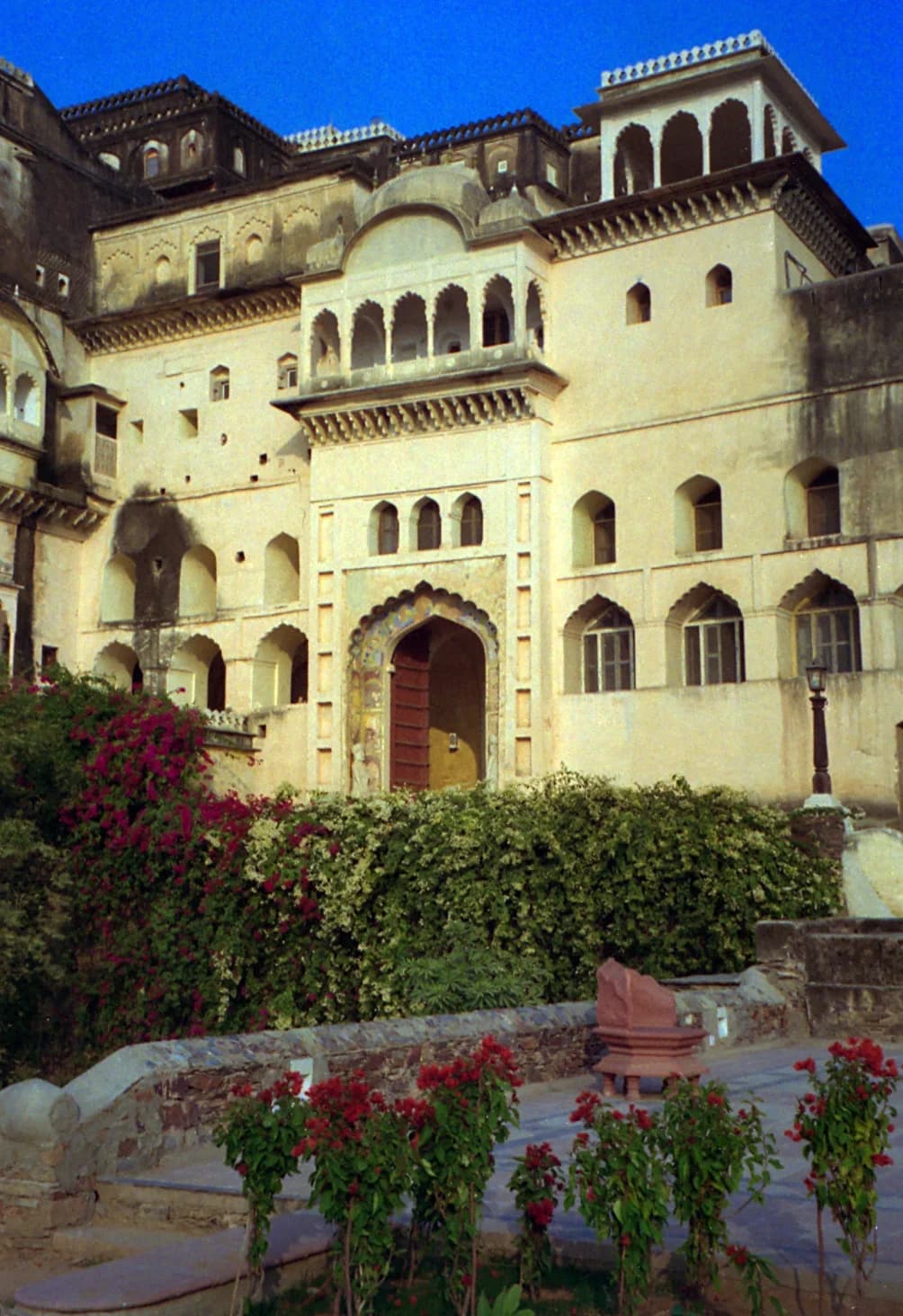
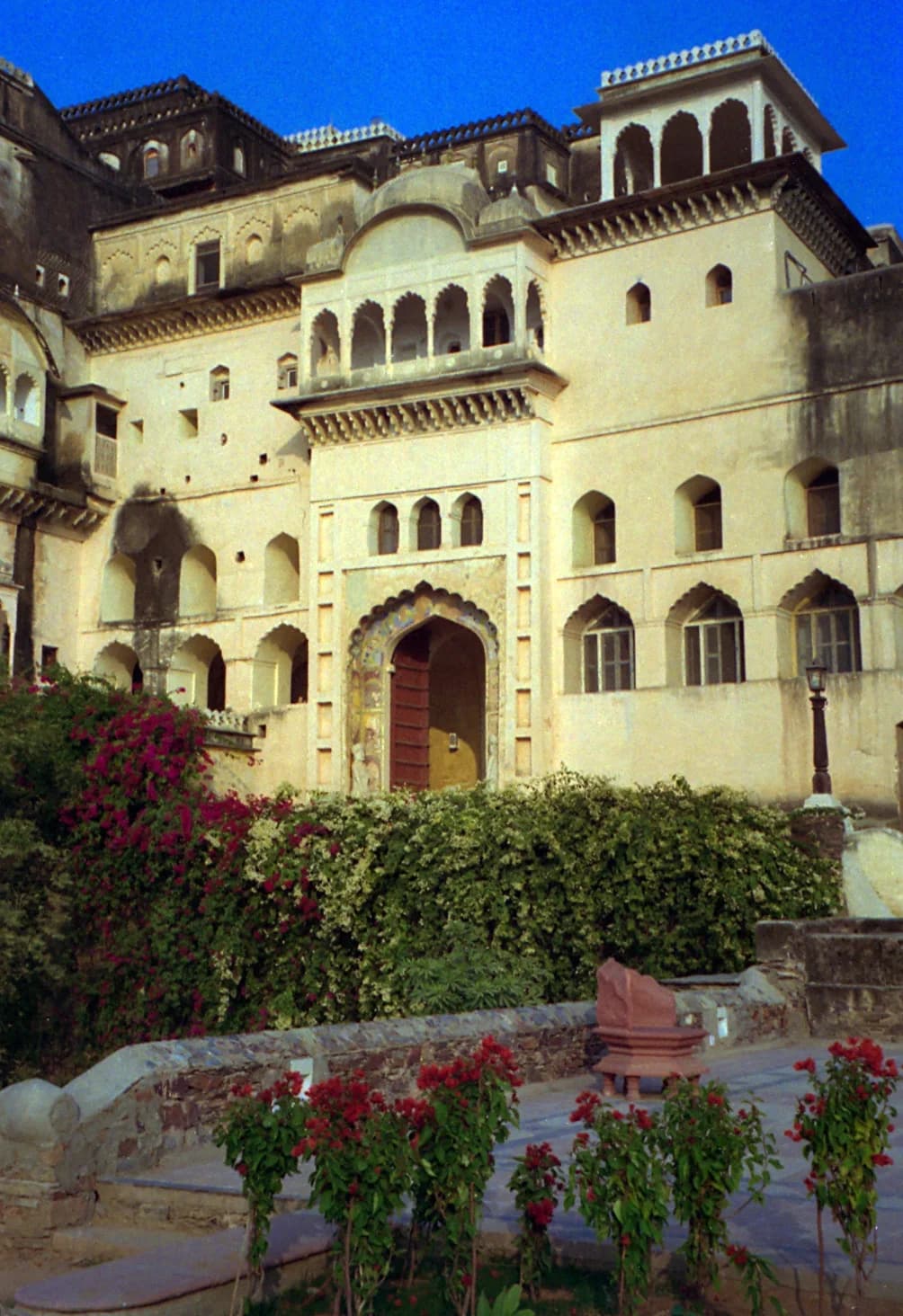
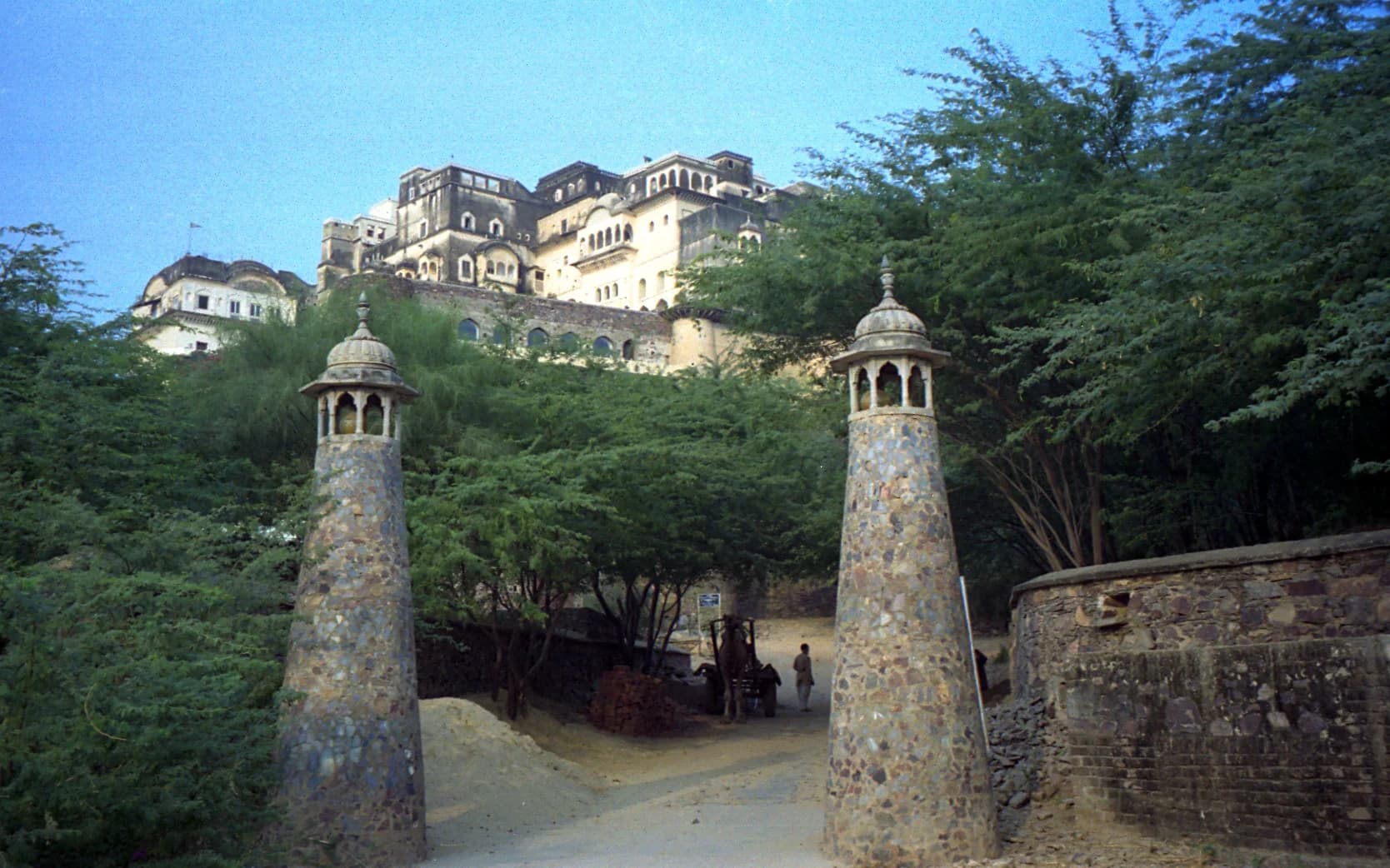
Neemrana Fort Palace — the sprawling fifteenth-century fortress cascading down a hillside in the Aravalli range, twelve palace levels connected by steep staircases, every balcony revealing a different vista of the surrounding hills
Built in 1464 by the Chauhan Rajputs, the fort was abandoned for forty years before being restored beginning in 1986 as India's first major heritage hotel — the restoration project that launched the country's entire heritage hospitality movement
Photo: Dan Lundberg, CC BY-SA 2.0
What followed was not a restoration in the conventional sense. The seventy-four rooms — each one different, each one a collaboration between the surviving architecture and the improvisational genius of its restorers — were pieced together over nearly three decades. Walls were rebuilt. Courtyards were reclaimed from the jungle. A network of steep staircases — 350 steps from the lowest level to the highest — was restored, connecting the palace's twelve levels in a vertical labyrinth that rewards exploration and punishes those who have forgotten to pack comfortable shoes. The philosophy was never to erase the signs of age — the walls still carry the marks of centuries, the floors undulate gently, and the sense that you are inhabiting a building that has endured more than five centuries of Indian history is palpable in every room, balcony, and passageway.
India's first heritage hotel restoration — the project that proved a ruined palace could be reborn as a viable commercial enterprise — launched a movement that has since spread across the subcontinent. Every restored fort, haveli, and palace hotel in India owes a debt, acknowledged or not, to Neemrana.
The Architecture: A Fortress Unwrapped
Neemrana was built in 1464 by the Chauhan Rajputs of Neemrana, a clan of warriors who, before the founding of the fort, had already distinguished themselves at the Battle of Tarain in 1192. The fortress was designed for defence — a strategic position on a steep hill overlooking the pass through which the Delhi-Jaipur road now runs — but over the centuries it was expanded from a military stronghold into a palace complex of courtyards, pleasure gardens, and residential quarters that spread across the hillside in a cascade of towers, terraces, and arched colonnades.
The architecture is an organic accretion, not a designed master plan. Each generation added a wing, a gate, a courtyard, a tower, creating a vertical city of stone and mortar that ascends through twelve levels connected by staircases so steep and narrow that the porters, who carry guests' luggage, deserve hazard pay. Exploring the palace on foot — wandering from one level to the next, discovering a hidden courtyard, a rooftop terrace, a balcony that seems suspended in mid-air — is Neemrana's essential experience. The building does not reveal itself to the passive observer. It demands curiosity.
A steep stone staircase at Neemrana — one of 350 steps connecting the palace's twelve levels, worn smooth by five centuries of feet, sunlight filtering through an arched window in the thick stone wall
There are no elevators at Neemrana — the fort was built for defence, not comfort, and the steep stone staircases that wind through its twelve levels are both the property's greatest inconvenience and its defining architectural feature
The Rooms: Improvised, Unique, and Endlessly Charming
No two of Neemrana's seventy-four rooms are alike. This is not a marketing claim — it is a structural necessity. The palace was not designed as a hotel, and the conversion process involved adapting whatever spaces existed into whatever rooms they could accommodate. The result is a collection of chambers that range from modest cubbyholes to palatial suites, each one furnished with a mix of antiques, local crafts, and the slightly eccentric sensibility of its founders.
The higher rooms, particularly those in the upper reaches of the palace, offer the most spectacular views — the Aravalli Hills rolling away to the horizon, the plains of northern India hazy with distance, the sky immense and blue. They also require climbing the most stairs, which is either a feature or a bug depending on your fitness level. The lower rooms, closer to the entrance and the dining areas, trade views for convenience.
The decor throughout is a controlled chaos of Indian aesthetics. Hand-painted frescoes — some original, some commissioned from local artists — adorn the walls. Antique furniture — carved wooden chests, four-poster beds, brass lamps — fills the rooms. Textiles from Rajasthan and Gujarat — block-printed bedspreads, embroidered cushions, woven durries — provide colour and warmth. The bathrooms vary in quality; the higher-category rooms have been renovated with modern fixtures, while some of the lower-category rooms retain plumbing that feels its age.
A higher-category room at Neemrana — hand-painted frescoes covering the walls, a carved four-poster bed, French windows opening onto a private balcony with a panoramic view of the Aravalli Hills
Each of the 74 rooms is different — the restoration philosophy was to preserve the fort's medieval character while introducing modern comforts, so no two chambers share the same dimensions, decoration, or view
“Neemrana is not for everyone. It is for those who understand that luxury does not lie in thread count or soundproofing, but in the rare, unrepeatable experience of sleeping in a fifteenth-century fortress that has been loved back to life.”
Dining: Two Restaurants, Two Centuries
The palace has two principal dining venues. The Hanging Garden Restaurant, on an upper terrace, serves Indian and Continental dishes with a view that sweeps across the hills. The menu is not ambitious — this is hotel food, competently executed — but the setting, particularly at dinner, when the terrace is illuminated by lanterns and the fortress walls glow against the dark sky, elevates the cuisine. The Rajasthani thali, a selection of regional dishes served on a silver platter, is the most authentic option — Laal Maas, Ker Sangri, Gatte ki Sabzi, and the inevitable Dal Baati Churma.
The second restaurant, at the base of the fort, serves breakfast and casual meals throughout the day. The buffet breakfast is generous — Indian dishes (poha, paratha, idli), eggs cooked to order, fresh tropical fruit, and excellent chai — and the garden setting is a pleasant place to ease into the morning.
For a truly memorable evening, the palace can arrange a private dinner on one of the rooftop terraces. The view from the highest levels, with the fortress falling away beneath you and the lights of the plains glittering in the distance, is worth the climb.
The Pools and the Views
Neemrana has two swimming pools. The larger one, at the base of the fort, is a family-friendly rectangle of blue water surrounded by loungers and shaded by neem trees. The upper pool, smaller and more intimate, is reserved for guests in the higher-category rooms and offers a view of the Aravalli Hills that makes the climb worthwhile.
But the pools are not really the point. The point is the views — from the highest rooftop terrace, from a balcony in one of the upper rooms, from a window on one of the winding staircases — that open onto the Aravalli Hills in all their rugged, ancient beauty. These hills, among the oldest on Earth, have been worn down by half a billion years of erosion into soft, folded ridges that turn green after the monsoon and gold in the winter light. Sitting on a Neemrana balcony with a cup of chai and watching the sun drop behind these ancient hills — the sky turning through every shade of orange, rose, and violet — is a pleasure that the intervening five centuries have done nothing to diminish.
The view from Neemrana's highest terrace at sunset — the Aravalli Hills rolling away in folds of green and gold, the fortress walls descending in a cascade of domed pavilions, the sky a theatre of colour that no photograph can quite capture
The highest terrace, at the summit of the hill, is the site of the fort's evening cocktail service — guests gather here each evening to watch the sun descend behind the oldest mountain range in India
Navigating Neemrana
This is not a hotel for travellers with mobility issues. The 350 steps are unavoidable and often steep and uneven. Pack comfortable, flat shoes with good grip. Pack light — you will be hauling your suitcase up stone staircases, or tipping a porter to do it for you. Inform the hotel at the time of booking if you have difficulty with stairs; they will assign you a room in the lower reaches of the palace, closer to the dining areas and the entrance.
Weekend Warning
Neemrana's proximity to Delhi — 122 kilometres, roughly two and a half hours by car — makes it a popular weekend destination for the capital's middle class. Fridays and Saturdays can be crowded and noisy, with large family groups filling the courtyards and the pool area. Visit on a weekday to experience the palace at its best — quiet, atmospheric, and nearly empty. Sunday through Thursday is the strategy for serious Neemrana pilgrims.
Frequently Asked Questions
How many nights should I stay? Two nights is the sweet spot. One night feels rushed — you will spend half your stay climbing stairs and getting lost. Two nights allow time to explore the palace, settle into its rhythms, enjoy a sunset from the upper terrace, and take a dip in the pool. Three nights are for devotees of atmosphere.
How does Neemrana compare to a conventional luxury hotel? It doesn't. Do not come expecting the Four Seasons, or even the Taj. Come expecting a unique, eccentric, slightly shabby, and utterly atmospheric experience of sleeping in a restored fifteenth-century fortress. The WiFi is erratic. The plumbing can be temperamental. The stairs are exhausting. And none of it matters, because Neemrana is not about the amenities. It is about the experience.
Is it child-friendly? Yes — children love the staircases, the secret passages, the sense of exploring a castle. But supervise younger children carefully: the staircases are steep, the balconies are low, and the drops are significant.
Can non-guests visit? Day visitors are welcome to tour the grounds and dine at the restaurants with a prior reservation. The hotel rooms and the upper pool are reserved for registered guests.
What is the best time of year? October through March for pleasant temperatures. December and January nights can be cold — the palace's stone walls retain the chill — so pack warm layers. The monsoon (July to September) is romantic — misty hills, dramatic skies — but the stairs become slippery.
Neemrana Fort Palace at blue hour — the fortress illuminated against a darkening violet sky, its twelve levels glowing gold from within, the Aravalli Hills a dark silhouette beyond, the entire edifice a monument to the improbable idea that ruined things can be loved back into life
The restoration of Neemrana, begun in 1986, was the pioneering project that proved heritage hotels could be commercially viable in India — every restored fort and palace hotel in Rajasthan today owes a debt to this crumbling ruin that was loved back into life