The Durbar Hall
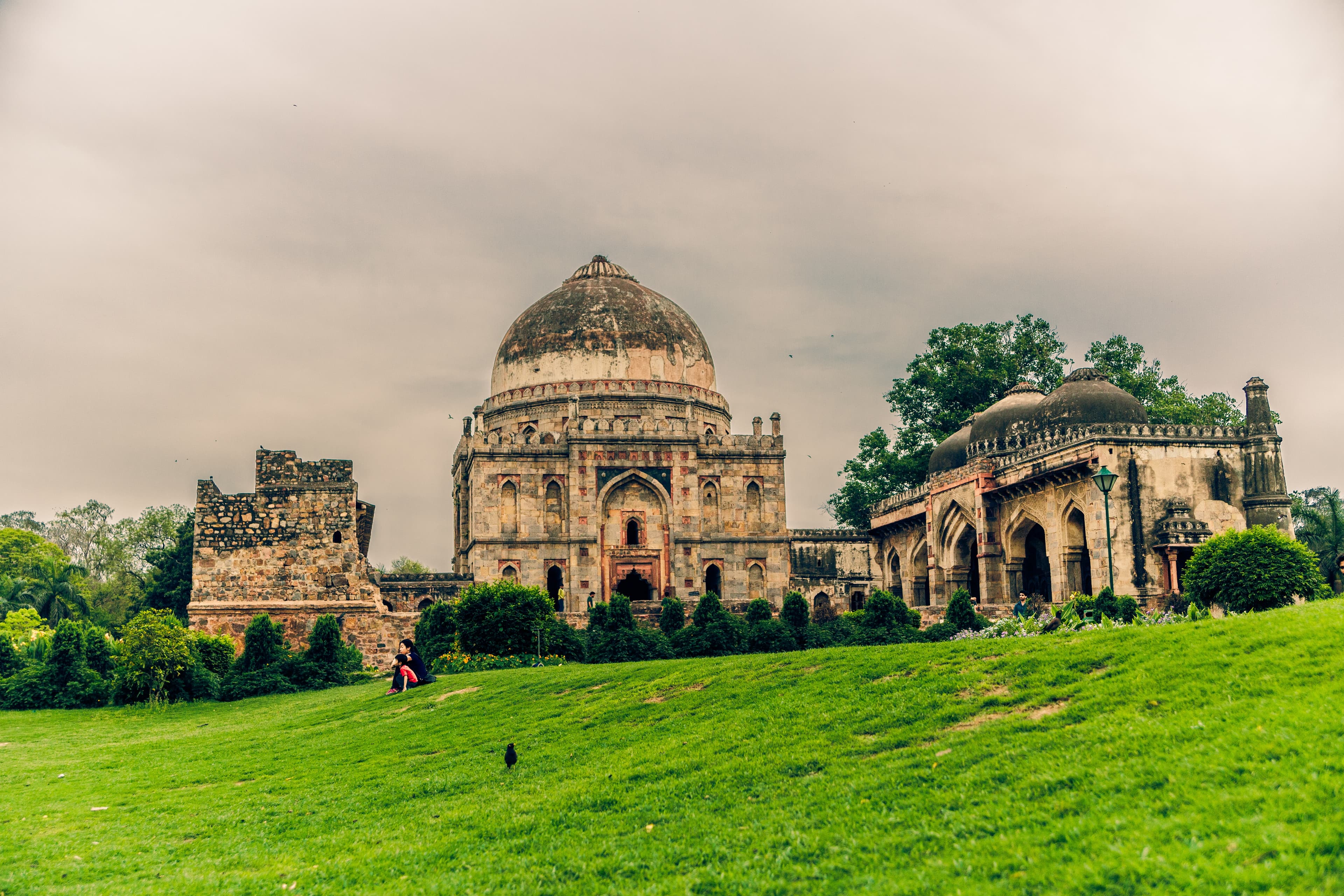
The durbar hall was the ceremonial heart of the Indian palace — the chamber in which the ruler received courtiers, ambassadors and subjects, and in which the authority of the throne was made visible. It is the most formal of royal interiors, and its design logic is entirely about hierarchy and display.
The ruler sat on a raised throne, often beneath a canopy, at the head of the hall, positioned so that every other element — the columns, the sight lines, the decoration — oriented toward that single point. The hall itself was built to impress: polished marble or stone floors, gilded and painted ceilings, chandeliers and columns dressed in precious materials. Light and scale were managed so that the room felt at once vast and intimate.
The durbar hall teaches a principle that carries into contemporary design: a room's power comes from a clear centre of gravity. Every decorative decision — from the height of the ceiling to the direction of a carpet — served the single purpose of framing authority. It is a lesson in how interiors can be organised around meaning rather than merely around furniture.
“A room's power comes from a clear centre of gravity — every decorative decision served the single purpose of framing authority.”
The Sheesh Mahal
The sheesh mahal, or palace of mirrors, is among the most distinctive of Indian royal interiors. These chambers are lined with small, convex pieces of mirror — often tinted glass — set into plaster or stucco in elaborate patterns, so that the entire room shimmers and multiplies whatever light enters it.
The effect is deliberate and spectacular. A single flame, placed at the centre of a sheesh mahal, is reflected across thousands of surfaces until the chamber appears to hold a field of stars. The technique transformed the modest light of candles and oil lamps into a display of dazzling abundance, and it made the interior itself a source of wonder.
Beyond spectacle, the sheesh mahal demonstrates a deeper decorative principle: the use of reflection to expand and animate space. The mirrored surface dissolves the room's boundaries, blurs figure and reflection, and turns light itself into an ornament. It is a technique of profound theatrical intelligence, and it remains one of the most imitated ideas in interior design — though rarely with the original's discipline.
The Frescoed Courtyard
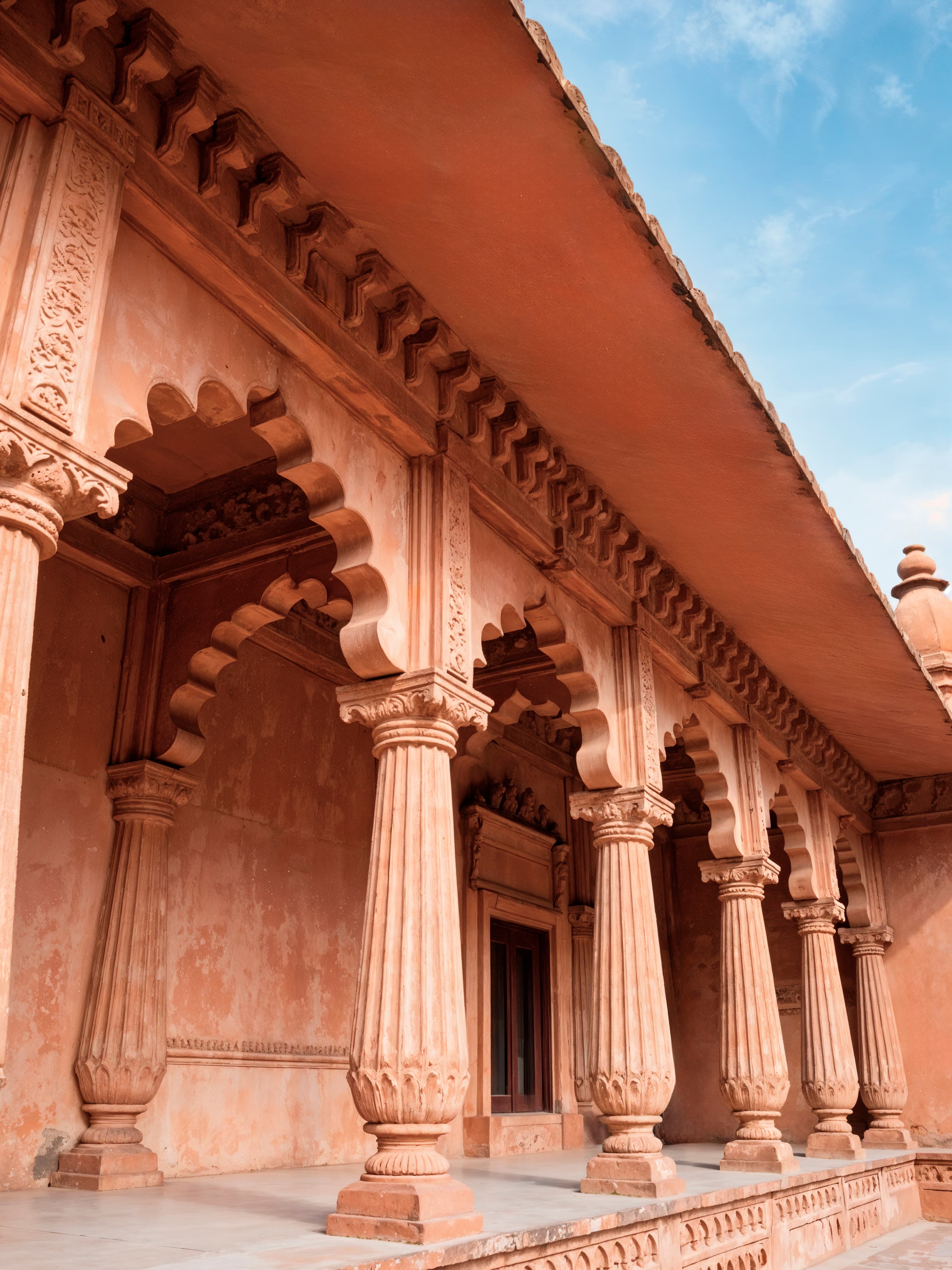
The frescoed courtyard is where Indian palace interiors meet the open air. In palaces across Rajasthan and beyond, the walls and ceilings of courtyards — and the rooms that open onto them — were painted with frescoes, narrative and decorative murals executed in natural pigments directly on the plaster, that turned domestic space into a painted world.
The subject matter is rich and varied: scenes of court life and hunting, processions, mythological narratives, and geometric and floral borders. The palette, drawn from mineral and vegetable pigments, has a distinctive softness, and the paintings were designed to be read in the changing light of the courtyard across the day.
The frescoed courtyard embodies a principle central to Indian palace living: the seamless movement between inside and outside, and the use of every surface — wall, ceiling, arch — as a canvas. Decoration was not confined to a room's furnishings but extended across the architecture itself, making the whole house an artwork. It is a vision of the interior as a total, immersive environment.
“Openings matter as much as enclosures — the frame, the screen and the sill are the instruments by which a room relates to its surroundings.”
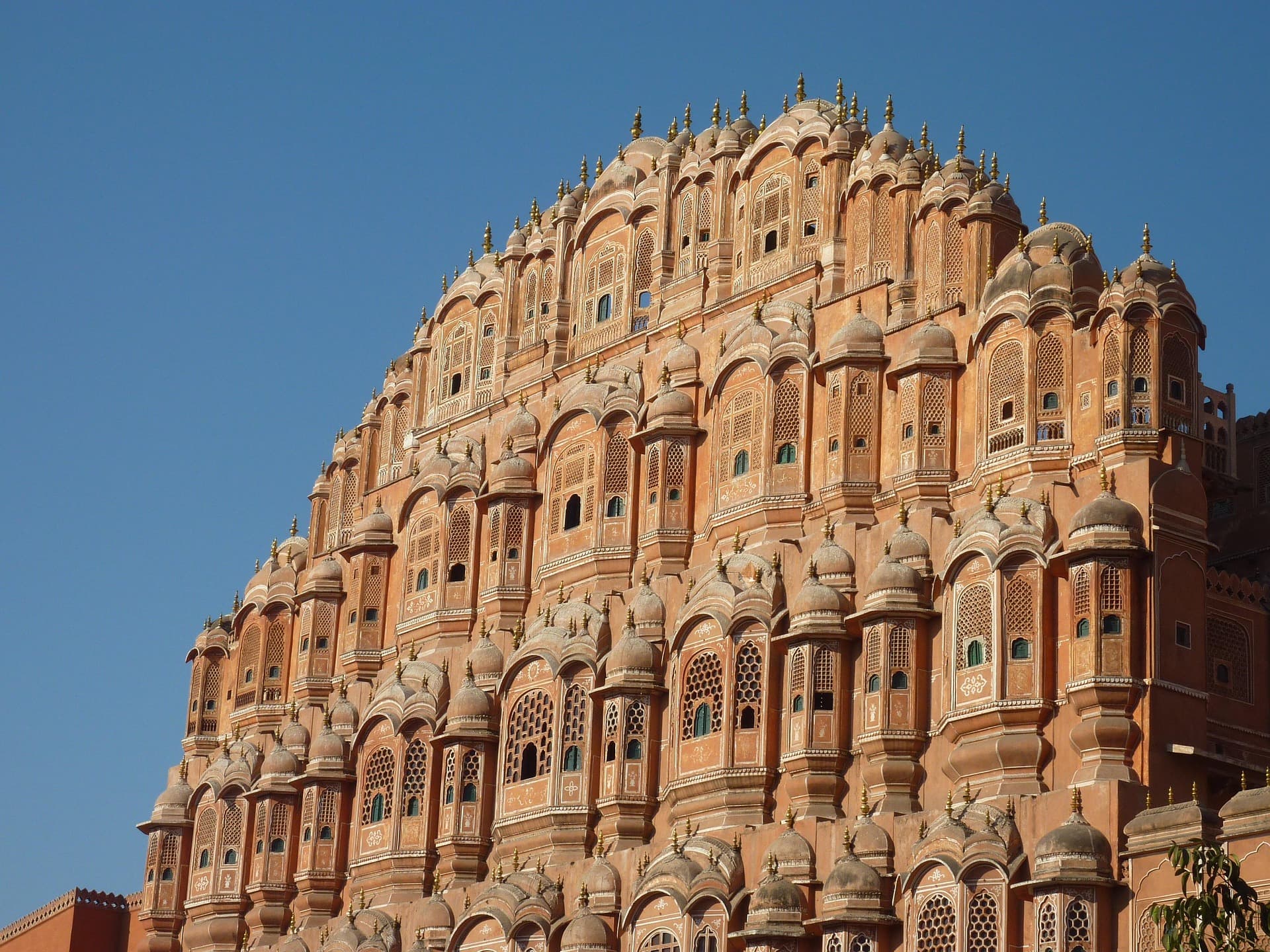
The Jharokha Balcony
The jharokha is the enclosed, overhanging balcony that projects from the upper walls of Indian palaces and havelis — an architectural device with both ceremonial and domestic purpose. From it, the ruler or resident could observe the street, the courtyard or the landscape below while remaining screened and shaded.
The jharokha is inseparable from the jali — the carved screen that fills its openings, filtering light into patterns, cooling the interior and preserving privacy. This union of outlook and concealment is the essence of the device: it frames a view while controlling what is seen, turning the act of looking outward into a measured, private pleasure.
The jharokha teaches a quiet but profound lesson about interior design: that openings matter as much as enclosures. The frame, the screen and the sill are not incidental details but the very instruments by which a room relates to its surroundings. It is a reminder, too, of how design can be both practical and poetic — solving the problem of climate and privacy while creating one of the most recognisable forms in Indian architecture.
The Royal Gallerys Perspective
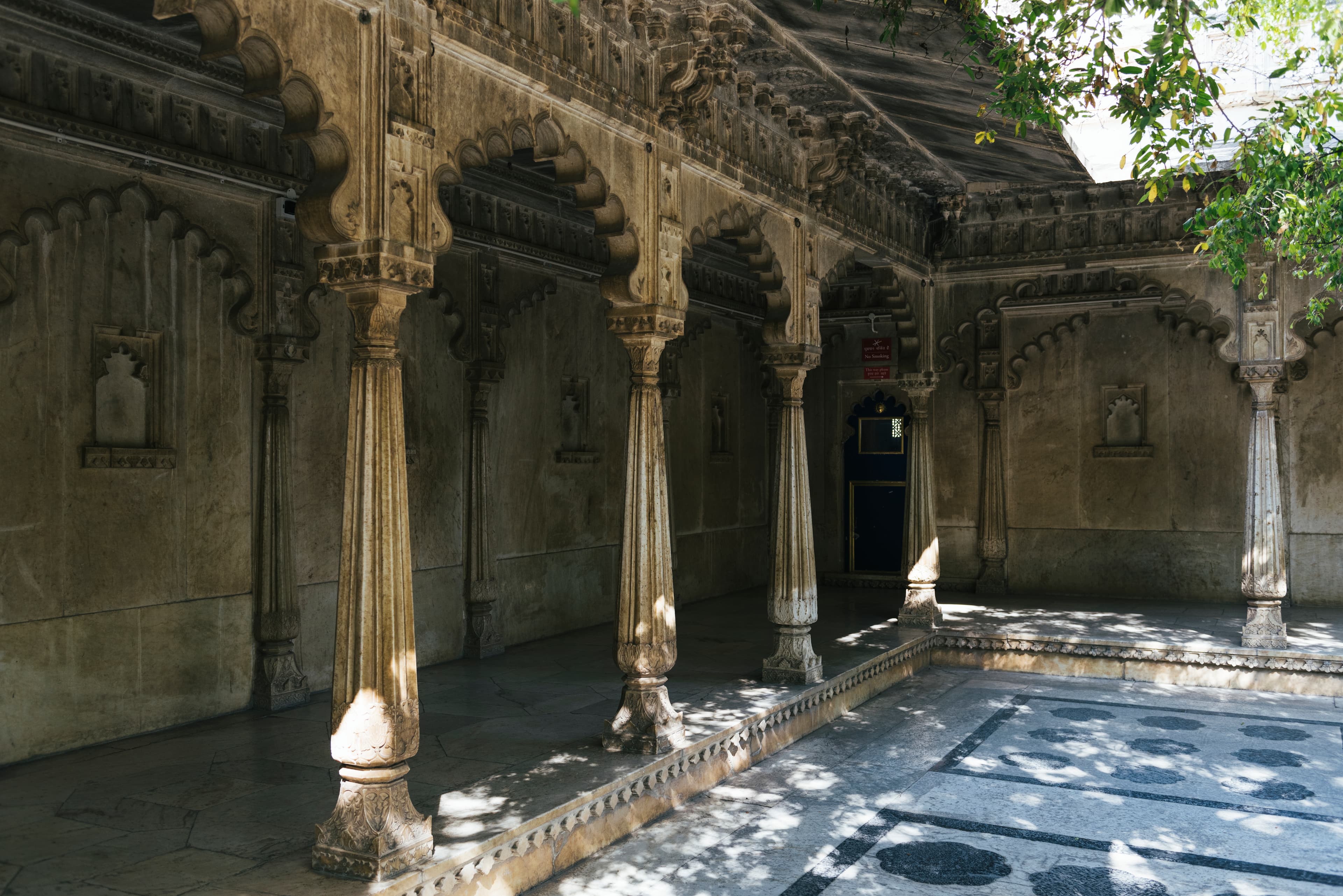
THE ROYAL GALLERYS reads India's royal interiors as design literature — a body of decorative principles developed over centuries, in which every device, from the mirrored sheesh mahal to the frescoed courtyard, answered a specific purpose of ceremony, climate or delight. We treat them not as curiosities but as a sourcebook whose ideas remain fully alive.
The principles these interiors embody — a clear centre of gravity, the orchestration of light, the total treatment of surface, the careful framing of views — are not bound to any period. They are transferable, and contemporary designers continue to draw on them, consciously or not.
We write about palace living because it offers a standard of thoughtfulness that the modern interior too often lacks: rooms conceived as environments, where every surface, opening and object belongs to a larger idea. That is the art of palace living, and it is the reason these interiors remain, centuries on, so remarkably compelling.
THE ROYAL GALLERYS is the international magazine for heritage, culture and luxury — documenting the people, places and ideas shaping the worlds of royalty, jewellery, design, travel and contemporary life. Our editorial authority rests on deep engagement with India's cultural ecosystem and a commitment to telling the stories that matter.
For editorial inquiries, story proposals, and partnership discussions, contact our editors at hey.theroyalgallerys@gmail.com.
The Royal Gallerys Editorial
Design & Interiors Correspondent. THE ROYAL GALLERYS is the international magazine for heritage, culture and luxury — editorial authority on the people, places and ideas shaping our world.
Part of Design
This article is part of THE ROYAL GALLERYS Design section — our international editorial destination for design, heritage and luxury.
Explore All Design Stories →