The Architecture of the 101 Table
Perched high on a hill overlooking the historic city of Hyderabad, Taj Falaknuma Palace (The Mirror of the Sky) houses what is universally acknowledged as one of the world’s most spectacular dining rooms. At its center stands the 101 Table—a continuous expanse of carved dark rosewood stretching 108 feet in length, flanked by 101 ornate carved chairs upholstered in royal green leather.
The room is an acoustic marvel: designed with vaulted plaster acoustics so precise that a whisper uttered by the Nizam at the head of the table could be heard by his Vizier seated halfway down the hall, while conversations between guests on opposite sides remained private. Above, five massive Venetian cut-crystal chandeliers illuminate gold-leaf mouldings and portraits of European royalty, creating an imperial stage unmatched anywhere on the subcontinent.
“The 101 Table at Falaknuma was designed so a whisper from the Nizam could travel across the hall while private table banter remained intimate.”
The Progression of the Imperial Dawat
A banquet hosted by the Nizam was an exercise in formal choreography. The meal began not with appetizers, but with the ceremonial washing of hands: attendants bearing silver chilamchis (basins) and aftabas (ewers) poured rosewater over guests’ hands, offering warm linen napkins scented with natural jasmine attar.
The opening course was invariably Marag—an ethereal, translucent broth of tender lamb shanks simmered with green almonds, pistachios, cinnamon, and cream, calibrated to awaken the appetite and warm the palate. This was followed by delicate Shikampuri Kebabs, made of silk-smooth minced lamb stuffed with hung yogurt, fresh mint, and finely chopped raw onions that melted instantly on the tongue.
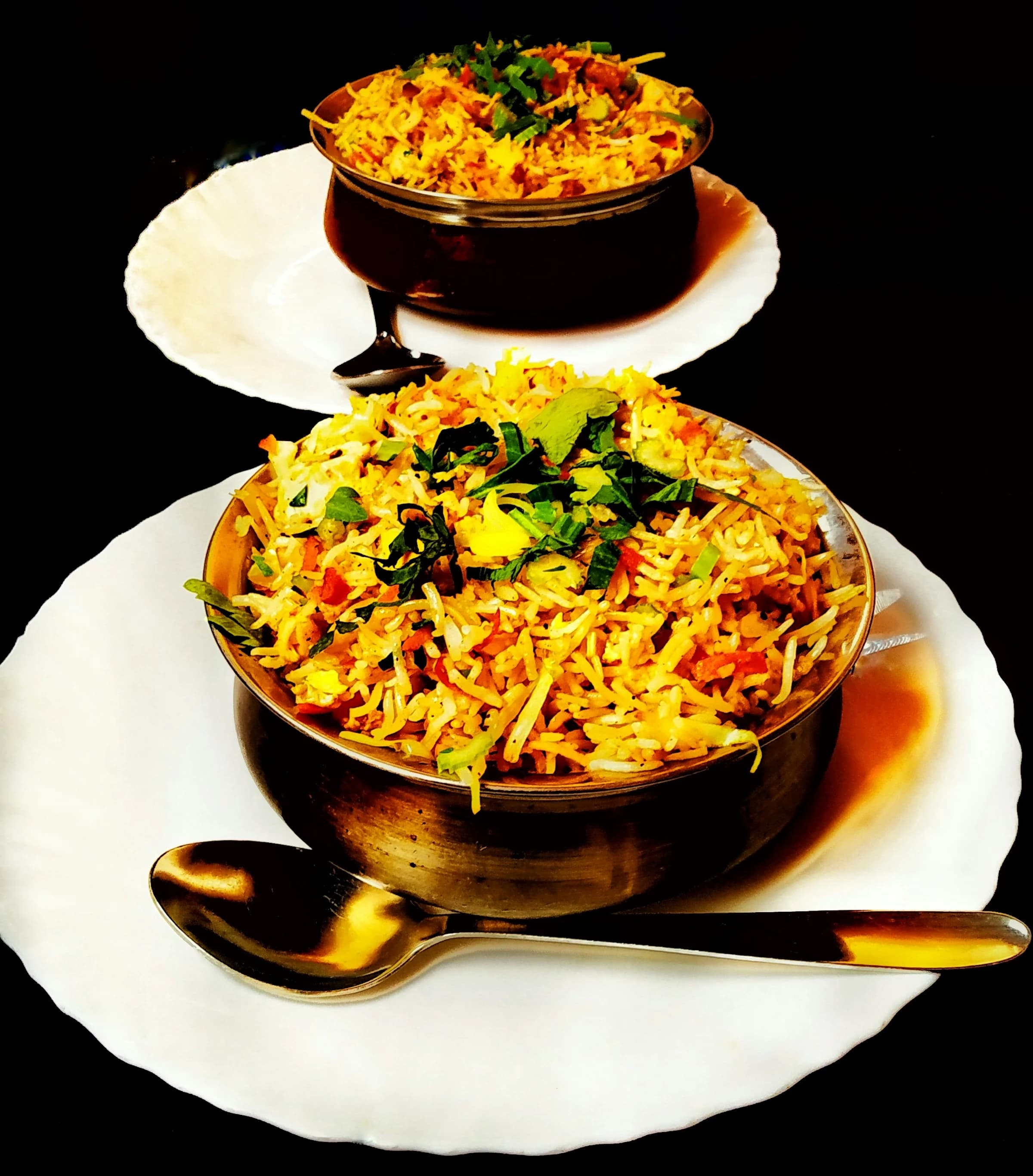
The Sovereign Dish: Kachhe Gosht Ki Biryani
The climax of every royal dawat was the arrival of the sealed copper degchis containing Kachhe Gosht Ki Biryani. Unlike the boiled-meat (pakki) biryanis prevalent elsewhere, the Hyderabadi court perfected the daring technique of marinating raw mutton overnight in sour curd, papaya extract, and ground aromatics, layering it with half-cooked basmati rice, and sealing the vessel with whole-wheat dough (parda).
The pot was placed over slow-burning charcoals with glowing embers also heaped upon its lid—a technique ensuring perfectly even radiant heat. When the seal was sliced open tableside, the fragrance of aged saffron, cardamom, and meat essences billowed across the dining hall. Each grain of rice emerged separate, luminous, and impregnated with flavour from the bone marrow.
“When the dough seal of a royal degchi was sliced tableside, the fragrance of saffron and bone marrow billowed across the entire hall.”
The Royal Gallerys Perspective
Hyderabadi court dining represents the exquisite confluence of Persian subtlety, Mughal grandeur, and fiery southern spices. Seated at the 101 Table or savouring a slow-dum banquet, one encounters a courtly tradition where hospitality was elevated to the highest form of diplomatic statecraft.
THE ROYAL GALLERYS is the international magazine for heritage, culture and luxury — documenting the people, places and ideas shaping the worlds of royalty, jewellery, design, travel and contemporary life. Our editorial authority rests on deep engagement with India's cultural ecosystem and a commitment to telling the stories that matter.
For editorial inquiries, story proposals, and partnership discussions, contact our editors at hey.theroyalgallerys@gmail.com.
Mirza Zafar Ali
Deccan Heritage & Court Historian. THE ROYAL GALLERYS is the international magazine for heritage, culture and luxury — editorial authority on the people, places and ideas shaping our world.
Part of Dining
This article is part of THE ROYAL GALLERYS Dining section — our international editorial destination for dining, heritage and luxury.
Explore All Dining Stories →