The Roman Genesis: Sotirio Bulgari and the Via Condotti Spirit
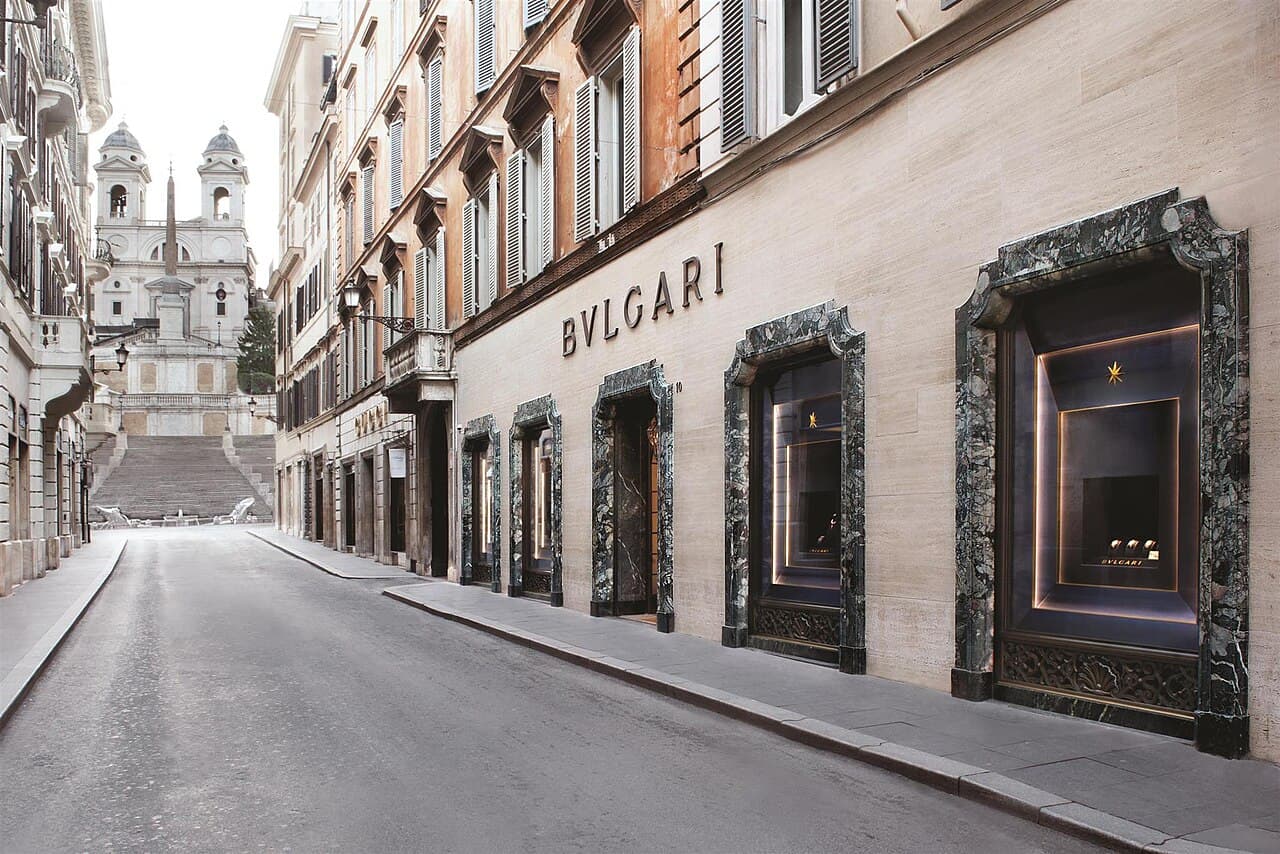
While Paris championed rigid geometry and delicate floral garlands, Rome marched to an entirely different drum. Founded in 1884 by Sotirio Bulgari, a Greek immigrant and master silversmith, the maison on Via Condotti drew its aesthetic vocabulary directly from the monumental ruins, sun-drenched marbles, and classical mythology of the Eternal City.
In ancient Rome, the serpent was not an emblem of sin, but a sacred symbol of rebirth, protection, wisdom, and eternal life. In the late 1940s, as Italy emerged from the devastation of war, Bulgari reinterpreted this ancient motif into a modern mechanical masterpiece: the Serpenti wristwatch.
“Richard Burton famously quipped during the 1962 filming of Cleopatra: 'The only Italian word Elizabeth knows is Bulgari.'”
Tubogas Engineering: The Coil Without Solder
The original Serpenti pieces achieved their sinuous flexibility through a pioneering goldsmithing technique called *tubogas* (gas tube). Inspired by the flexible exhaust pipes used in industrial machinery, the tubogas technique involved wrapping two long strips of gold or steel tightly around a flexible copper or wood core with interlocking edges.
Crucially, no solder was used. When the central core was removed or chemically dissolved, the resulting hollow gold coil possessed extraordinary spring-like memory, wrapping effortlessly around the wrist and clinging snugly without the need for clasps or hinges. The snake’s head, crafted in polished gold and often concealed with a discreet watch dial, rested elegantly atop the hand.
Hollywood on the Tiber: Elizabeth Taylor and Cinecittà
During the 1950s and 1960s, Rome was transformed into 'Hollywood on the Tiber'. International movie directors descended on the Cinecittà studios to film epic historical blockbusters, and their glamorous stars made a beeline for Bulgari’s Via Condotti salon.
None was more synonymous with the house than Elizabeth Taylor. While filming *Cleopatra* in Rome in 1962, Taylor was famously photographed on set wearing a custom Bulgari Serpenti watch-bracelet in yellow gold, with diamond scales and emerald eyes. Her co-star and future husband Richard Burton famously quipped: 'The only Italian word Elizabeth knows is Bulgari.' Taylor’s public passion for Serpenti transformed the Roman jewel from a European connoisseur's secret into an international symbol of sensual, unapologetic luxury.
“Hand-articulated scales in platinum and pavé diamonds drape around the collarbone, behaving not like cold metal, but like a living, tactile creature.”
The High Jewellery Renaissance: Articulated Platinum Scales
In the 21st century, Bulgari elevated the Serpenti from its tubogas beginnings into the stratosphere of Haute Joaillerie. In the maison’s high jewellery atelier in Rome, master craftsmen construct Serpenti colliers from hundreds of individual, hand-articulated scales crafted in solid platinum or white gold.
Each scale is individually cast, filed, and set with brilliant-cut diamonds before being pinned onto an internal gold spring with microscopic tolerances. The snakehead, sculpted with predatory poise, features piercing pear-shaped Colombian emerald or Burmese sapphire eyes. When draped around the neck, the necklace behaves not like cold metal, but like a living, tactile serpent that flexes and breathes with the wearer's movements.
By uniting ancient Greco-Roman mythology, post-war Italian industrial ingenuity, and contemporary high jewellery benchcraft, Bulgari created an icon that transcends fashion — proving that true luxury is not ephemeral, but timeless.
THE ROYAL GALLERYS is the international magazine for heritage, culture and luxury — documenting the people, places and ideas shaping the worlds of royalty, jewellery, design, travel and contemporary life. Our editorial authority rests on deep engagement with India's cultural ecosystem and a commitment to telling the stories that matter.
For editorial inquiries, story proposals, and partnership discussions, contact our editors at hey.theroyalgallerys@gmail.com.
Gianluca Moretti
Senior Horology & Jewellery Editor, Milan. THE ROYAL GALLERYS is the international magazine for heritage, culture and luxury — editorial authority on the people, places and ideas shaping our world.
Part of Jewellery
This article is part of THE ROYAL GALLERYS Jewellery section — our international editorial destination for jewellery, heritage and luxury.
Explore All Jewellery Stories →