St Petersburg 1874: Bolin’s Masterpiece for a Grand Duchess
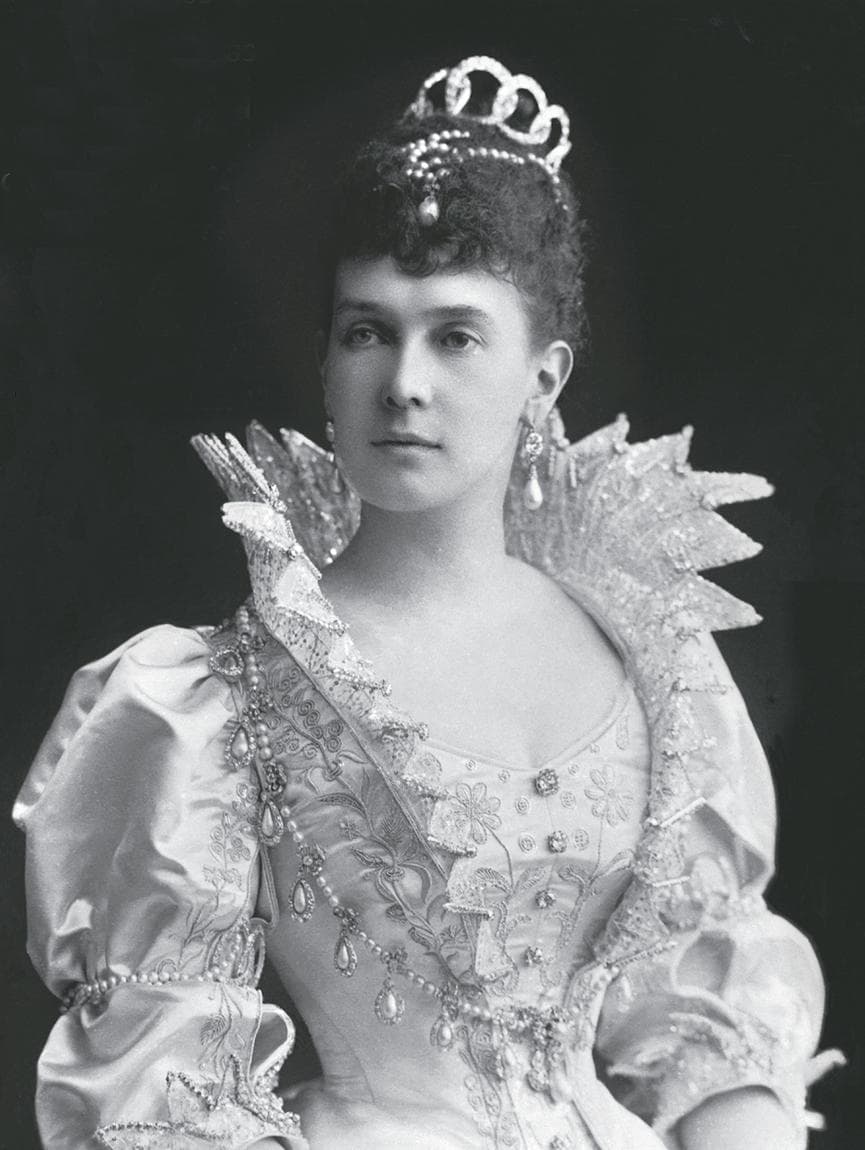
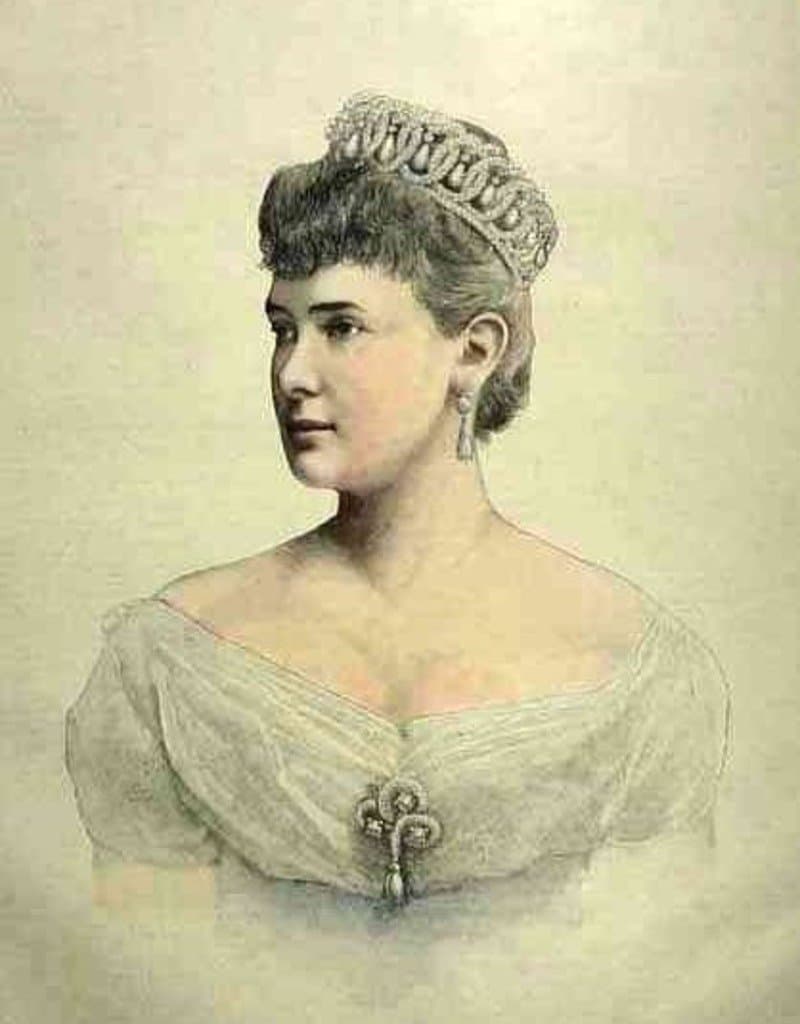
In 1874, Duchess Marie of Mecklenburg-Schwerin married Grand Duke Vladimir Alexandrovich, son of Tsar Alexander II and brother to Tsar Alexander III. As Grand Duchess Vladimir, she reigned as the undisputed doyenne of St Petersburg society, renowned for her sharp wit, diplomatic connections, and legendary jewel vaults.
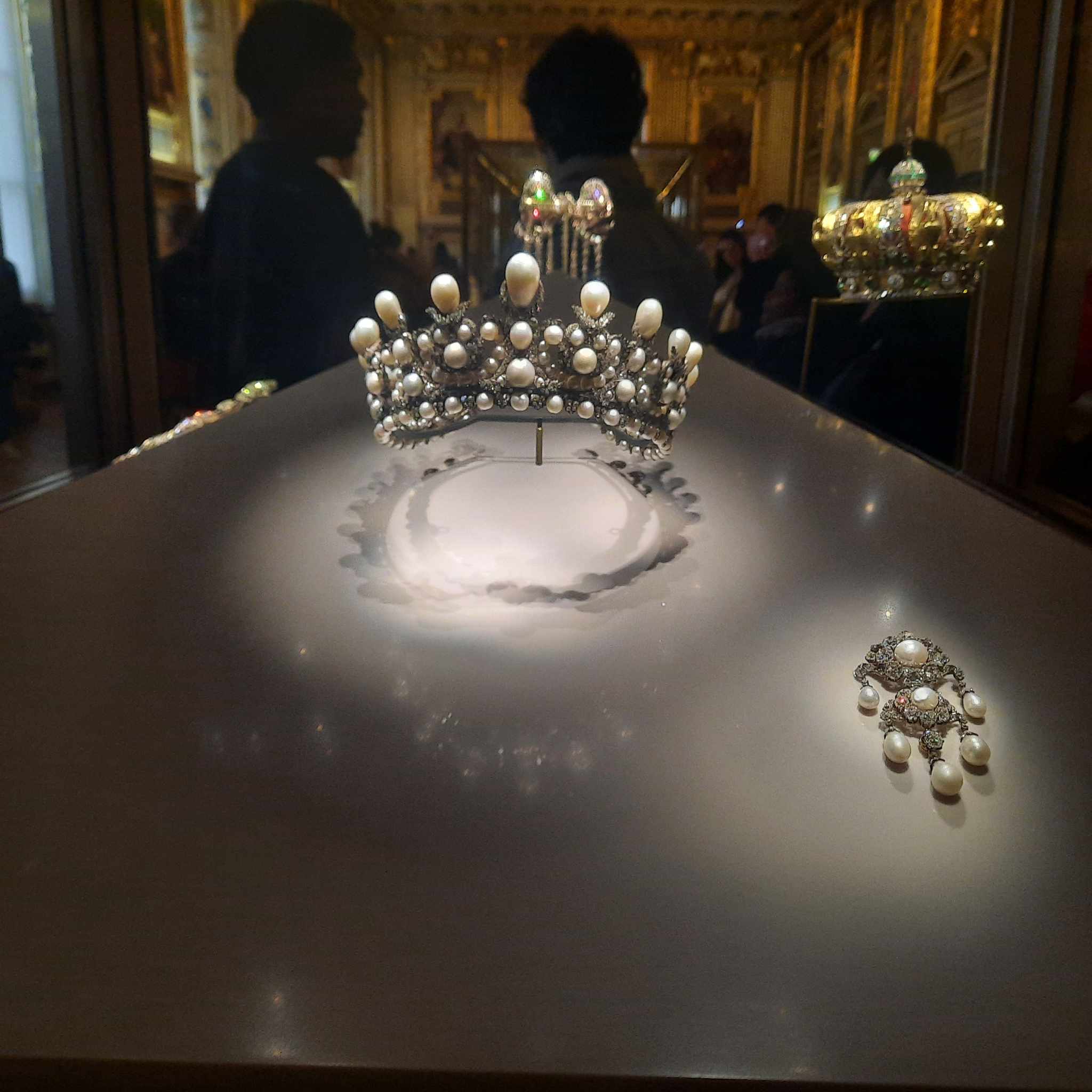
Her wedding gift from the Grand Duke was a spectacular diadem commissioned from Carl Edvard Bolin, court jeweller to the Romanov tsars. Constructed in gold and silver, the tiara featured fifteen interlocking loops of brilliant-cut diamonds, from each of which hung a swinging, pear-shaped natural pearl drop. The design was both architectural and fluid: when the Grand Duchess swept through the Winter Palace at an imperial ball, the pearl pendeloques danced with luminous cadence.
“Disguised as an elderly workman, Albert Stopford smuggled 244 imperial Russian jewels out of Petrograd in two battered Gladstone bags.”
1917: Smuggled Through Revolutionary St Petersburg in Gladstone Bags
When the Russian Revolution erupted in 1917, the Grand Duchess was in the Caucasus, leaving her immense jewellery treasury hidden in a secret vault behind a wall safe in her palace on the Palace Embankment in Petrograd.
Enter Albert Stopford: an English aristocrat, antiques dealer, and diplomatic courier with deep ties to the British embassy and the Russian nobility. Disguised as an elderly workman, Stopford slipped into the Vladimir Palace with the complicity of the Grand Duchess’s son, Grand Duke Boris. In the dead of night, using secret keys, Stopford opened the safe, loaded 244 jewels — including the Bolin tiara — into two battered Gladstone bags, and carried them out.
Stopford smuggled the bags out of Russia on a diplomatic train across the Finnish border, eventually depositing them in a safe at Coutts & Co on the Strand in London. It remains one of the most daring escapes of imperial treasure in modern history.
Queen Mary’s Transformation: The Cambridge Emeralds
Following the Grand Duchess’s death in France in 1920, her daughter, Princess Nicholas of Greece (mother of Princess Marina, Duchess of Kent), inherited the tiara and sold it in 1921 to Queen Mary of the United Kingdom for £28,000.
Queen Mary, an unmatched connoisseur and editor of historic jewellery, recognized the tiara’s brilliance but felt its structural mounts had suffered damage during the escape. She commissioned Crown Jeweller Garrard to undertake a comprehensive restoration, resetting the diamonds into modern platinum mounts.
More importantly, Queen Mary conceived an ingenious modular mechanism: Garrard fitted the tiara so that the original swinging pearl drops could be detached. In their place, Queen Mary could suspend fifteen teardrop-shaped Cambridge emeralds — magnificent cabochons won in an 1818 charity lottery by her grandmother, the Duchess of Cambridge. Alternatively, the diadem could be worn 'widow' (without any drops), leaving crisp, interlocking diamond circles.
“Queen Mary transformed the tiara into a modular marvel: allowing it to be worn with Russian pearls, Cambridge emeralds, or crisp diamond hoops.”
Queen Elizabeth II's Most Versatile Diadem
Inherited by Queen Elizabeth II in 1953, the Vladimir Tiara became one of her most frequently worn and celebrated diadems. The late Queen paired the emerald version with the Delhi Durbar emerald necklace for state banquets honoring European monarchs and US presidents, while wearing the pearl version for official portraits and diplomatic receptions.
The Vladimir Tiara represents the quintessential synthesis of European royalty: Russian imperial goldsmithing by Bolin, English diplomatic daring during the revolution, Queen Mary’s curatorial genius, and Garrard’s mechanical mastery. It stands today as an indelible symbol of the continuity between the vanished courts of imperial Europe and the modern British Crown.
THE ROYAL GALLERYS is the international magazine for heritage, culture and luxury — documenting the people, places and ideas shaping the worlds of royalty, jewellery, design, travel and contemporary life. Our editorial authority rests on deep engagement with India's cultural ecosystem and a commitment to telling the stories that matter.
For editorial inquiries, story proposals, and partnership discussions, contact our editors at hey.theroyalgallerys@gmail.com.
Prince Alexander Galitzine
Imperial Provenance Historian. THE ROYAL GALLERYS is the international magazine for heritage, culture and luxury — editorial authority on the people, places and ideas shaping our world.
Part of Jewellery
This article is part of THE ROYAL GALLERYS Jewellery section — our international editorial destination for jewellery, heritage and luxury.
Explore All Jewellery Stories →