Rohet Garh is the ancestral home of the Champawat Rajputs — a clan of warriors, horsemen, and, more recently, pioneers of Rajasthani hospitality. The fortified manor, forty kilometres south of Jodhpur on the edge of the Thar Desert, has been in the Singh family for four centuries. It has witnessed the rise and fall of empires, the transformation of Rajasthan from a mosaic of princely states to a modern Indian state, and, since the 1990s, the birth of something remarkable: India's heritage hotel movement, of which Rohet Garh was one of the first and finest exemplars.
Rohet Garh at dusk — the fortified manor reflected in its placid lake, Marwari horses grazing in the foreground, the warm glow of welcome lamps shining from every window, the Thar Desert stretching endlessly beyond
The ancestral home of the Champawat Rajputs for four centuries, Rohet Garh became Rajasthan's first heritage homestay in the late 1980s — a radical experiment that helped launch India's entire heritage hotel movement
The story begins with Thakur Dalpat Singh, the patriarch of the family, who in the late 1980s looked at his ancestral home — a beautiful but expensive-to-maintain fortified manor of carved sandstone and sprawling courtyards — and faced a choice familiar to every custodian of heritage in India: find a way to make the building pay for its own upkeep, or watch it crumble. His solution, radical at the time, was to open his home to paying guests. Rohet Garh became Rajasthan's first heritage homestay — a concept that had no name, no regulatory framework, and no precedent in Indian tourism.
The experiment succeeded beyond any reasonable expectation. Guests who came for a night stayed for a week. They told their friends. They returned with their families. The international press — Condé Nast Traveller, Travel + Leisure, the Financial Times — discovered Rohet Garh and wrote about it in the hushed, reverent tone that travel journalists reserve for discoveries they half-wish they could keep secret. The heritage hotel movement in Rajasthan, which has since grown to encompass hundreds of properties, began, in significant measure, in this fortified manor on the edge of the Thar.
The Manor: Four Centuries of Fortified Hospitality
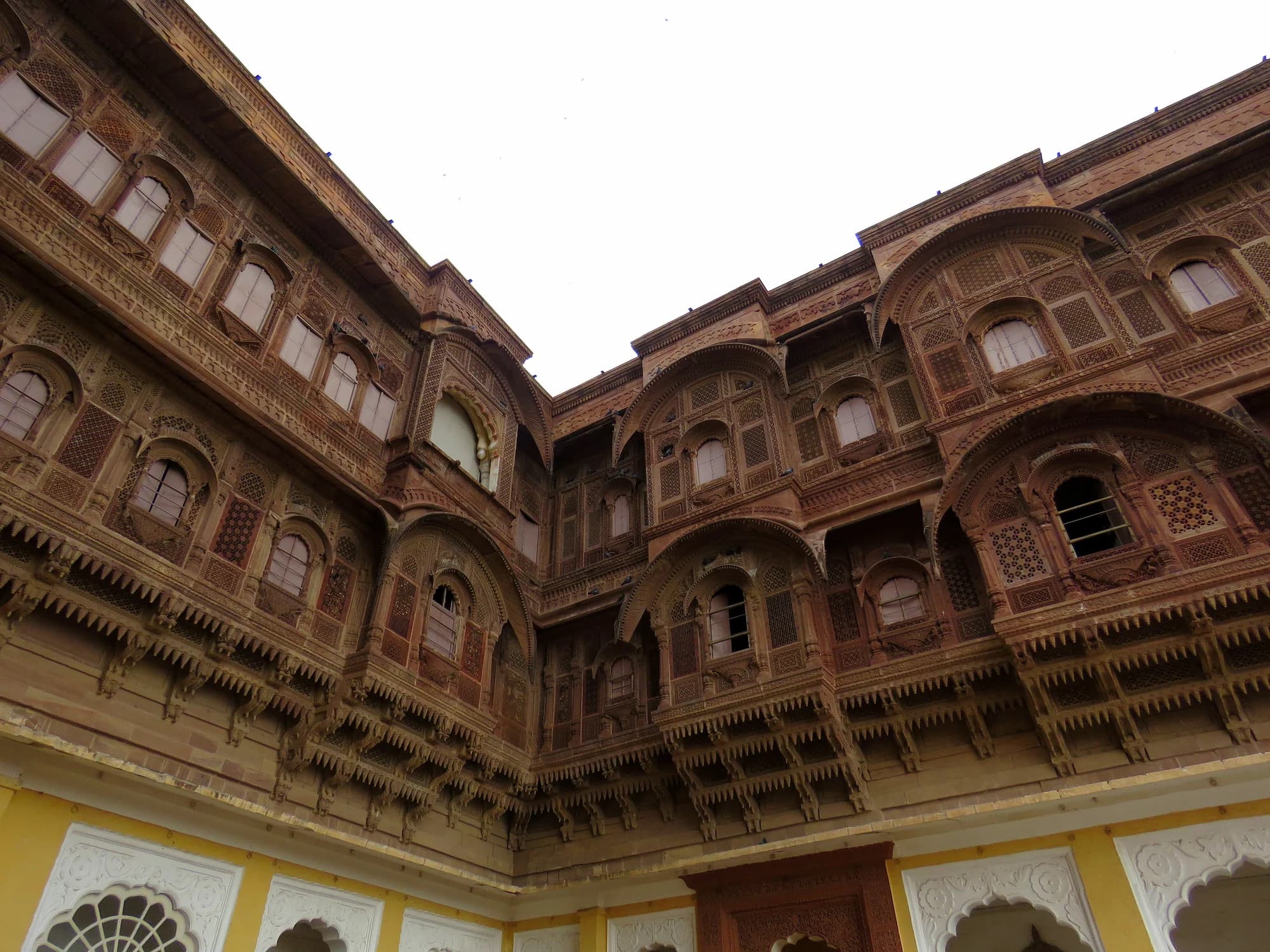
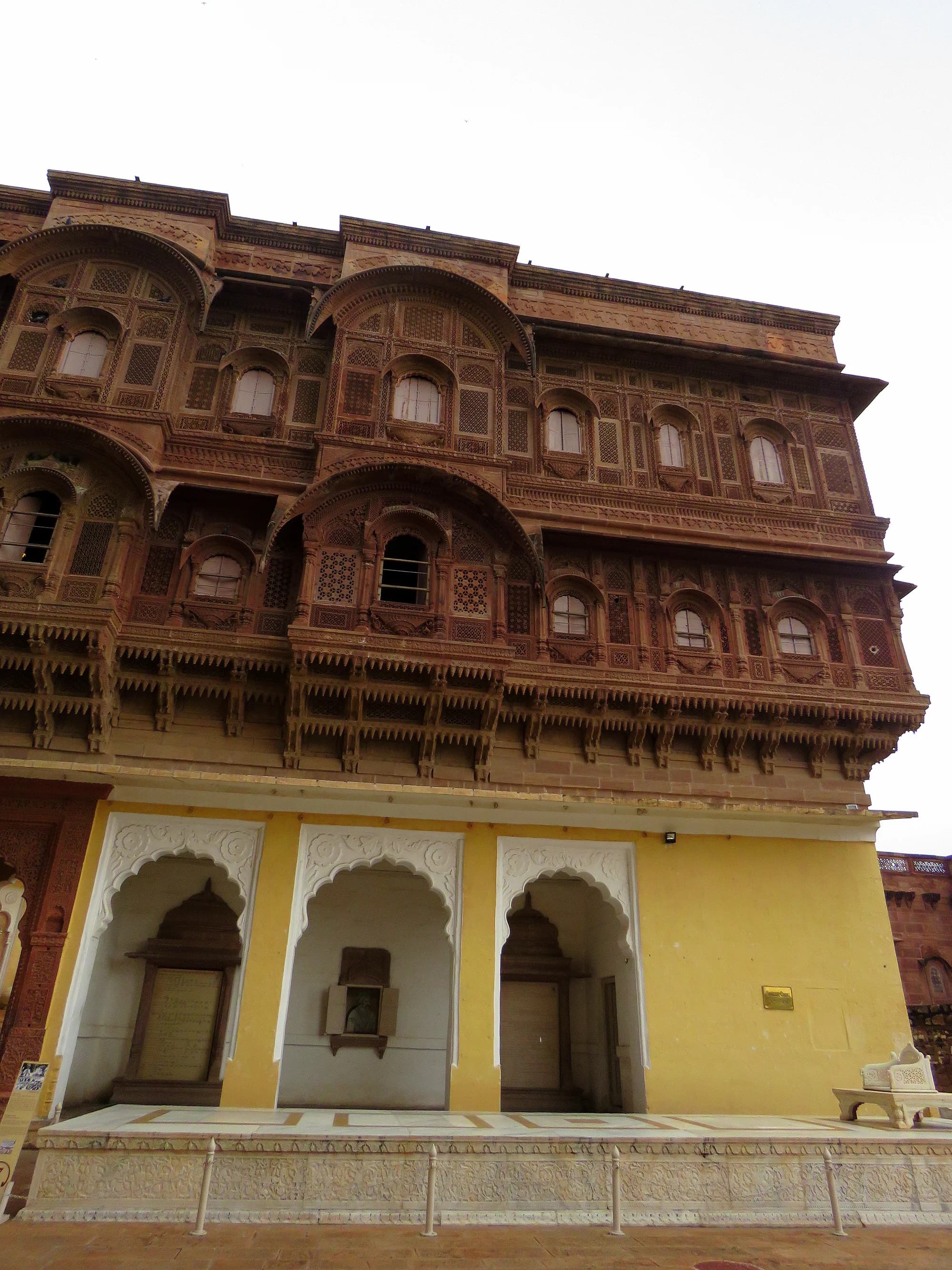
Rohet Garh is not a palace in the Umaid Bhawan sense. It is a garh — a fortified manor — and its architecture reflects the priorities of a warrior clan living on the frontier of the Thar Desert: defensive walls, a strategic position overlooking a lake, and a compact, inward-facing layout designed to protect the family and its retainers against the raids that were, until the nineteenth century, a recurrent feature of desert life.
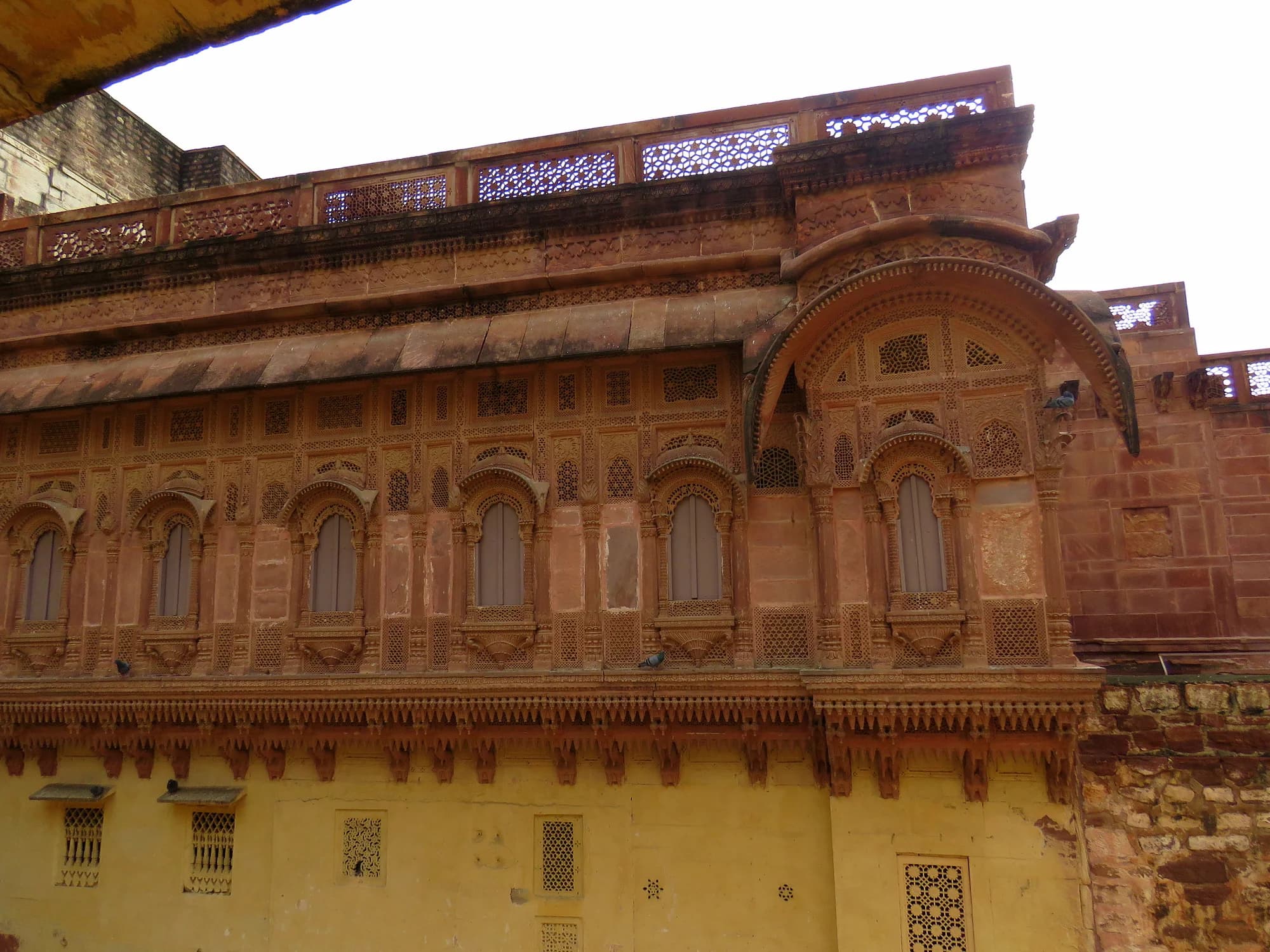
The central courtyard, around which the manor's life revolves, is shaded by neem trees and cooled by a central fountain. The arcades that surround it are decorated with family photographs — generations of Champawat Rajputs in their ceremonial turbans, polo teams from the 1930s, hunting parties posed with shikar trophies, weddings and births and the accumulated milestones of a family that has lived in the same place for four centuries. The effect is less of a hotel than of a home whose owners have, rather generously, allowed you to stay for a few days.
The 34 rooms are distributed across the manor's various wings, and they vary in size, outlook, and character. The Heritage Rooms, in the original building, feature carved sandstone details, antique furniture, and windows that open onto the courtyard or the lake. The newer Garden Rooms, in a quieter wing overlooking the lawns, are larger and brighter but lack the Heritage Rooms' sense of history. The suites — particularly the Lake Suite, with its private terrace directly above the water — are the property's finest accommodation, and they are priced at a level that, by the standards of Rajasthan's palace hotels, is remarkably accessible.
The central courtyard at Rohet Garh — neem trees casting dappled shade, a fountain murmuring at the centre, arcades lined with family photographs spanning four centuries of Champawat Rajput history
The courtyard is the heart of Rohet Garh — guests and family members gather here for morning chai, afternoon conversations, and the unhurried hospitality that distinguishes a genuine homestay from a commercial hotel
“We do not run a hotel. We welcome guests into our home. The difference is not semantic — it is the difference between a transaction and a relationship.”
The Horses: Rohet's Defining Experience
Rohet Garh is famous for its horses. The Marwari breed — distinguished by its inward-curving ears, legendary endurance, and deep historical connection to the Rajput warrior tradition — is the centrepiece of the property's identity, and the stables house some forty animals, from seasoned polo ponies to gentle mares suitable for novice riders.
The signature experience is the horseback safari — a guided ride through the Bishnoi villages and desert scrub that surround the manor. The safari lasts two to three hours and is suitable for riders of all levels, including complete beginners. The horses are impeccably trained, the tack is well-maintained, and the guides — local villagers who have grown up with the animals — are patient, knowledgeable, and quietly proud of their charges. The route winds through village paths, past fields of millet and mustard, through stands of acacia and khejri (the desert tree that the Bishnoi revere as sacred), and ultimately to a dune-top clearing where a picnic breakfast or sundowner awaits.
For experienced riders, multi-day riding expeditions are available — three to five days through the Thar, camping each night at a different location, with the support crew travelling ahead to set up tents, prepare meals, and ensure that the cold beer is waiting when you arrive. These expeditions are among the finest equestrian experiences in India, and they attract riders from around the world who have heard, through the quiet grapevine of the international riding community, about the quality of the Rohet horses.
The Bishnoi: Rohet's Neighbours
The villages around Rohet Garh are predominantly Bishnoi — followers of a 15th-century guru whose teachings forbid the killing of animals and the felling of trees. The Bishnoi conservation ethic has preserved a remarkable diversity of wildlife in the region: blackbuck antelope, chinkara gazelles, nilgai, wild boar, peacocks, and migratory birds including demoiselle cranes, which arrive in their thousands each winter.
A jeep safari through Bishnoi country — arranged by the manor and guided by a member of the family or a senior staff member — is one of Rajasthan's most authentic cultural experiences. You visit working villages, meet potters and weavers in their homes, and observe a community whose religious principles have created, in effect, a private wildlife reserve. The blackbuck, so tame that they graze within metres of village houses, are a testament to the Bishnoi's success — and a living rebuke to the modern assumption that human habitation and wildlife conservation are incompatible.
A Marwari horse at Rohet Garh — the distinctive inward-curving ears of the breed, a studded bridle and embroidered saddle cloth, the Thar Desert hazy with dust and heat in the background
The Champawat Rajputs are renowned horsemen, and Rohet Garh maintains one of India's finest stables of Marwari horses — the breed's distinctive inward-curving ears, unique among equines, are a symbol of Rajasthani identity
Dining: The Family Table
Meals at Rohet Garh are taken in the family dining room, a space of carved sandstone pillars and antique chandeliers that has hosted four centuries of Champawat dinners. The kitchen is helmed by cooks who have been with the family for decades — in some cases, their parents were the family's cooks — and the menu is Rajasthani home cooking at its finest: unfussy, generous, and deeply satisfying.
The Laal Maas is prepared according to a family recipe that deploys the Mathania chilli with strategic precision — a slow-building heat that never quite overwhelms the flavour of the mutton. The safed maas, a white curry of lamb in yoghurt and almond gravy, is delicate and aromatic. The vegetarian dishes — Ker Sangri, Gatte ki Sabzi, Dal Baati Churma — are prepared with the same care as the meat, because the family itself eats a predominantly vegetarian diet, and the cooks have had four hundred years to perfect the art of Rajasthani vegetable cookery.
Dinner is a communal affair, at least in spirit. The family often joins guests for a drink before the meal, and the conversation flows naturally across the dining room, which is small enough — ten tables at most — that a sense of shared experience develops organically. If you prefer privacy, a table can be set in the courtyard or on your private terrace, but most guests find that the communal atmosphere is part of Rohet's charm.
Dinner at Rohet Garh — candlelit tables in the family dining room, silver bowls of Laal Maas and safed maas, the carved sandstone pillars glowing amber in the lamplight, the conversation of guests and family members mingling in the warm desert evening
The kitchen prepares recipes that have been in the Champawat family for generations — the Laal Maas is the genuine article, cooked with Mathania chillies that create a slow-building heat that lingers rather than assaults
When to Visit
October through March for the most comfortable weather. December and January nights are cold — pack warm pyjamas and a shawl for evening drinks by the bonfire — but the days are glorious and the winter light is superb for photography. The monsoon (July to September) brings a brief greening of the desert and magnificent cloudscapes. April to June is hot but viable if your primary activities are poolside reading and sunset rides.
What to Pack
Riding boots or sturdy closed shoes if you plan to ride (trainers are not safe for horseback). Long trousers for riding and for protection against the desert scrub if you are walking in the villages. Layered clothing for winter visits — the temperature swing between midday and midnight can be 15-20°C. A good camera with a zoom lens for wildlife. And a book — the gardens of Rohet Garh were designed for reading.
Frequently Asked Questions
How does Rohet Garh compare to Mihir Garh? They are sibling properties, owned by different generations of the same family, and they complement each other beautifully. Rohet Garh is the traditional ancestral manor — warm, sociable, centred on the family who still live there. Mihir Garh is the contemporary desert fortress — intimate, design-forward, centred on solitude. A stay at both (two nights at each) is the ideal Thar Desert experience.
Do I need riding experience for the horseback safari? No. Complete beginners are welcome, and the guides are excellent. The horses are selected for temperament, and the pace is gentle unless you explicitly request otherwise and demonstrate the necessary skill. For multi-day expeditions, some prior riding experience is recommended.
How far is it from Jodhpur? Forty kilometres, approximately one hour by car. The hotel arranges private transfers from Jodhpur Airport or railway station. The road is good for the first thirty kilometres, then becomes a pleasant country road through mustard fields and Bishnoi villages.
What is the dress code? Relaxed throughout the day. In the evening, most guests change into smart casual attire for dinner. Riding gear is available from the stables, but you will be more comfortable in your own boots if you have them.
Is the property suitable for children? Yes — the family welcomes children warmly, and the horses, pool, and open spaces provide ample entertainment. The communal dining atmosphere is relaxed enough to accommodate young guests. The family can arrange child-friendly meals and early dinner times.
Rohet Garh at dawn from across the lake — the sandstone walls catching the first light, the reflections perfect in the still water, the peacocks beginning their morning calls, the Thar Desert awakening to another day of infinite space and ancient silence
The lake, fed by monsoon rains, is the focal point of the property — a haven for migratory birds in winter and the setting for the morning ritual of chai taken at water's edge